Gallery
The Mantua Gown: The Pauper Dress
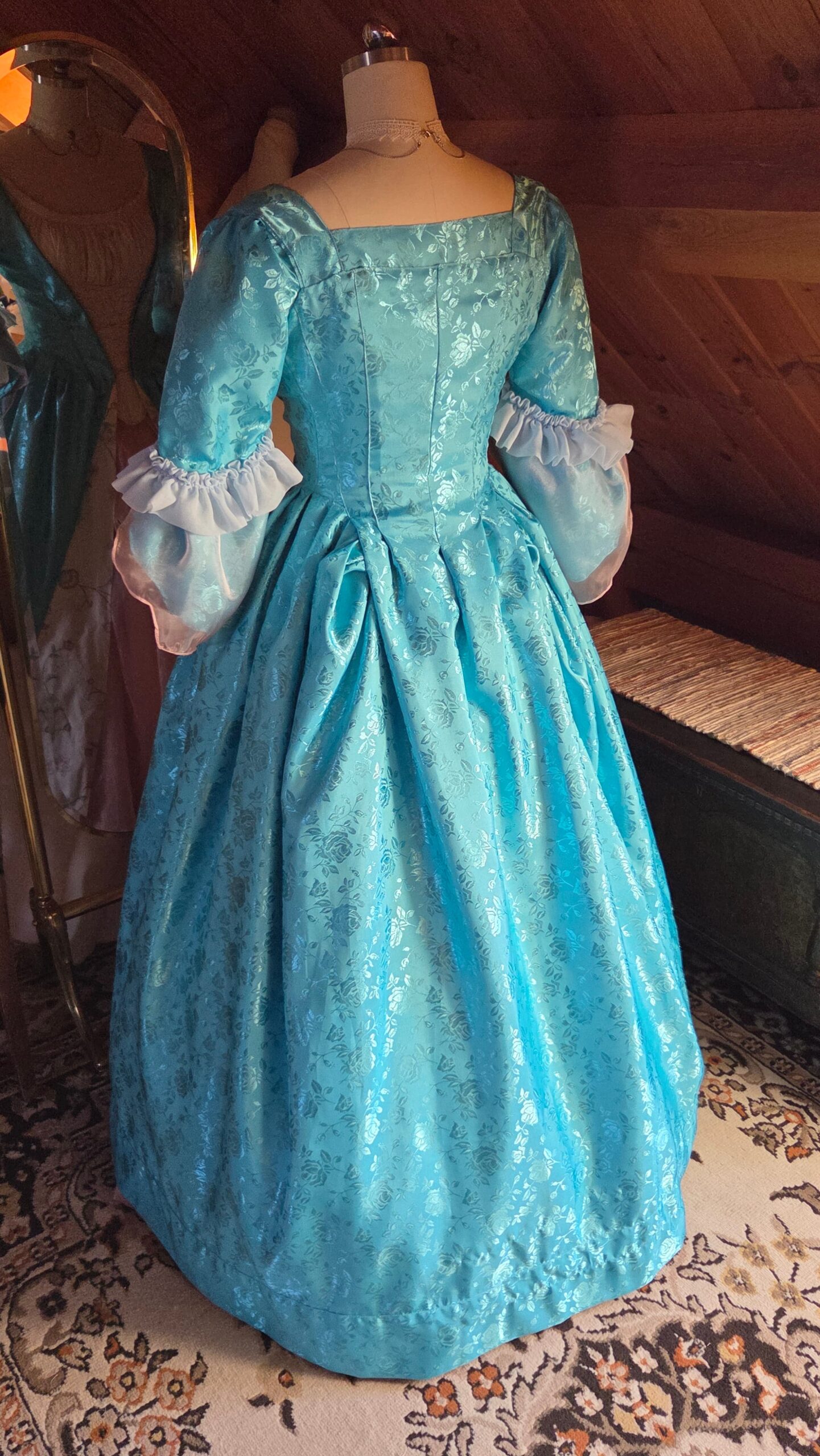
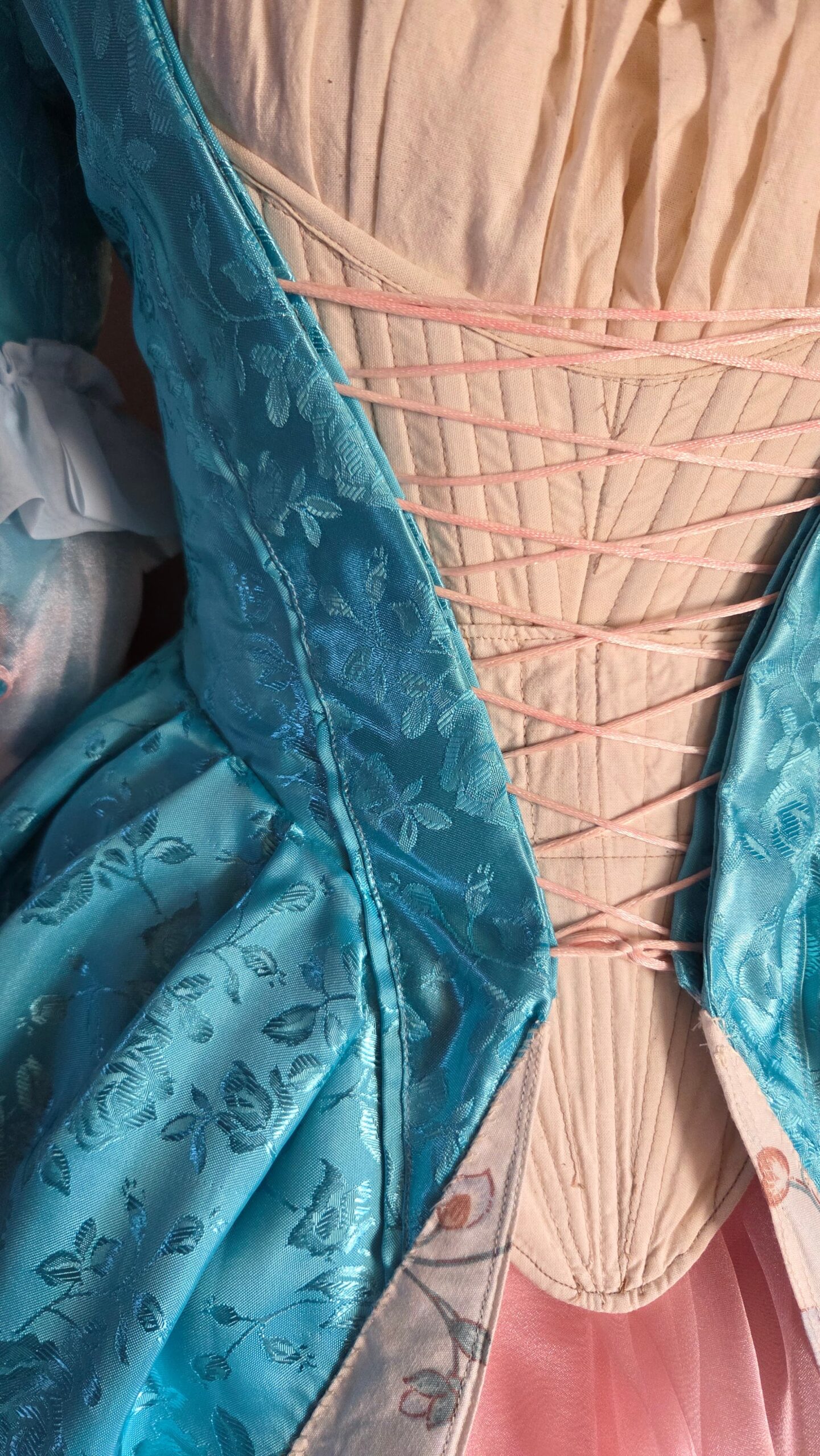
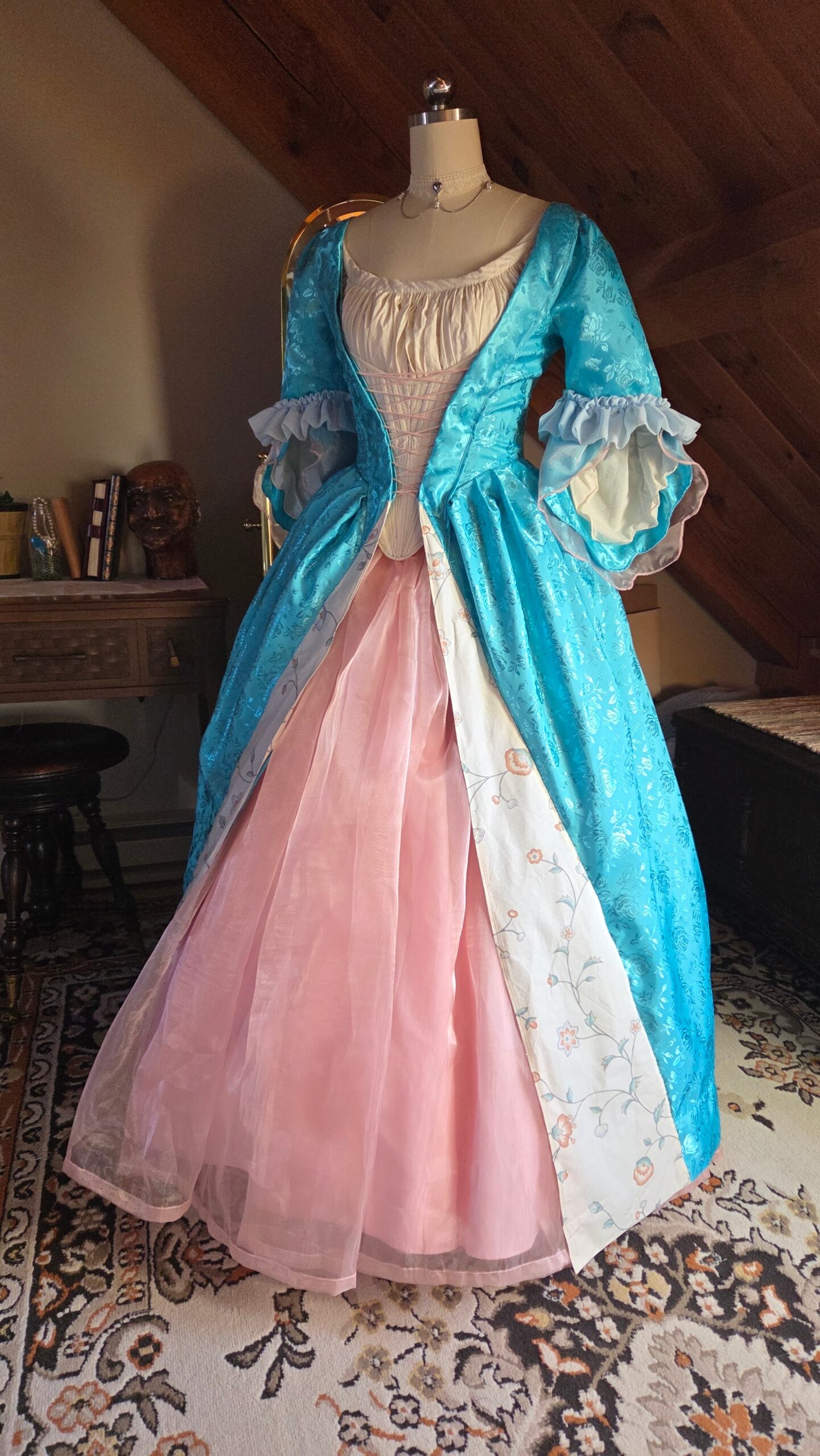
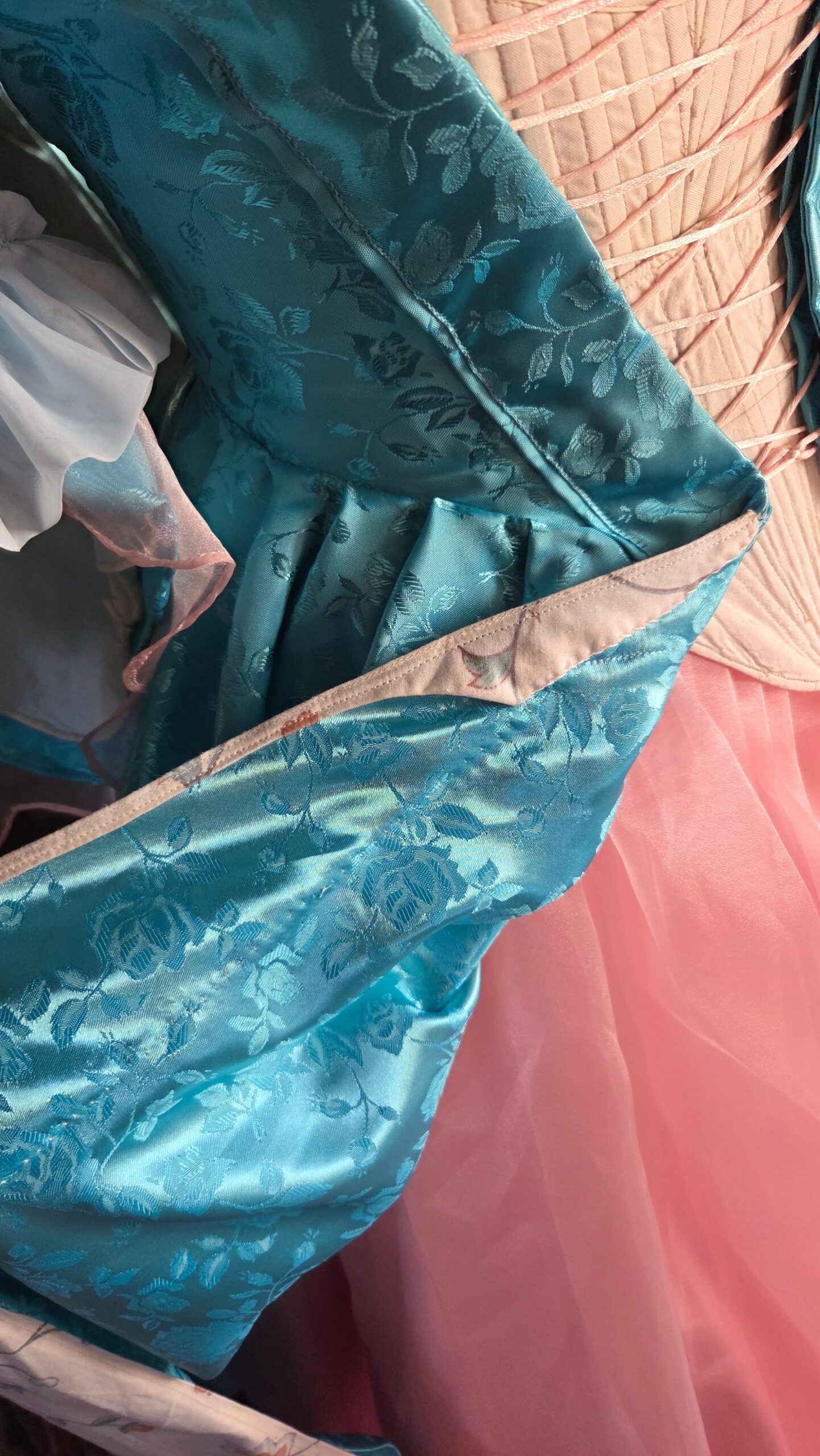
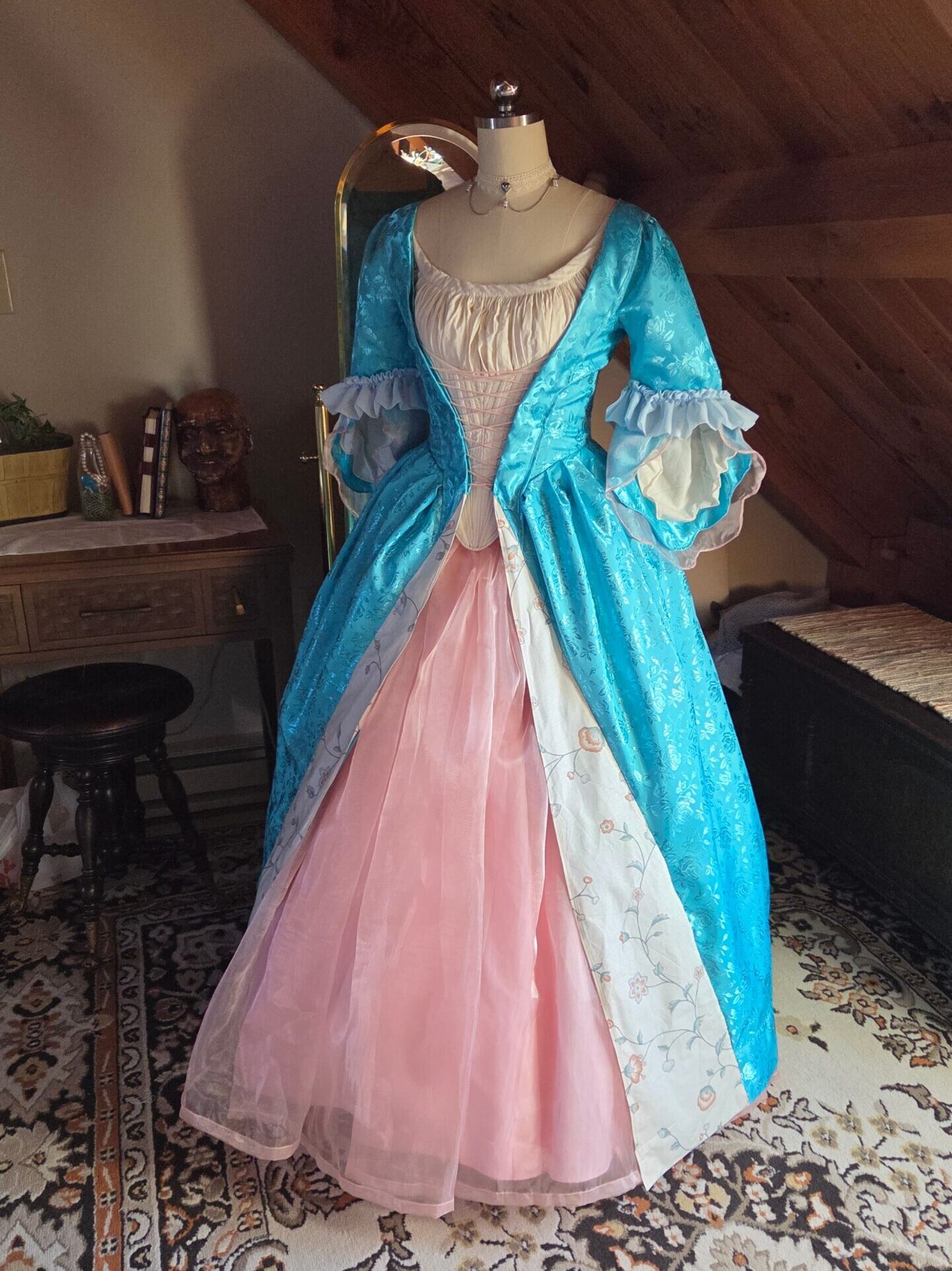
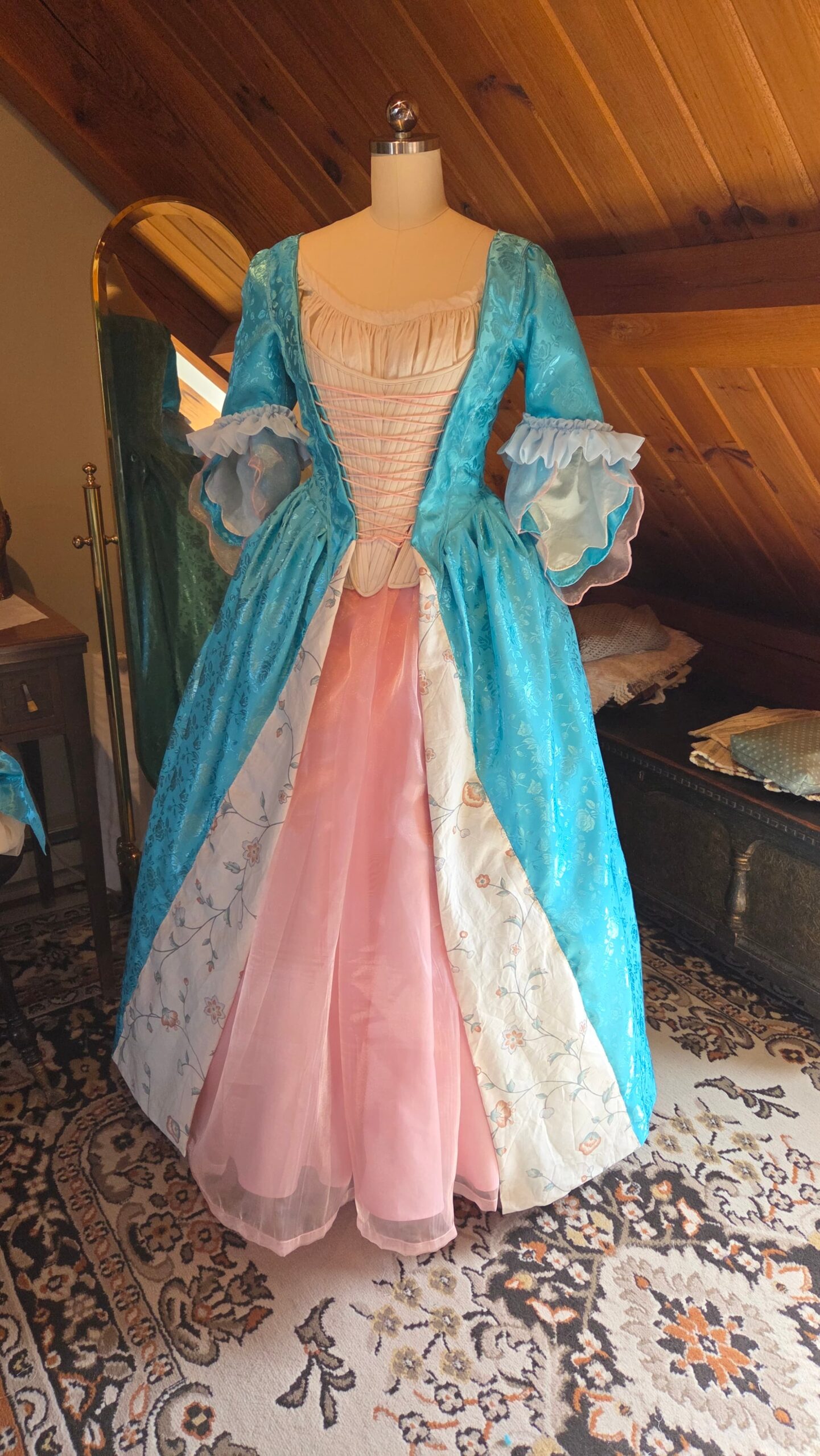
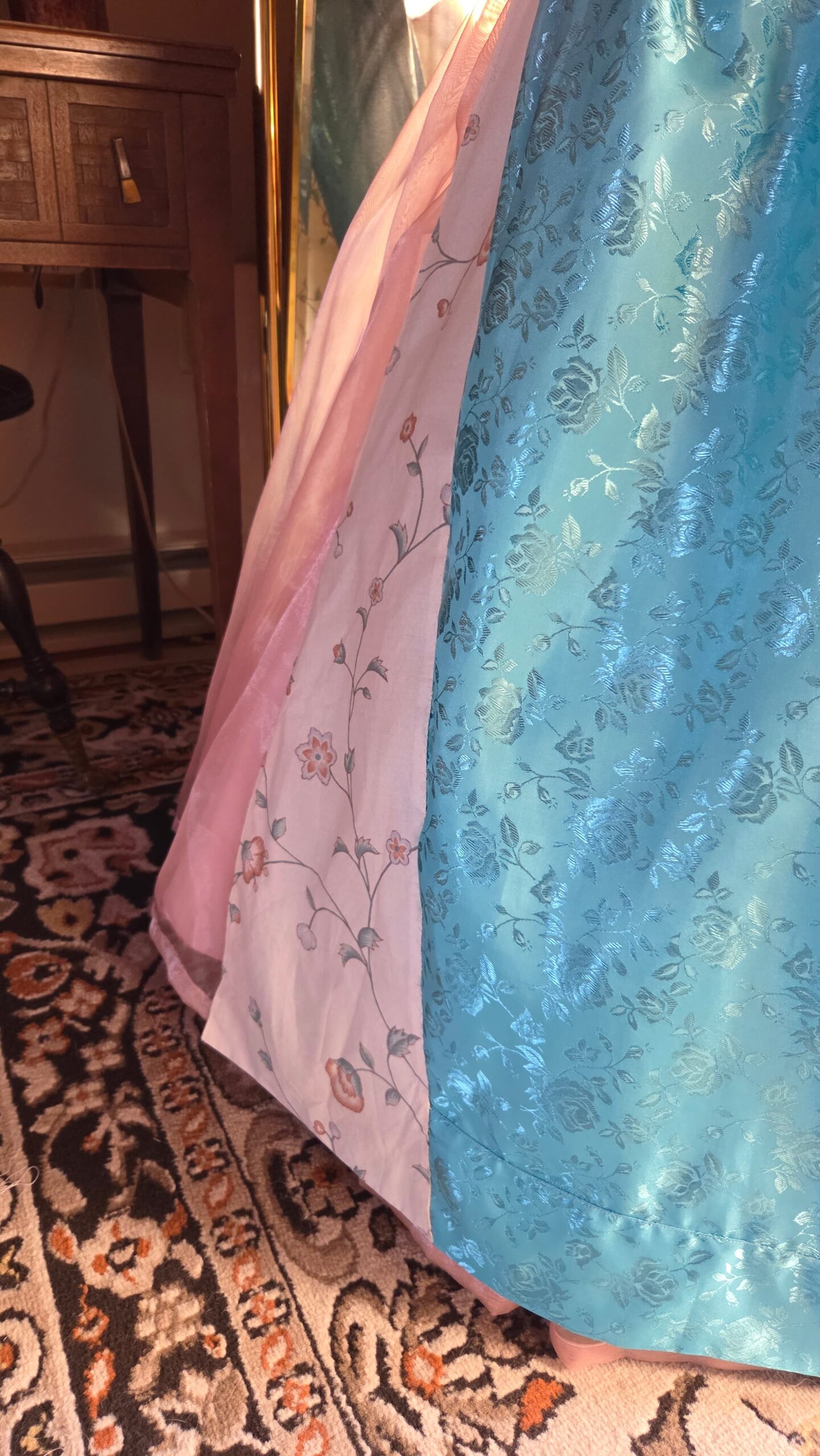
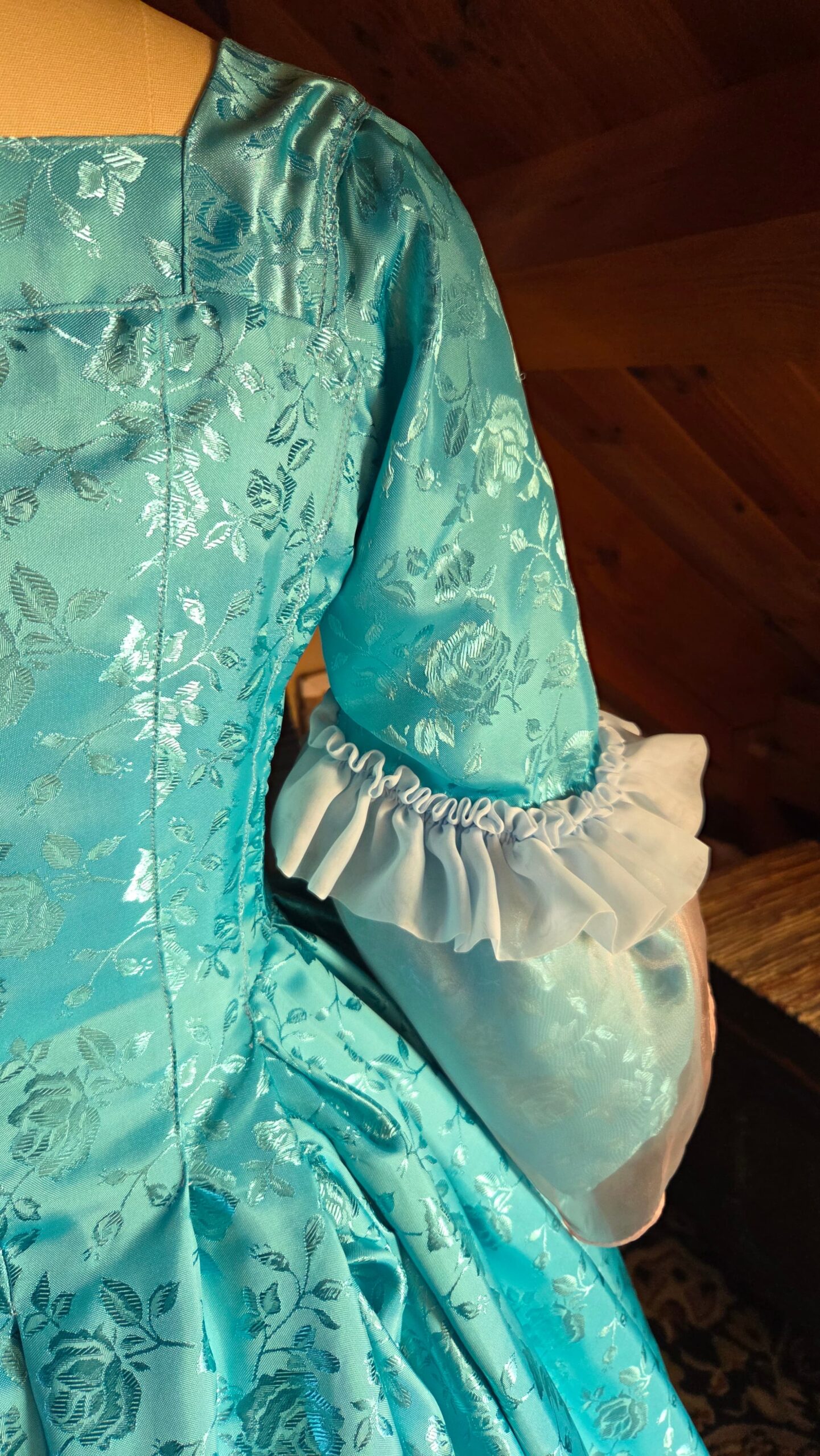
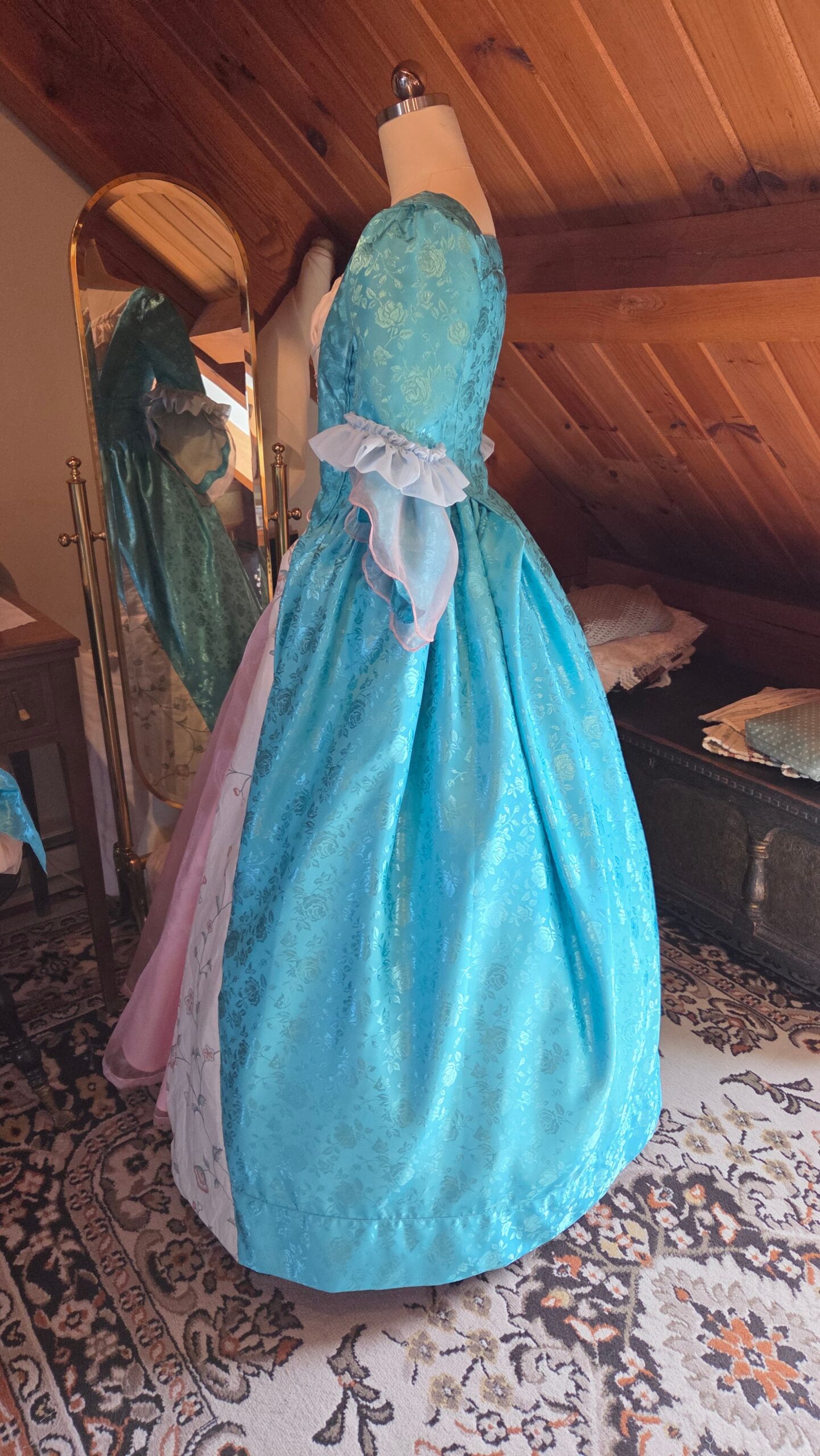
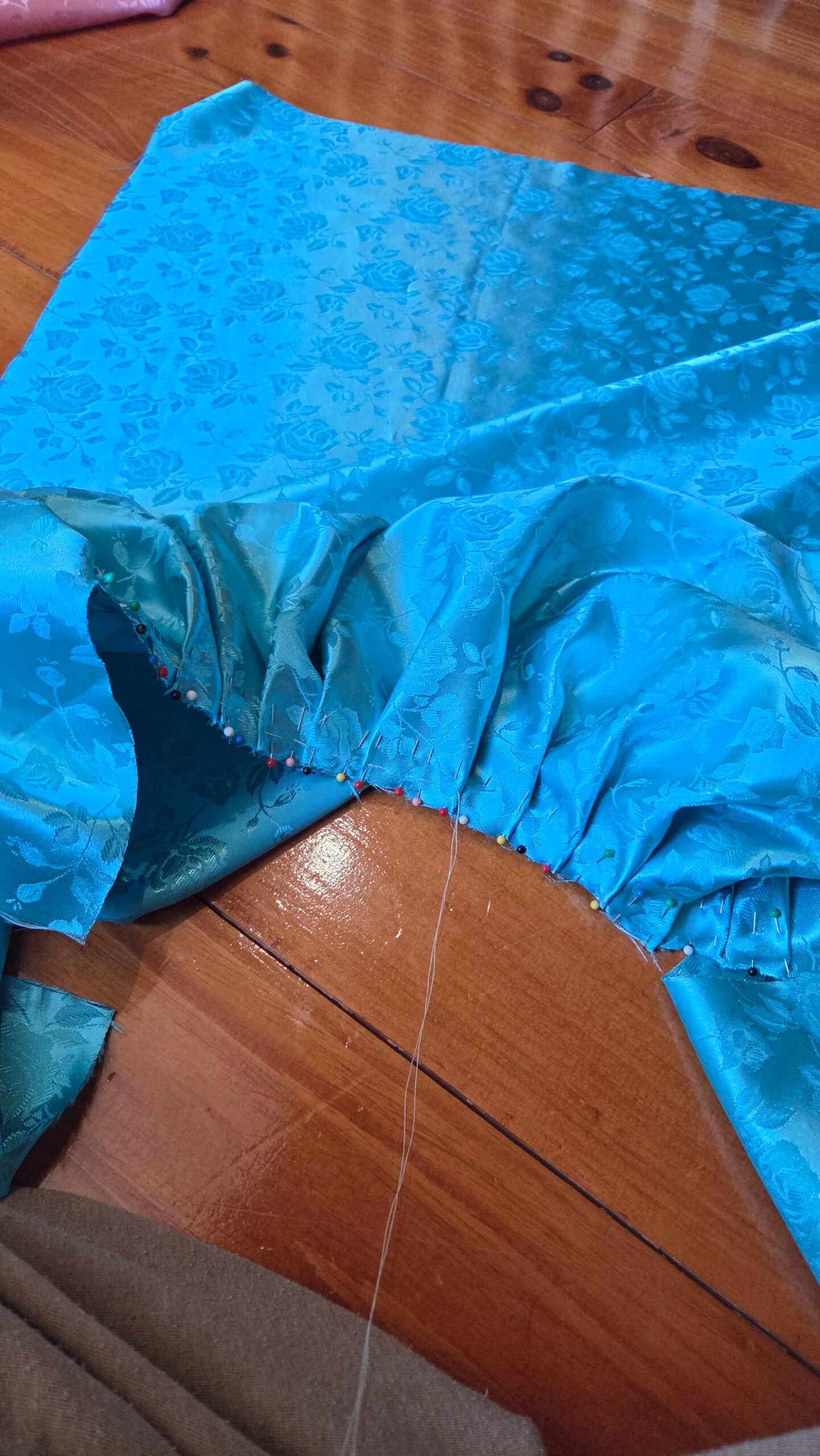
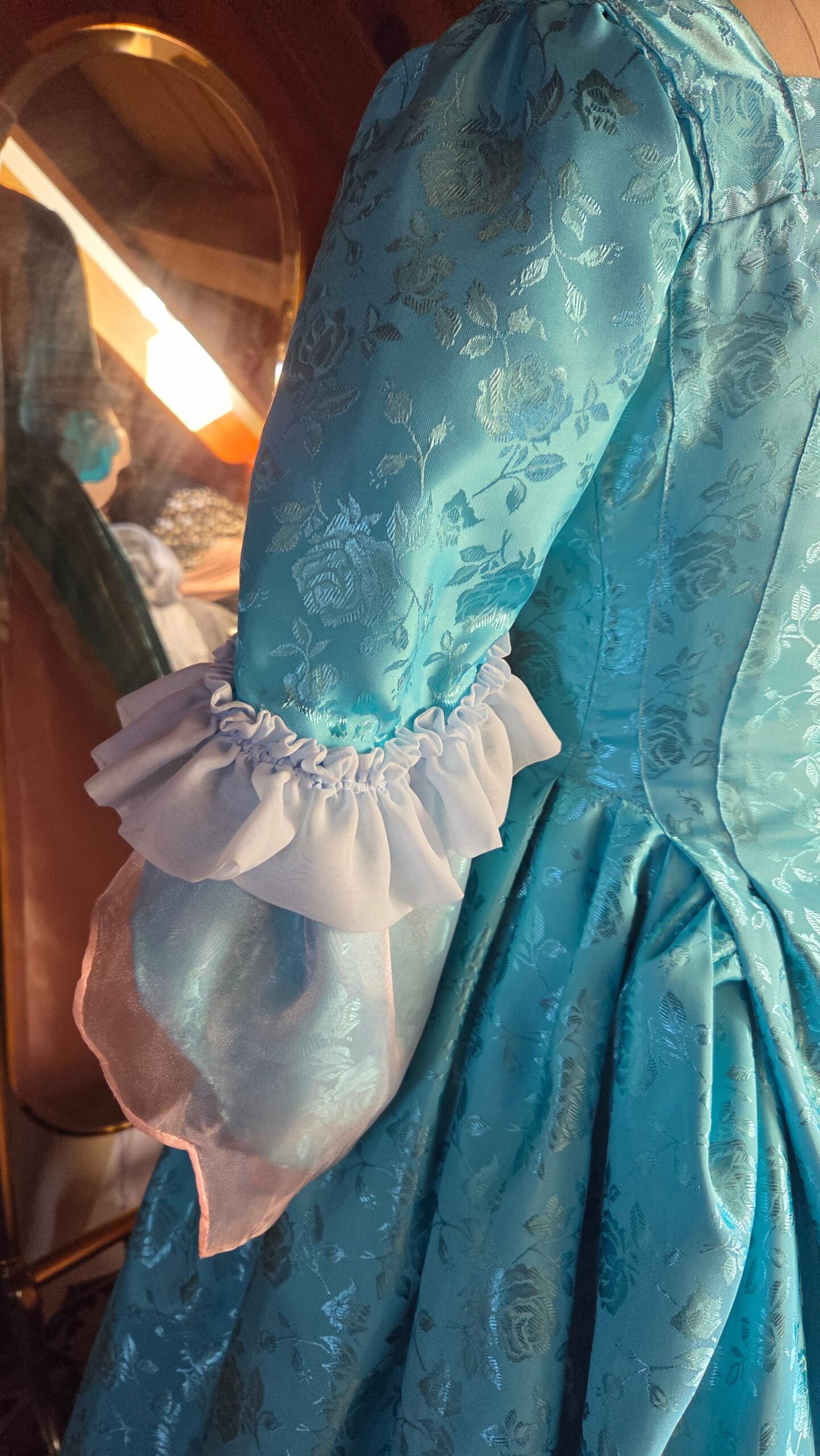
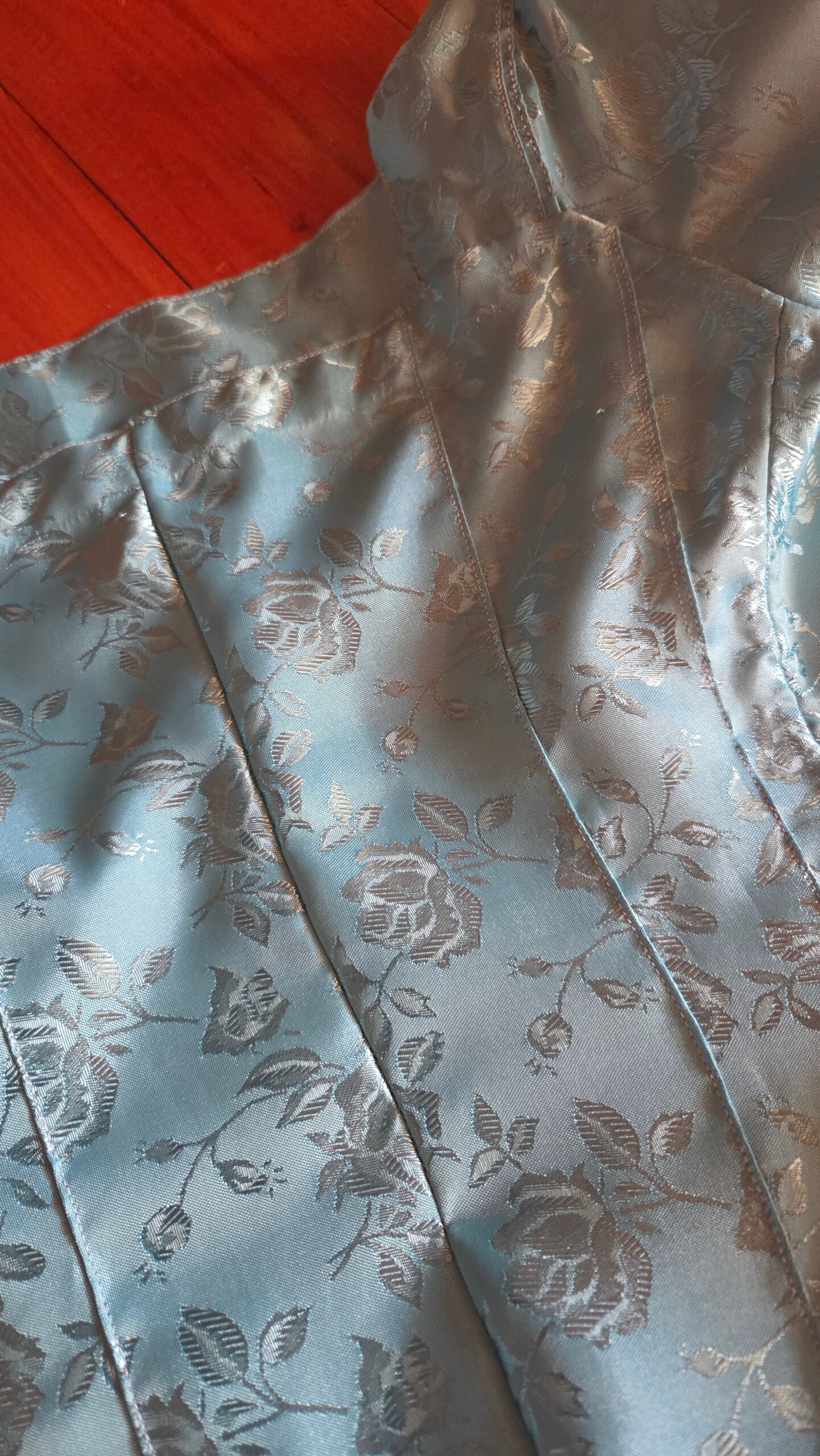
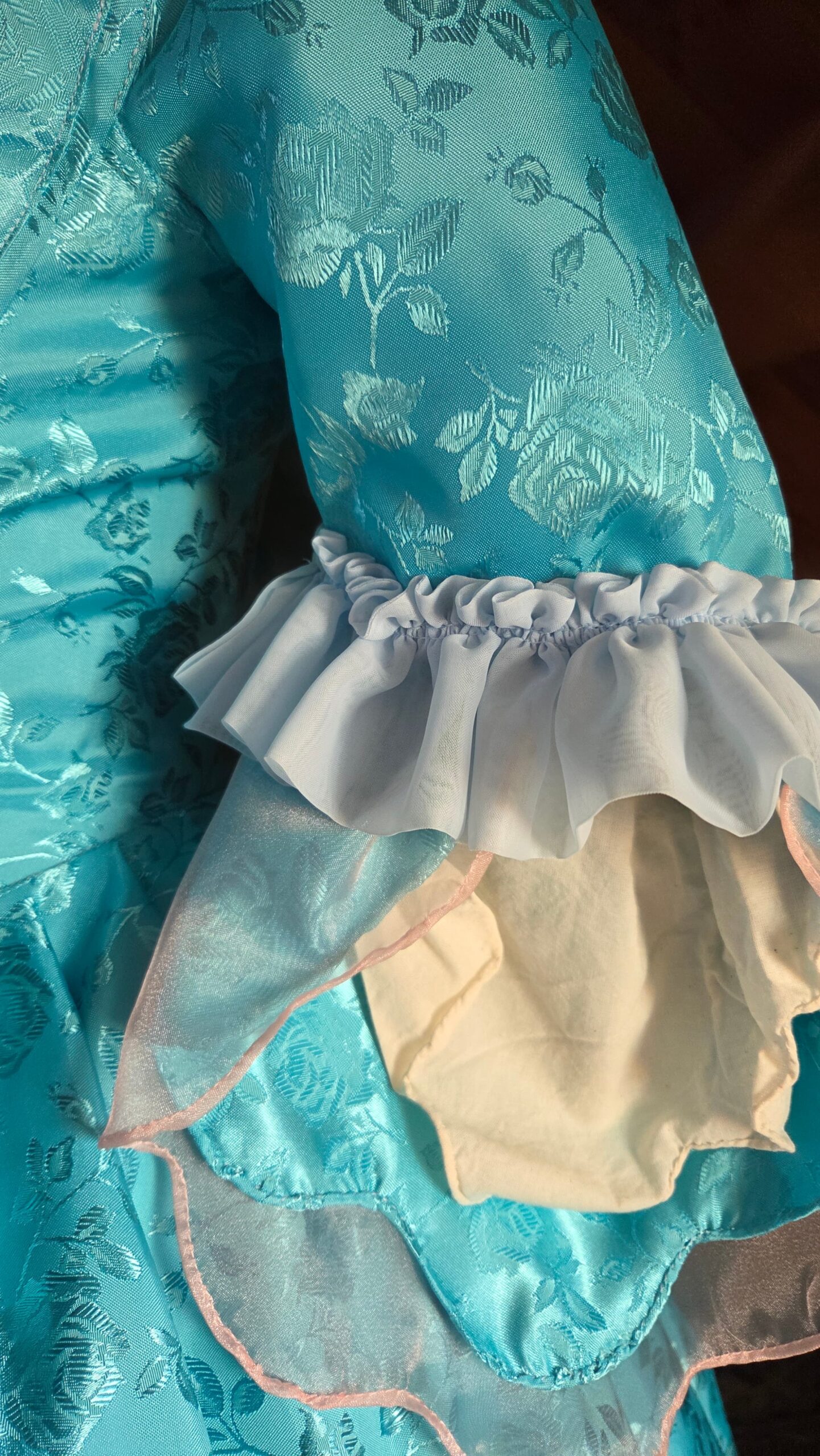
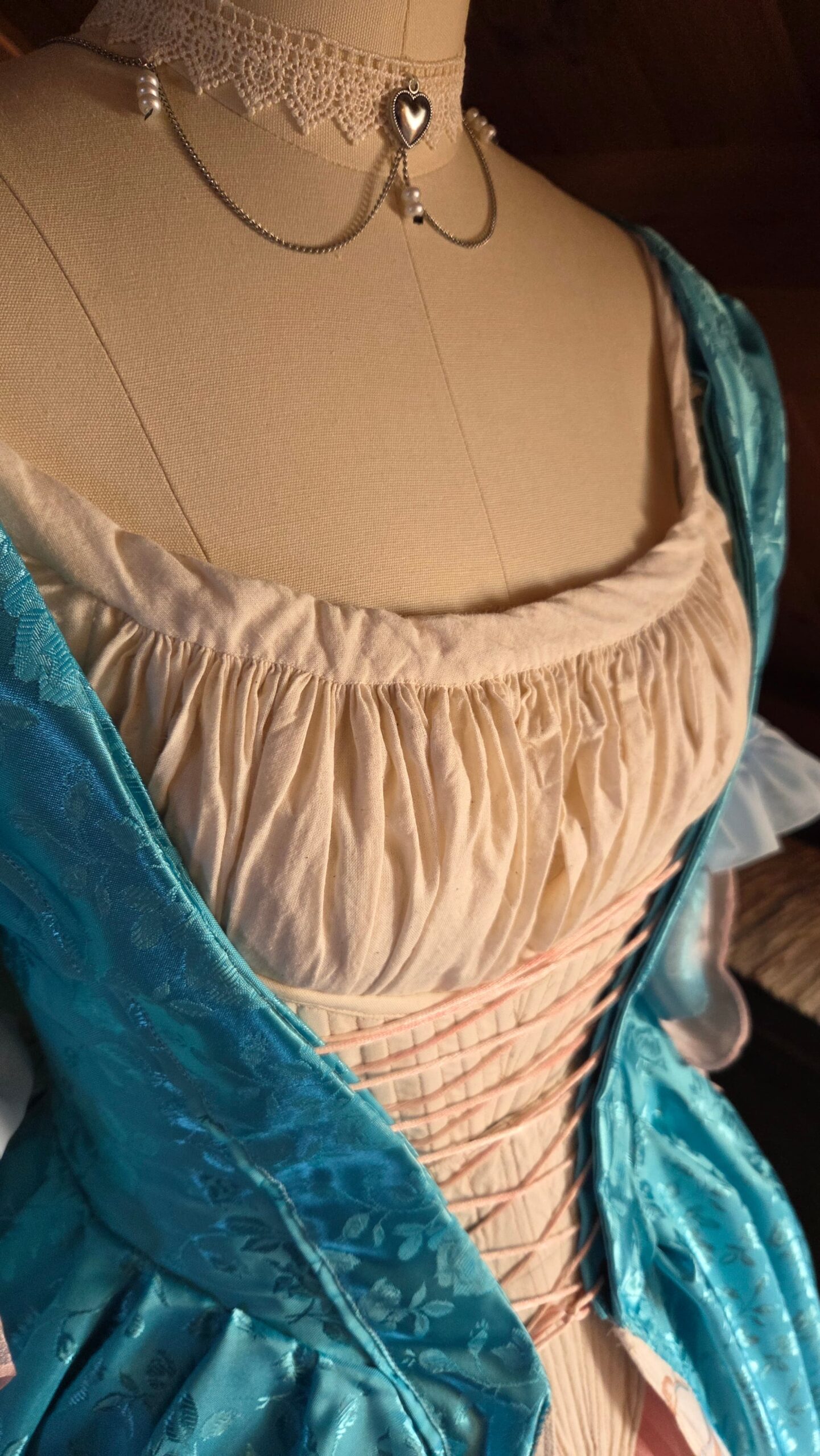
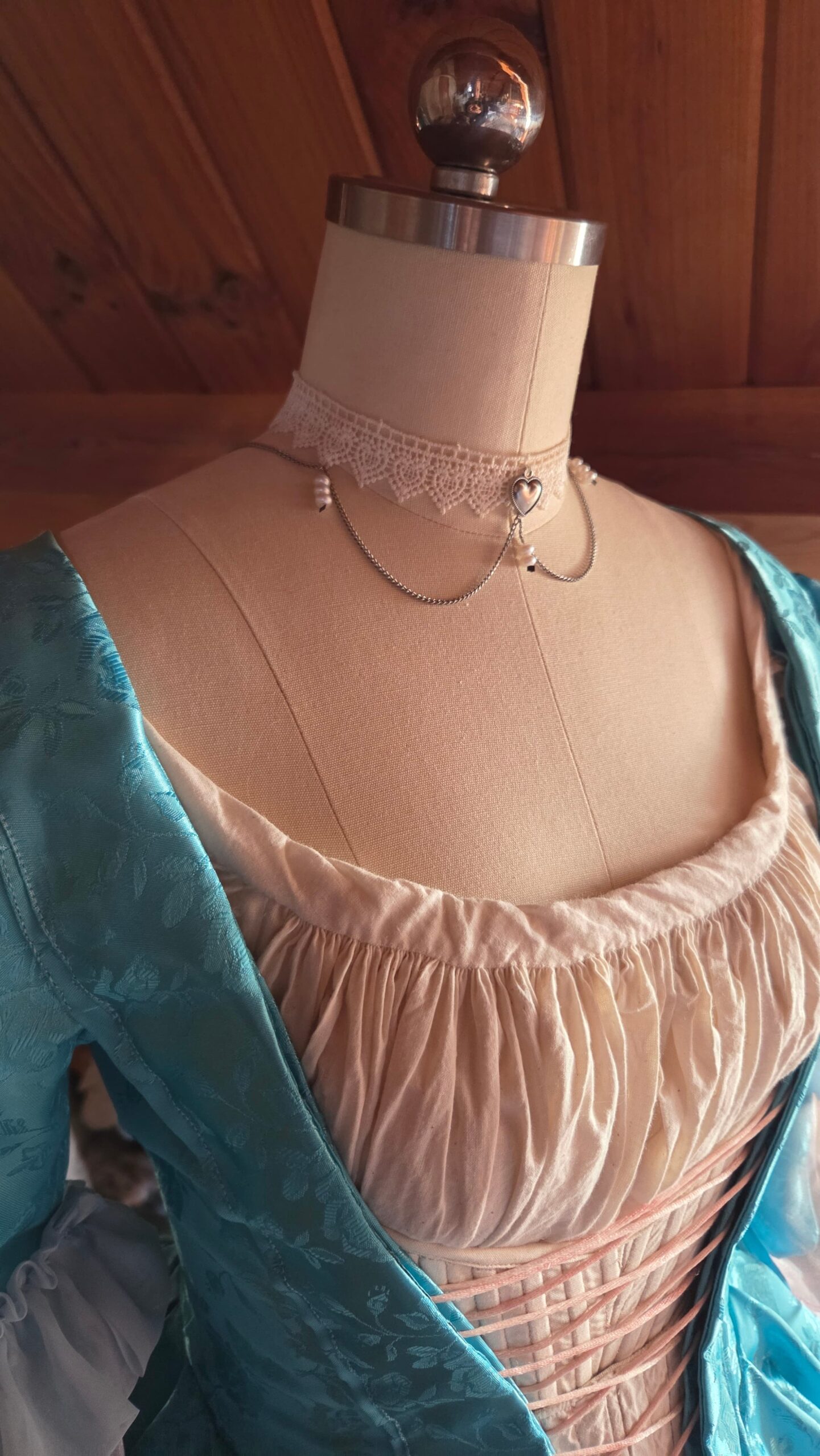
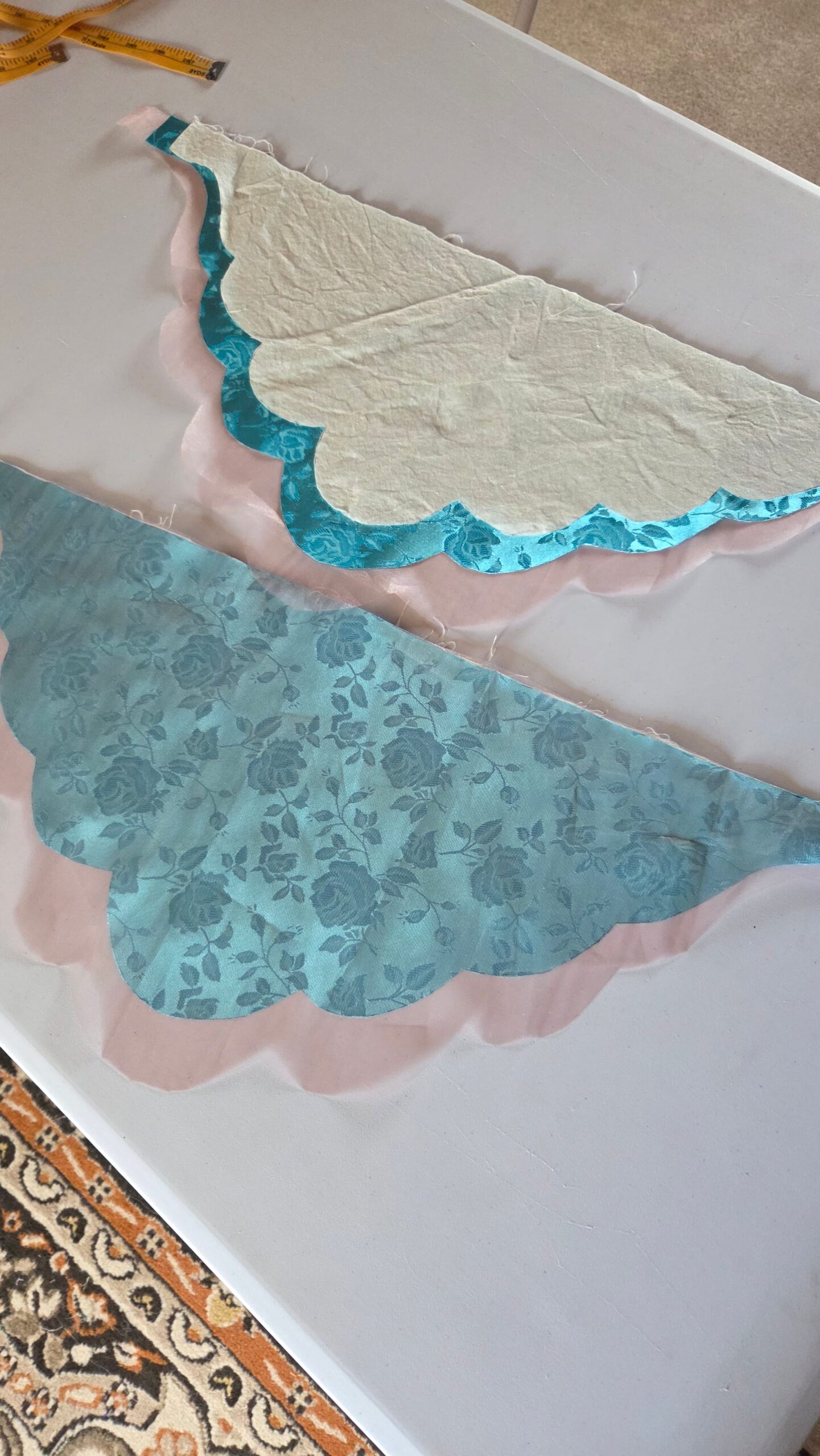
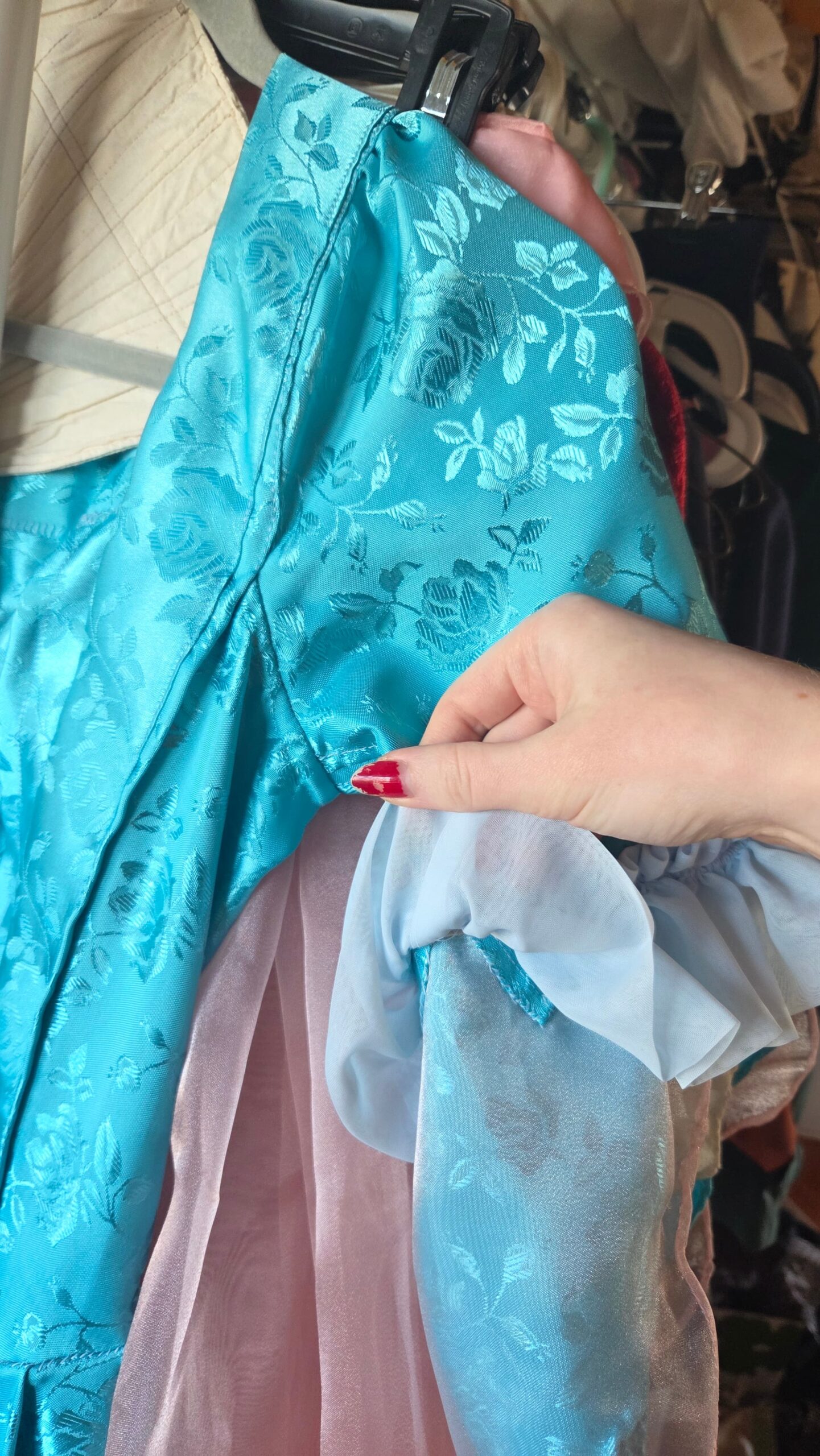
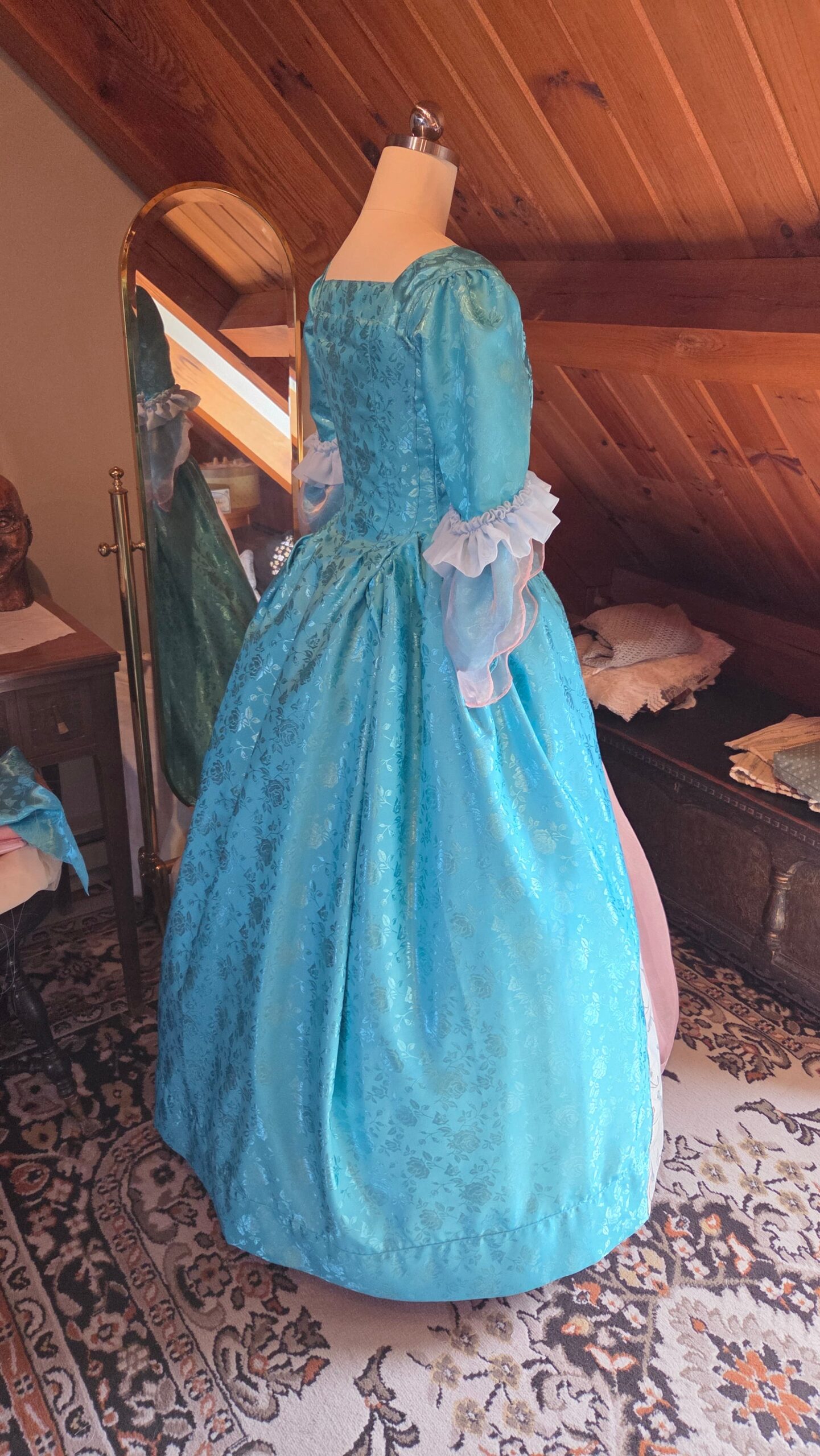
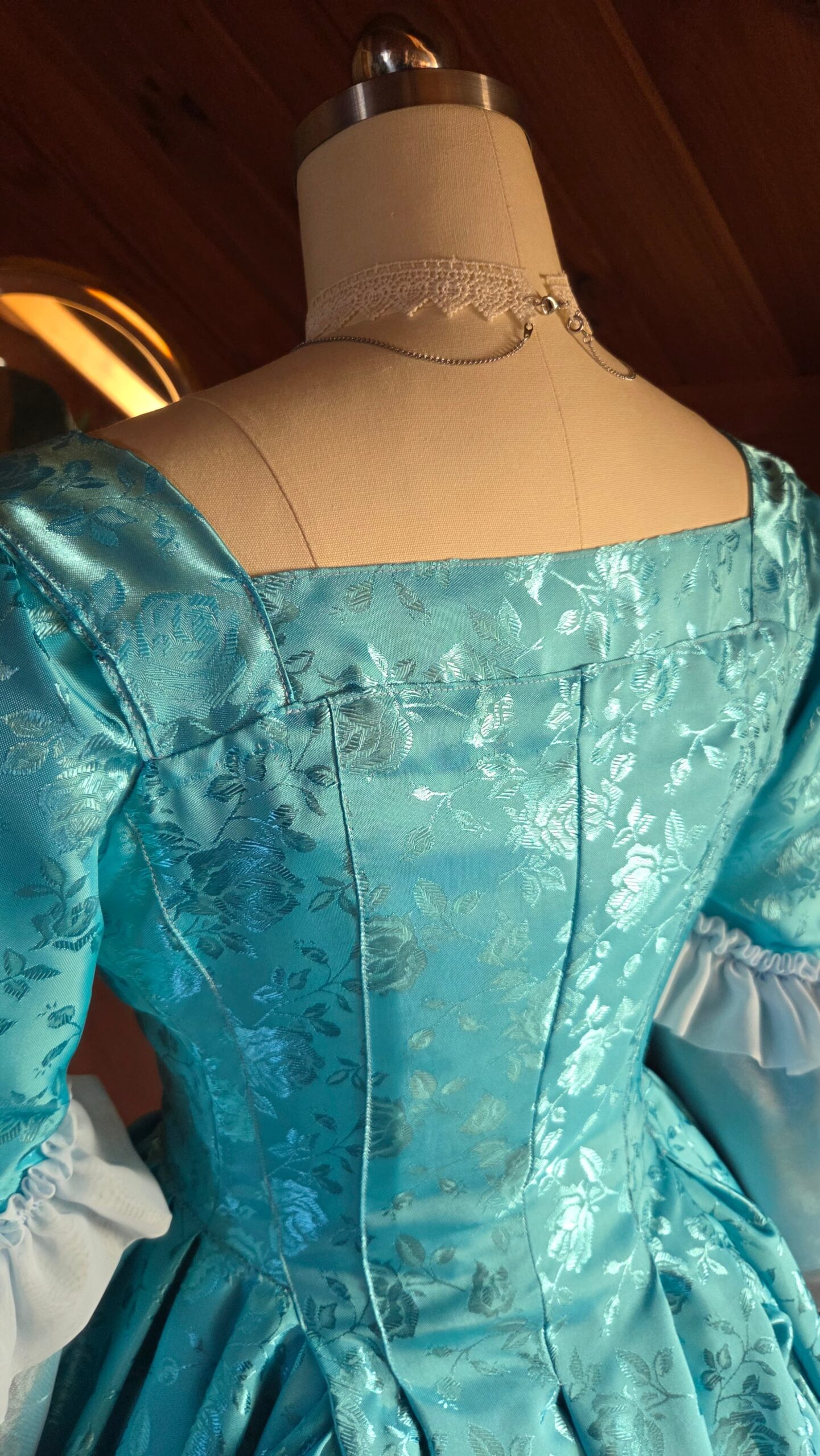
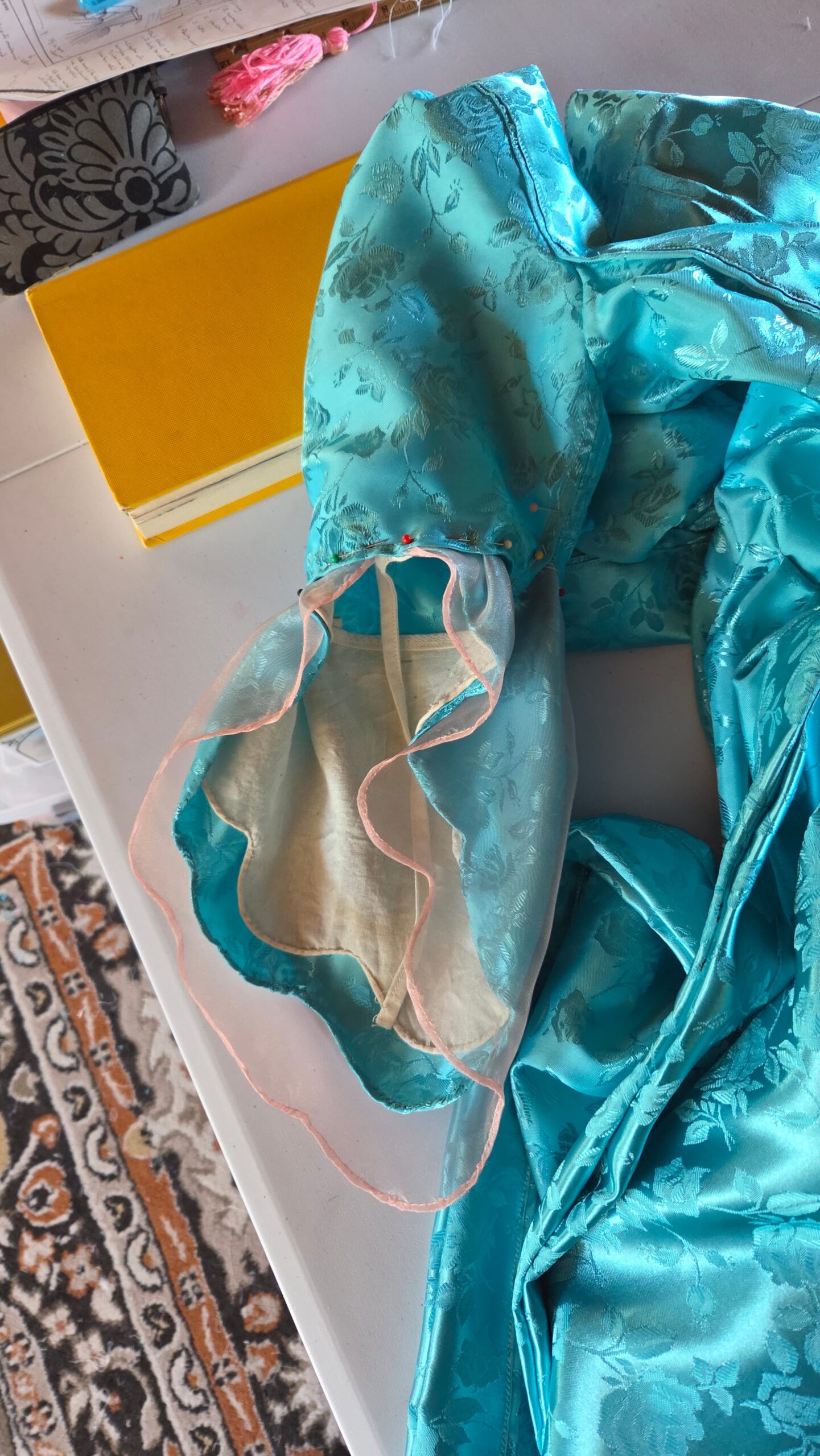
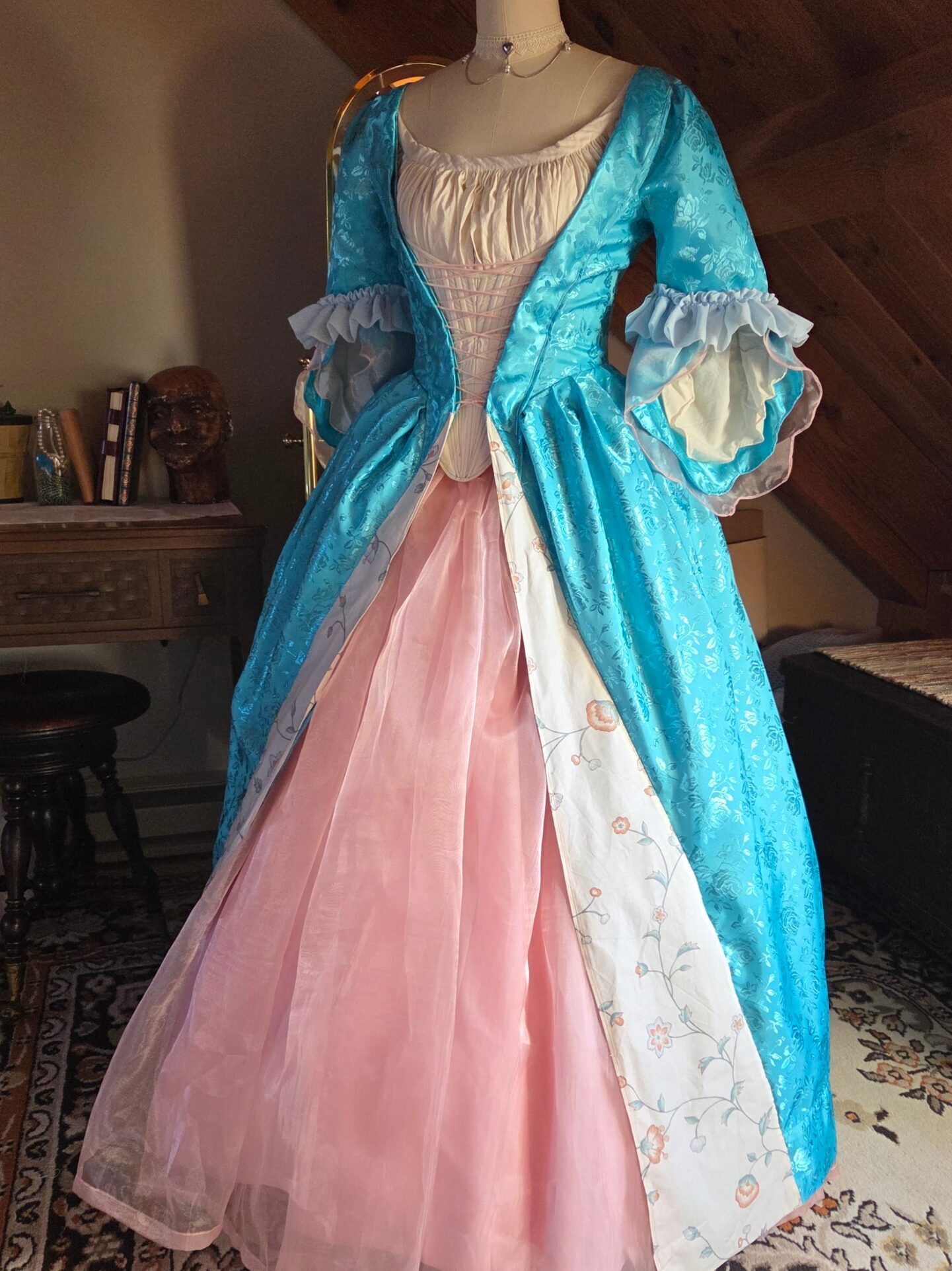
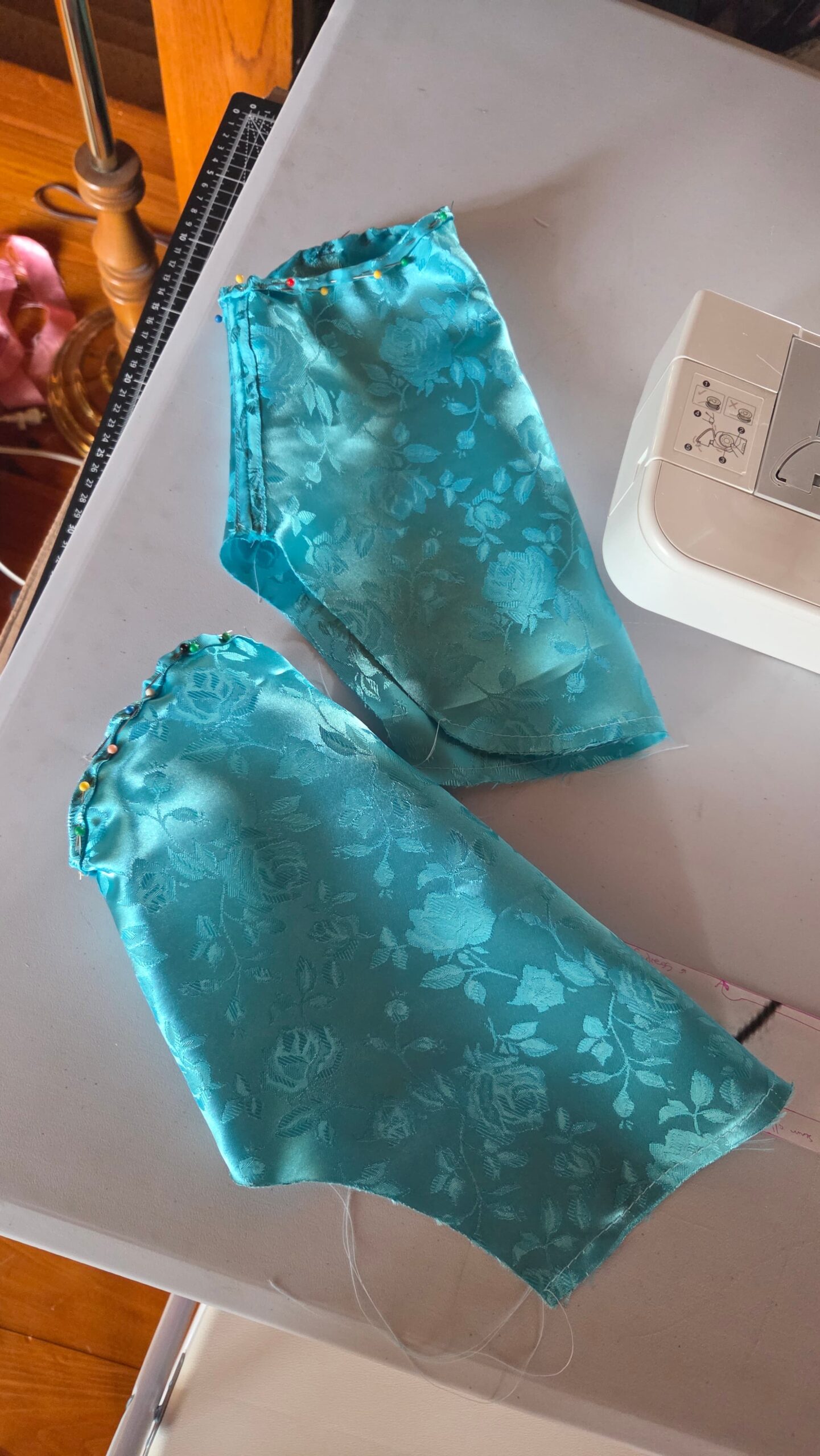
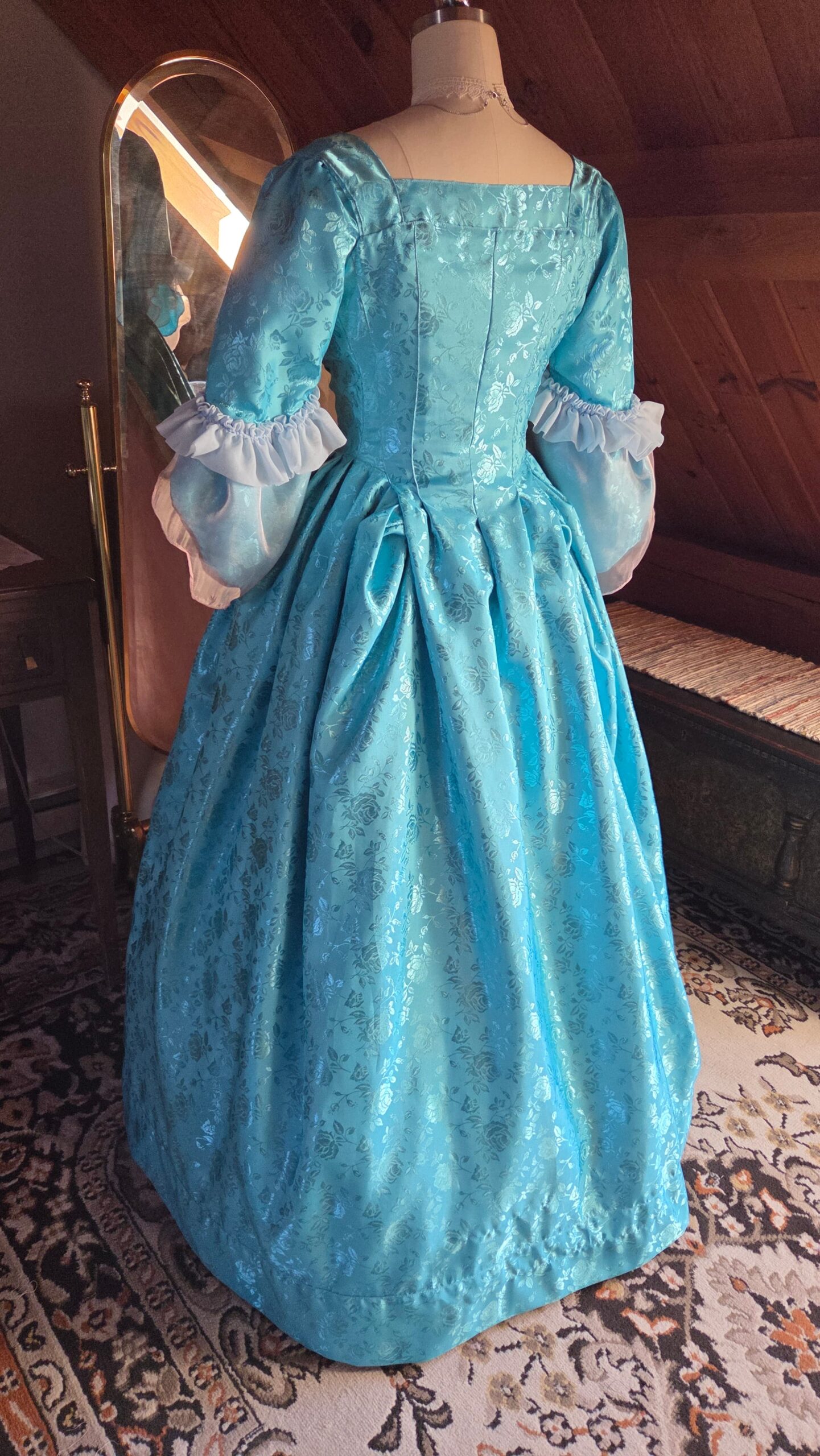
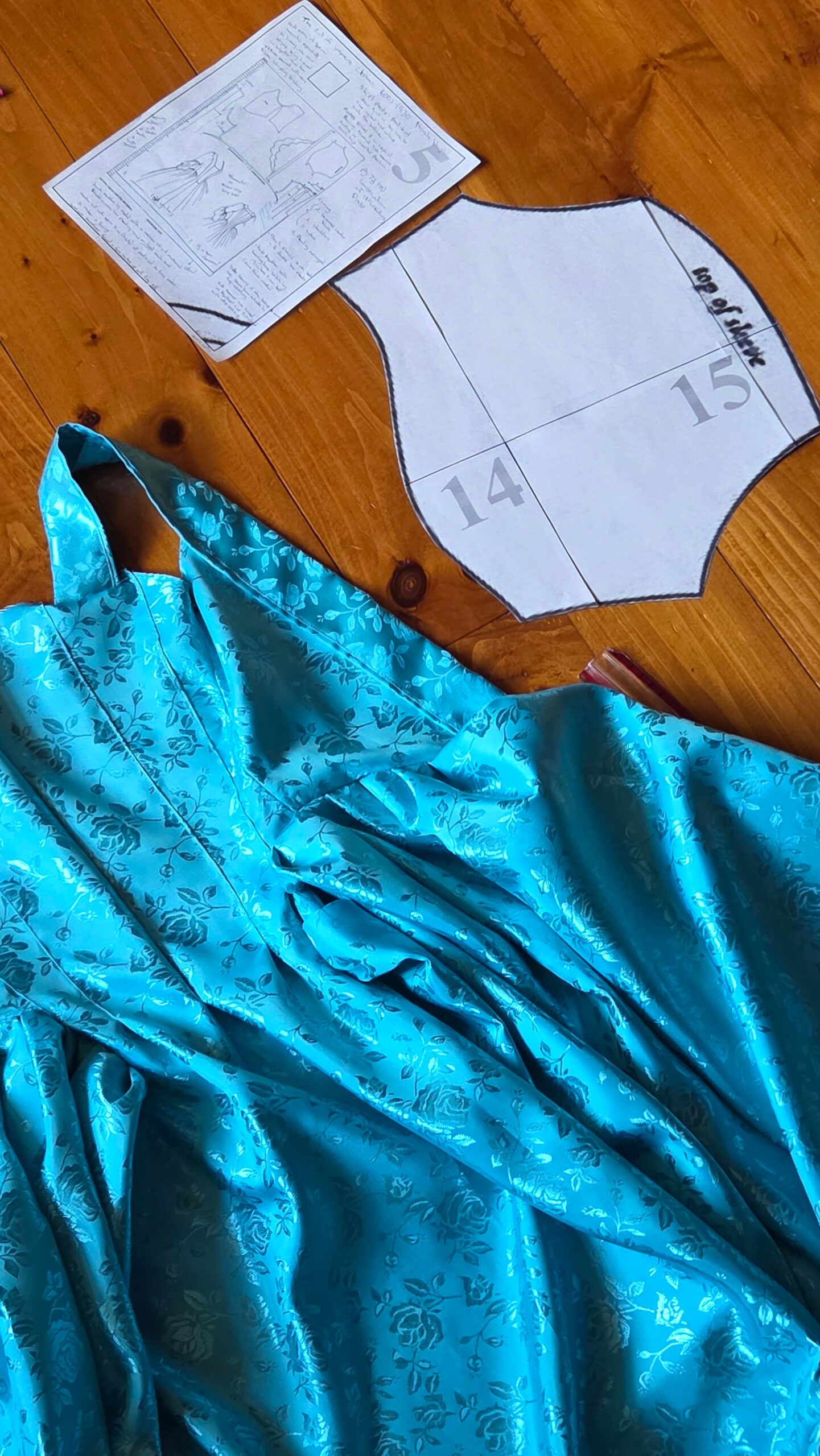
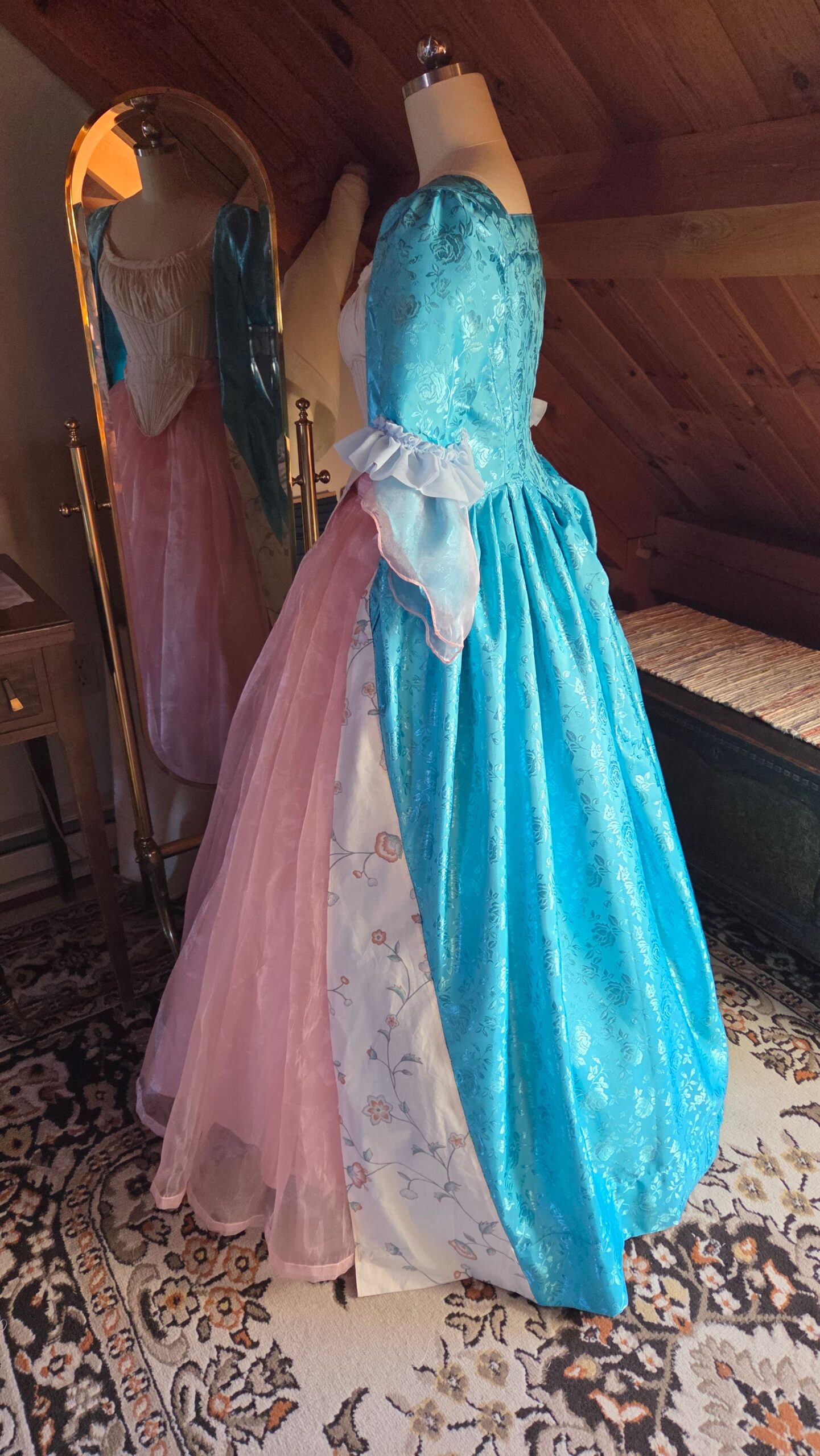
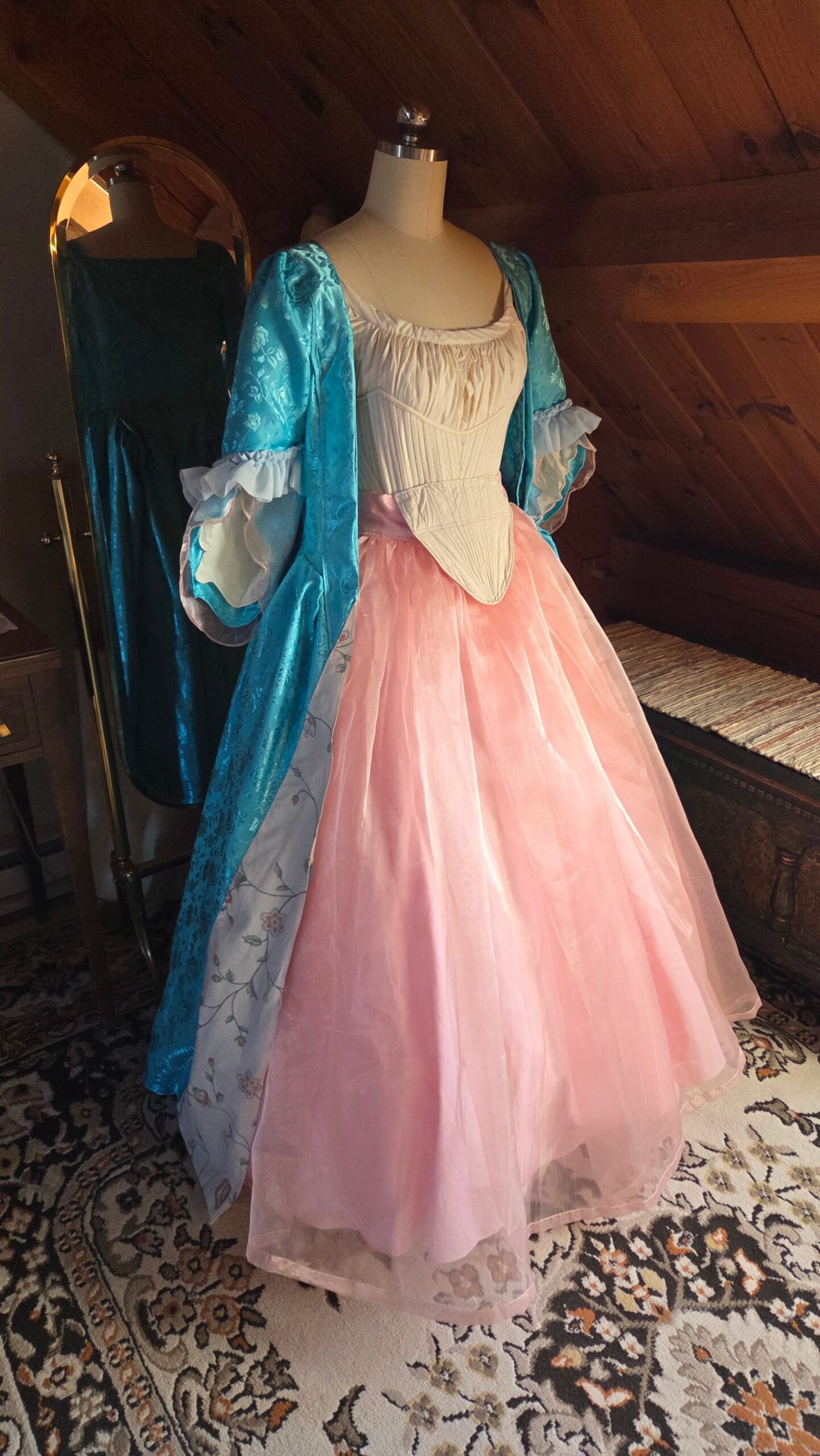
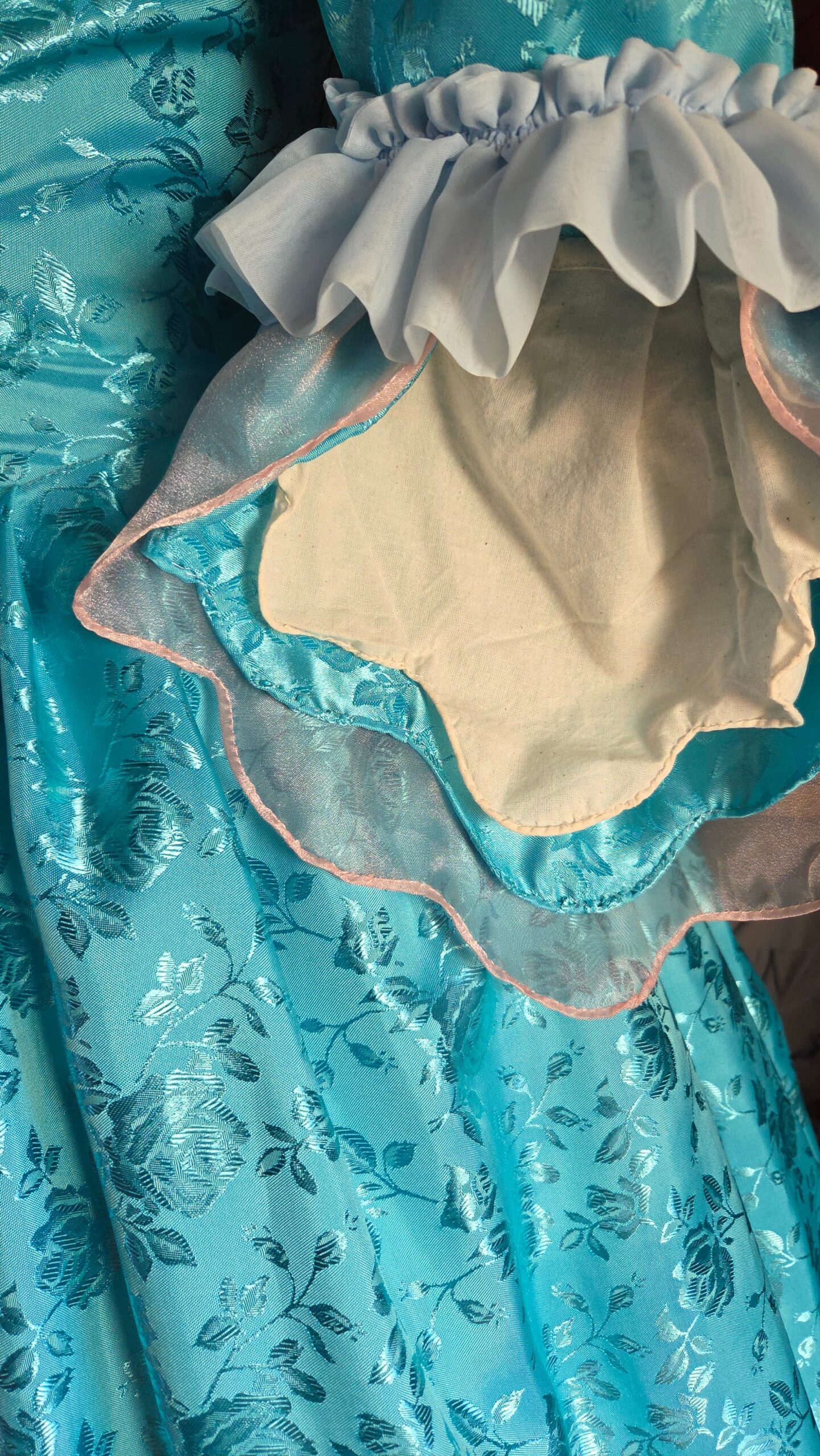
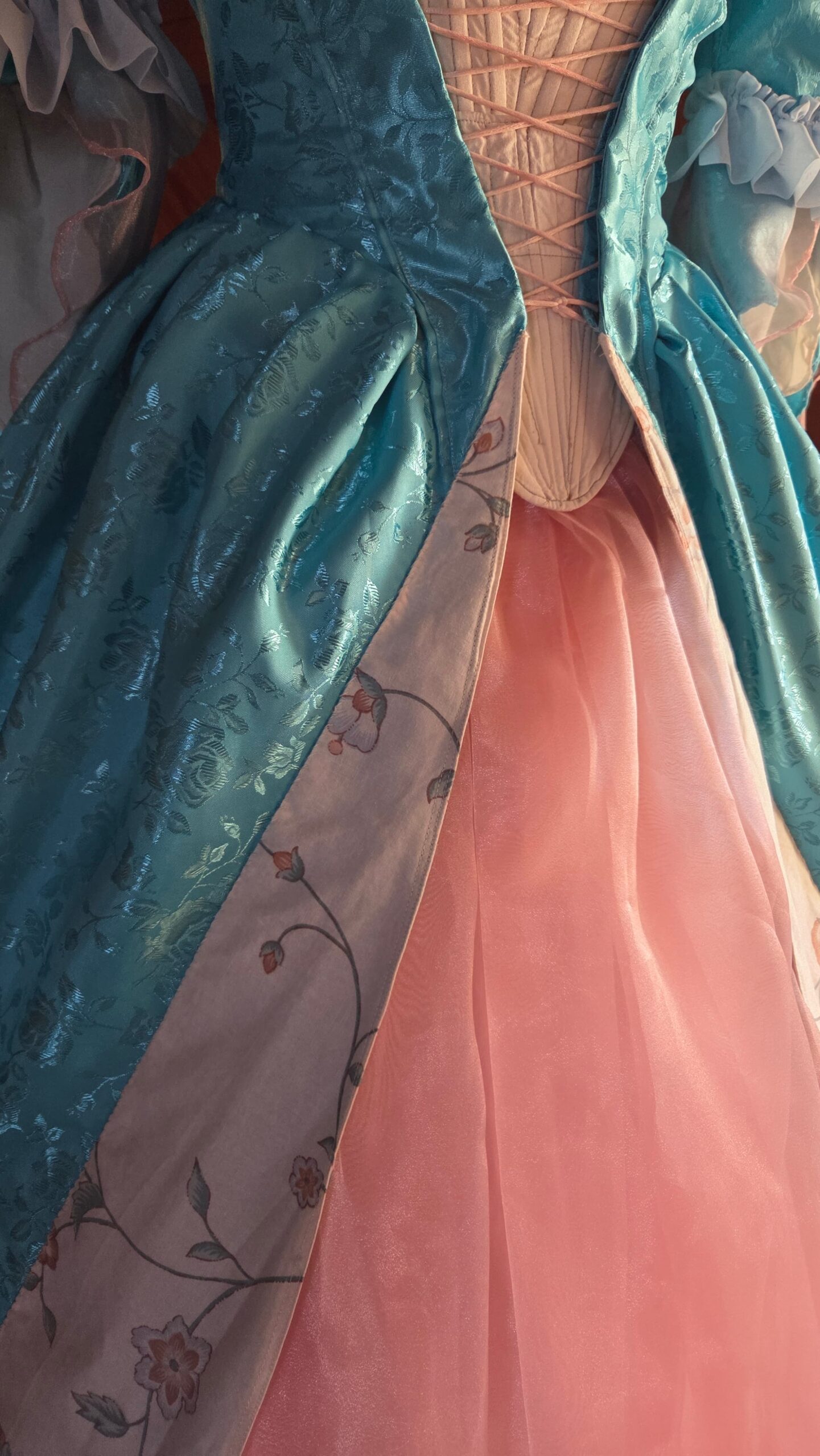
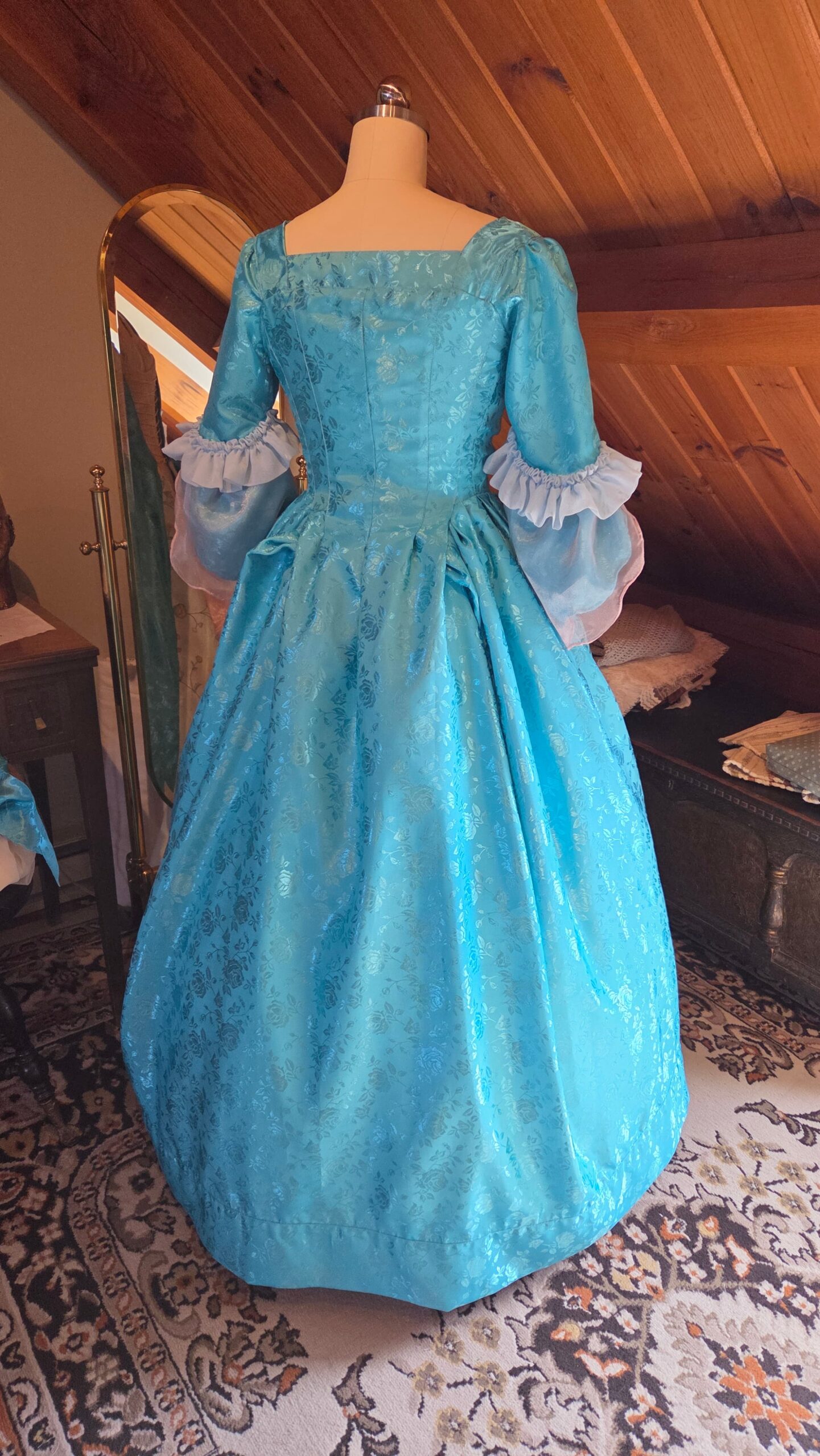
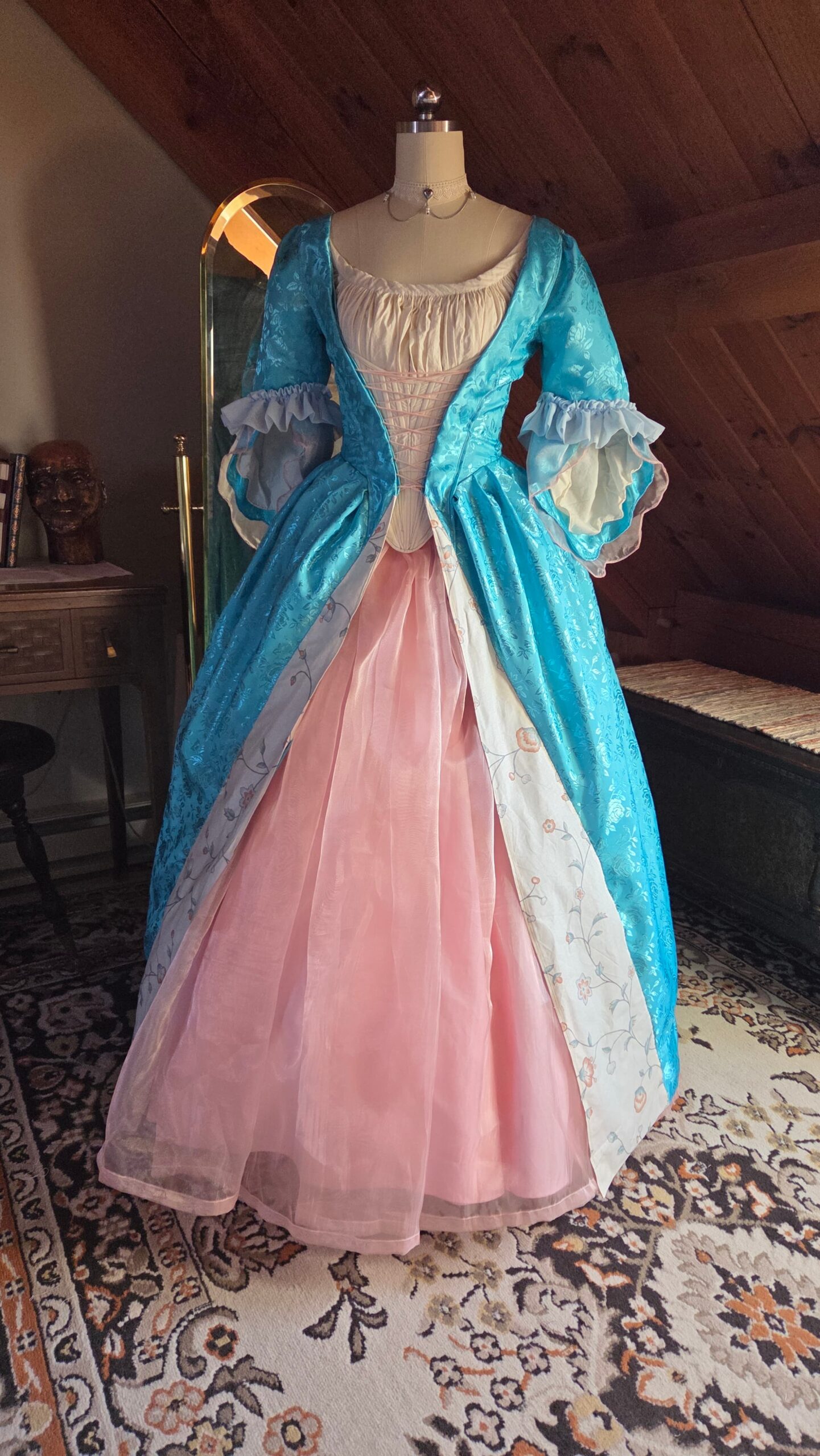
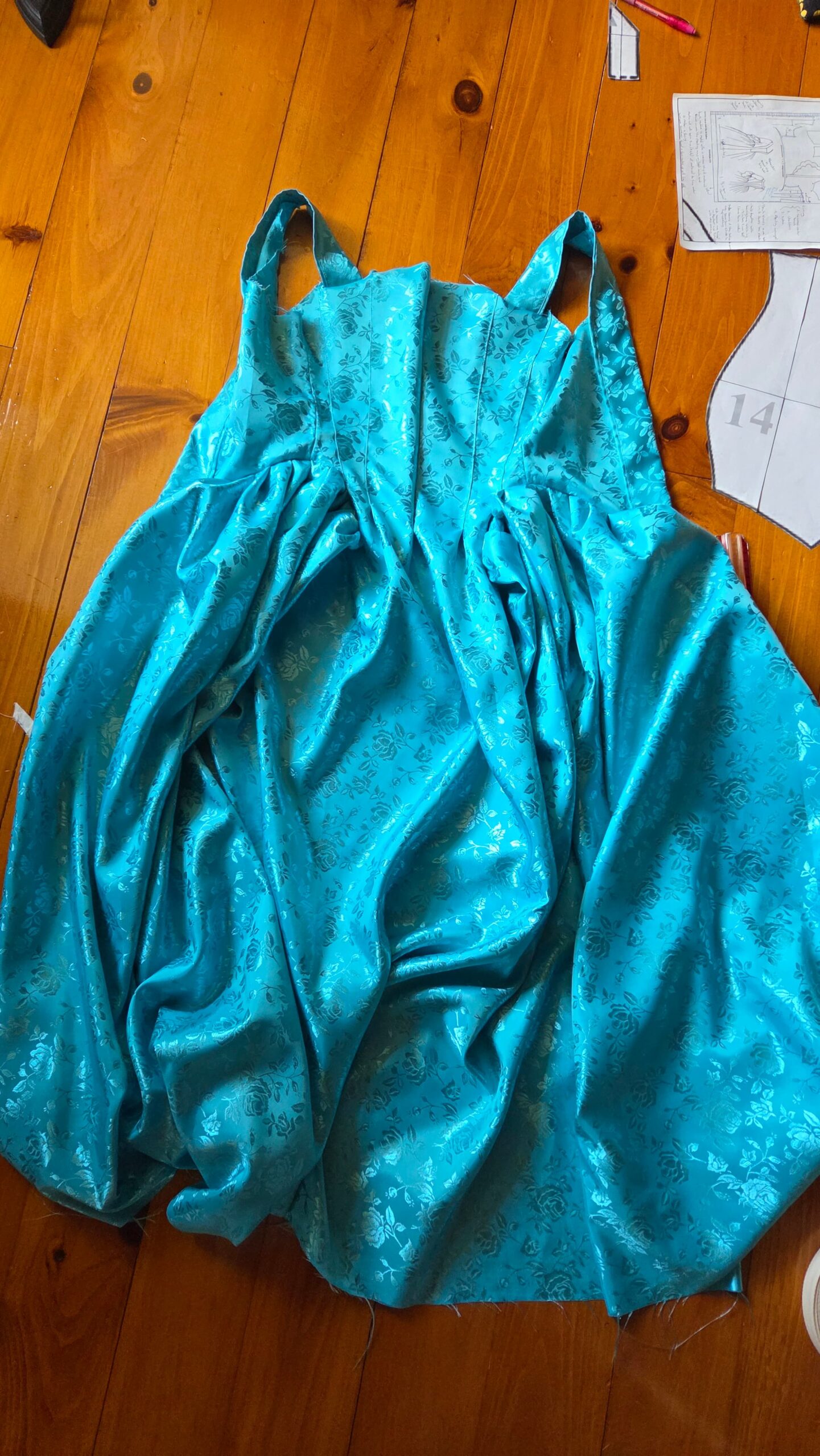
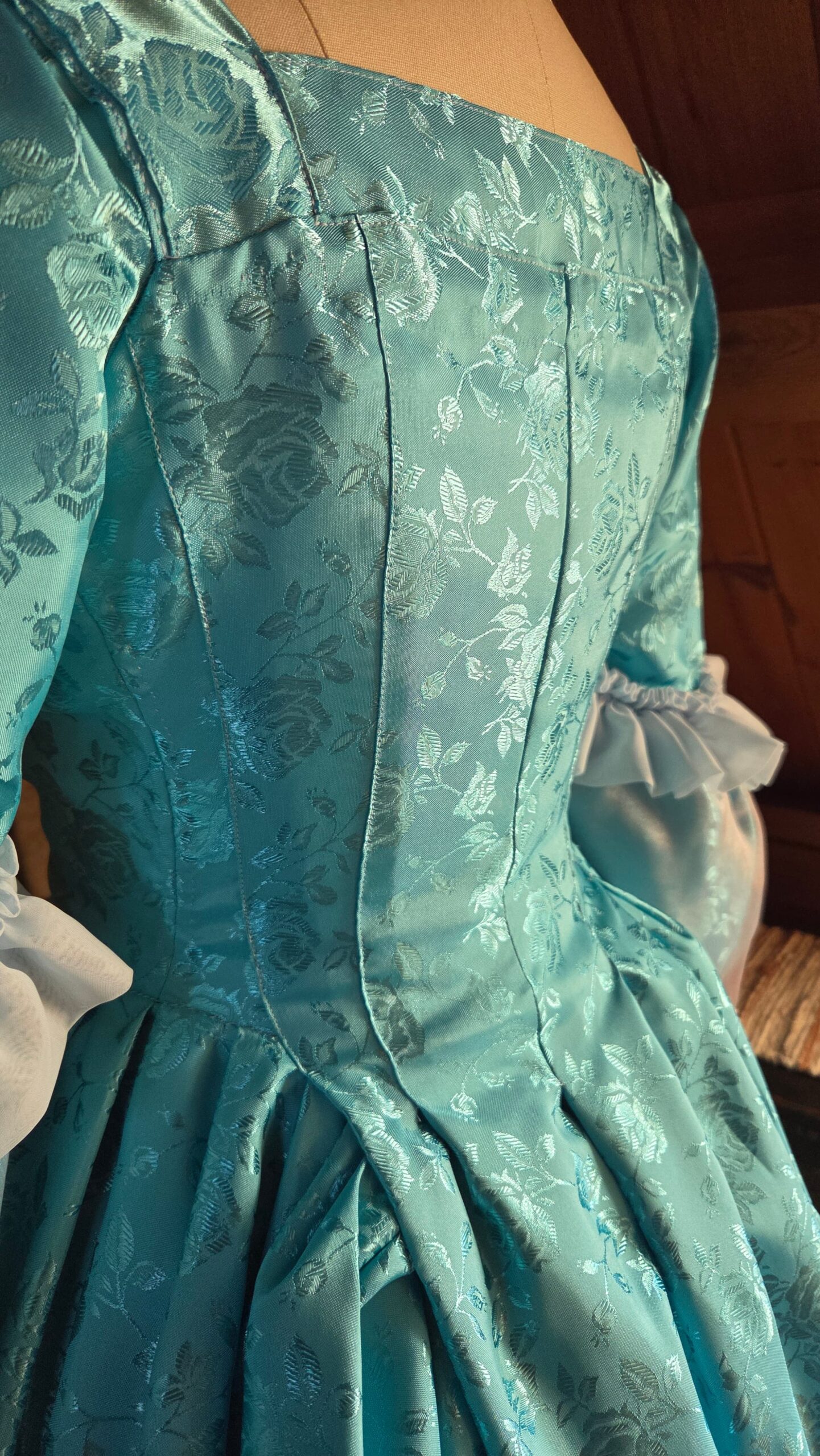
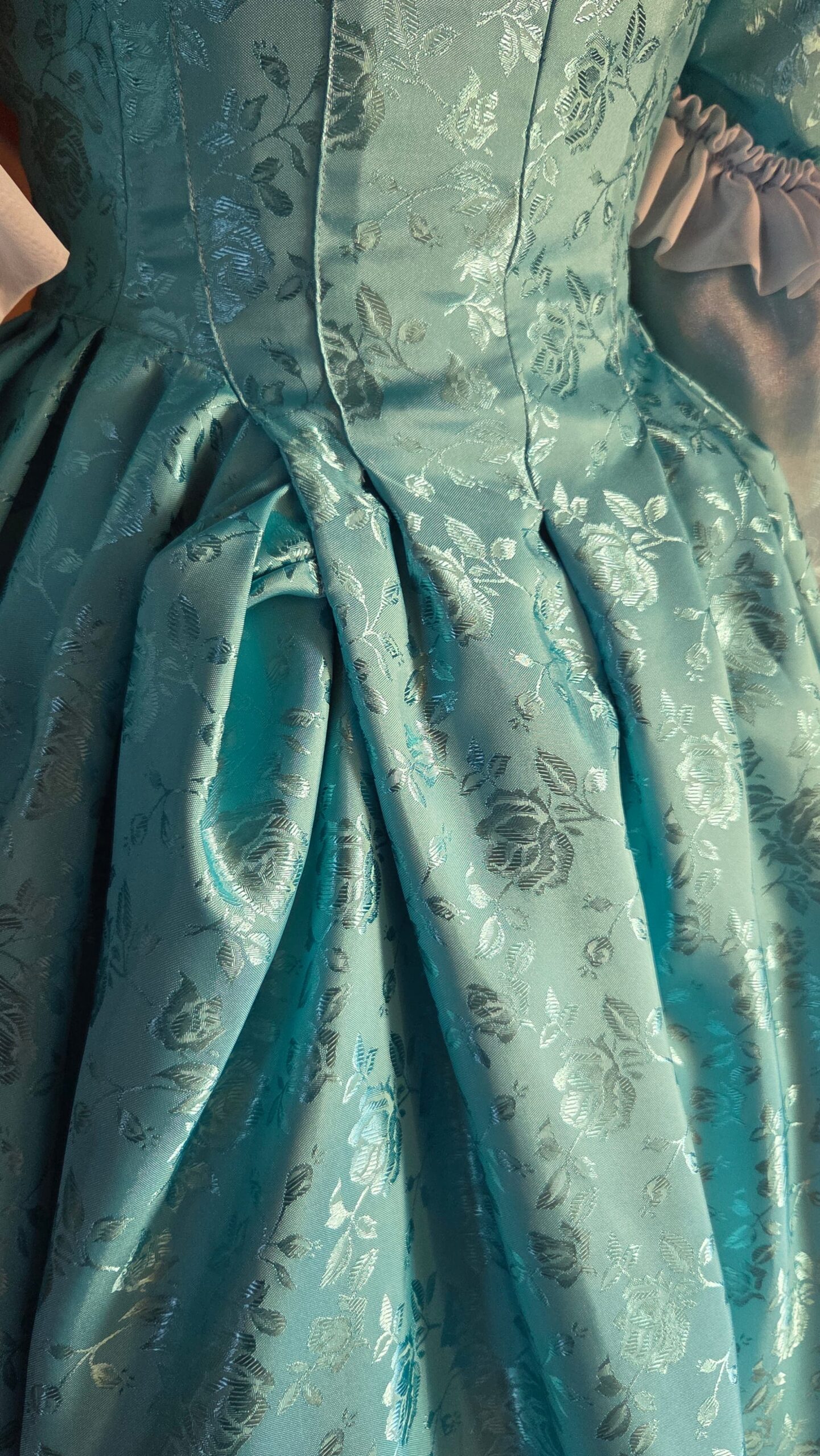
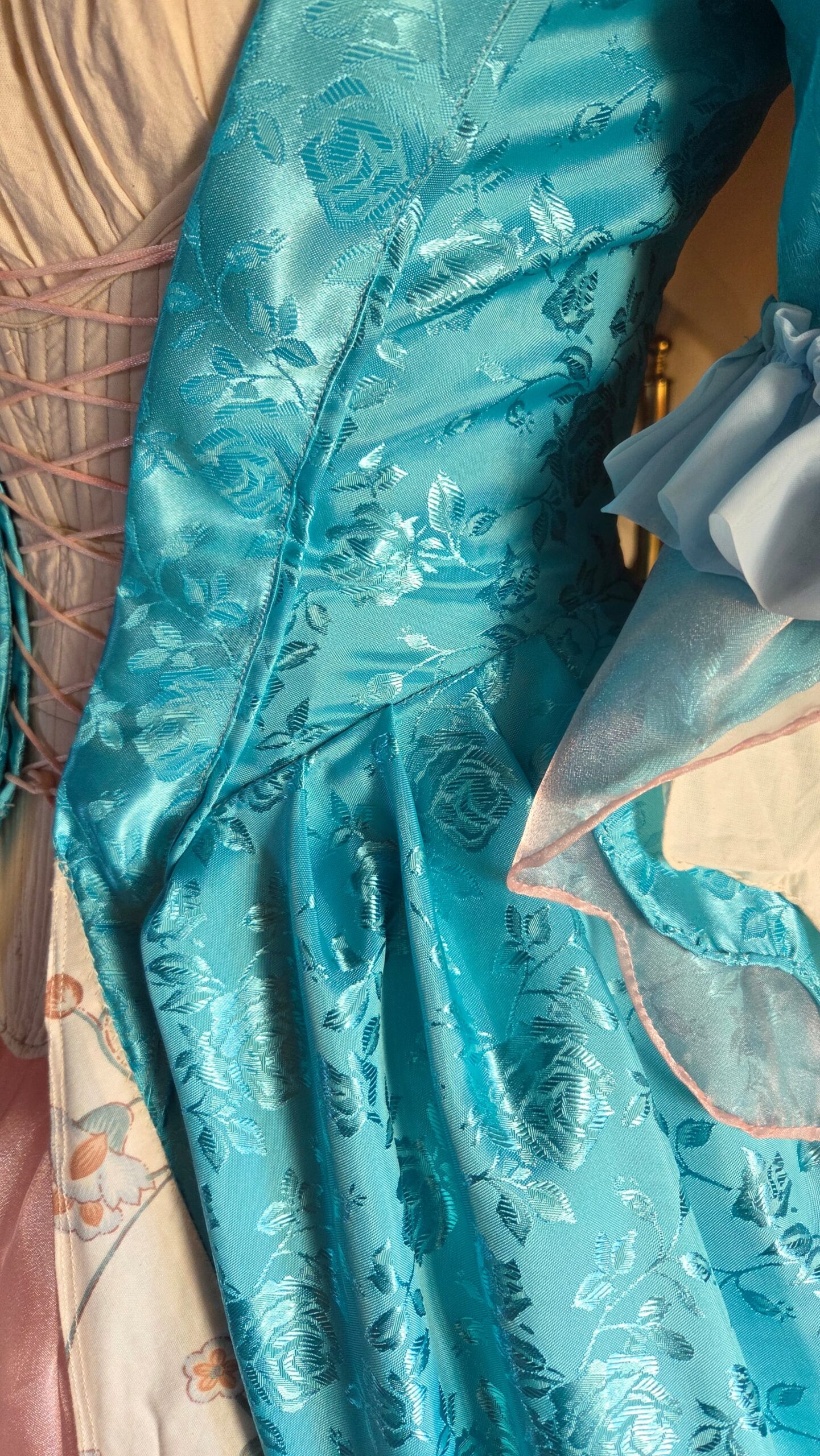
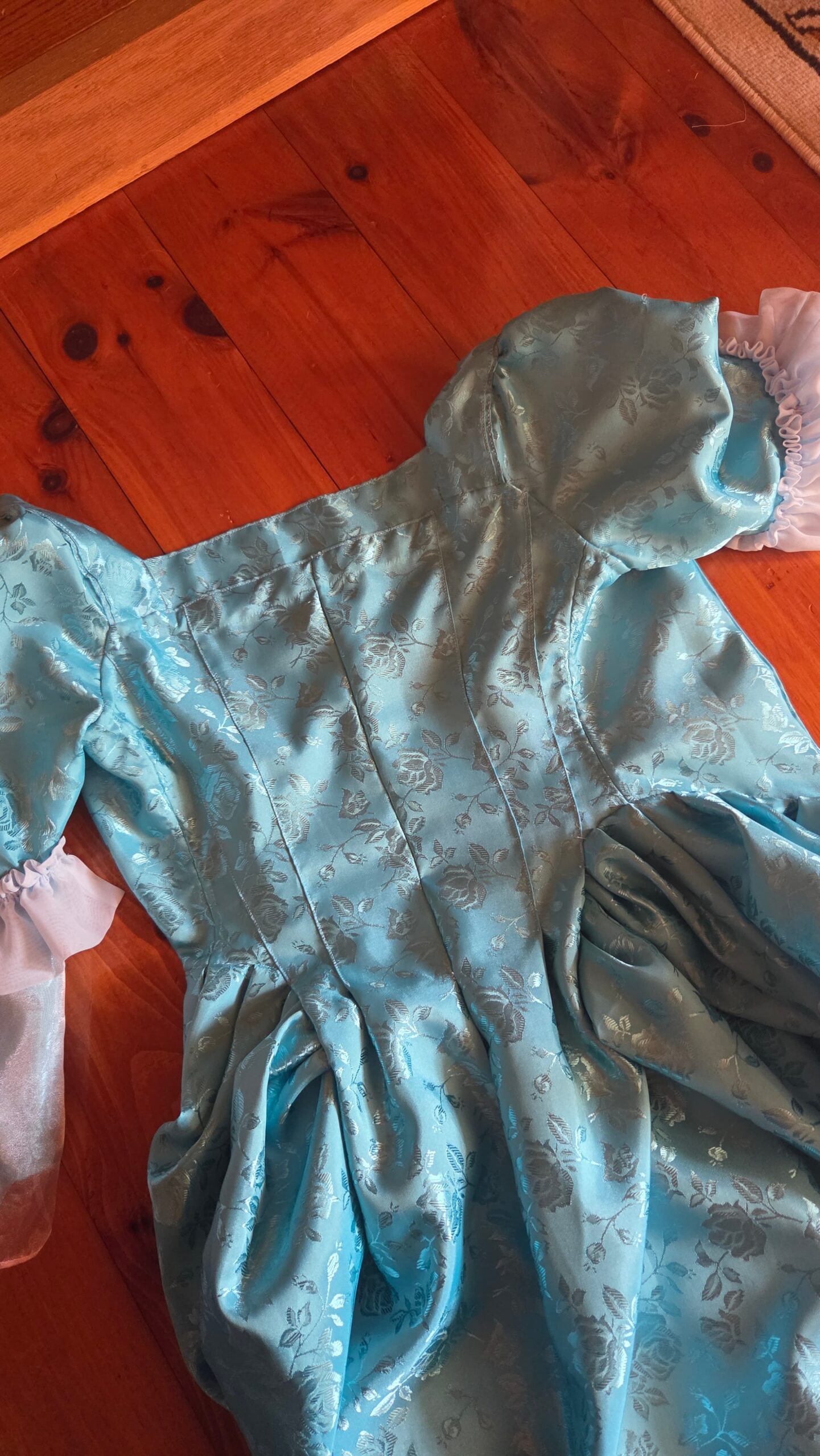
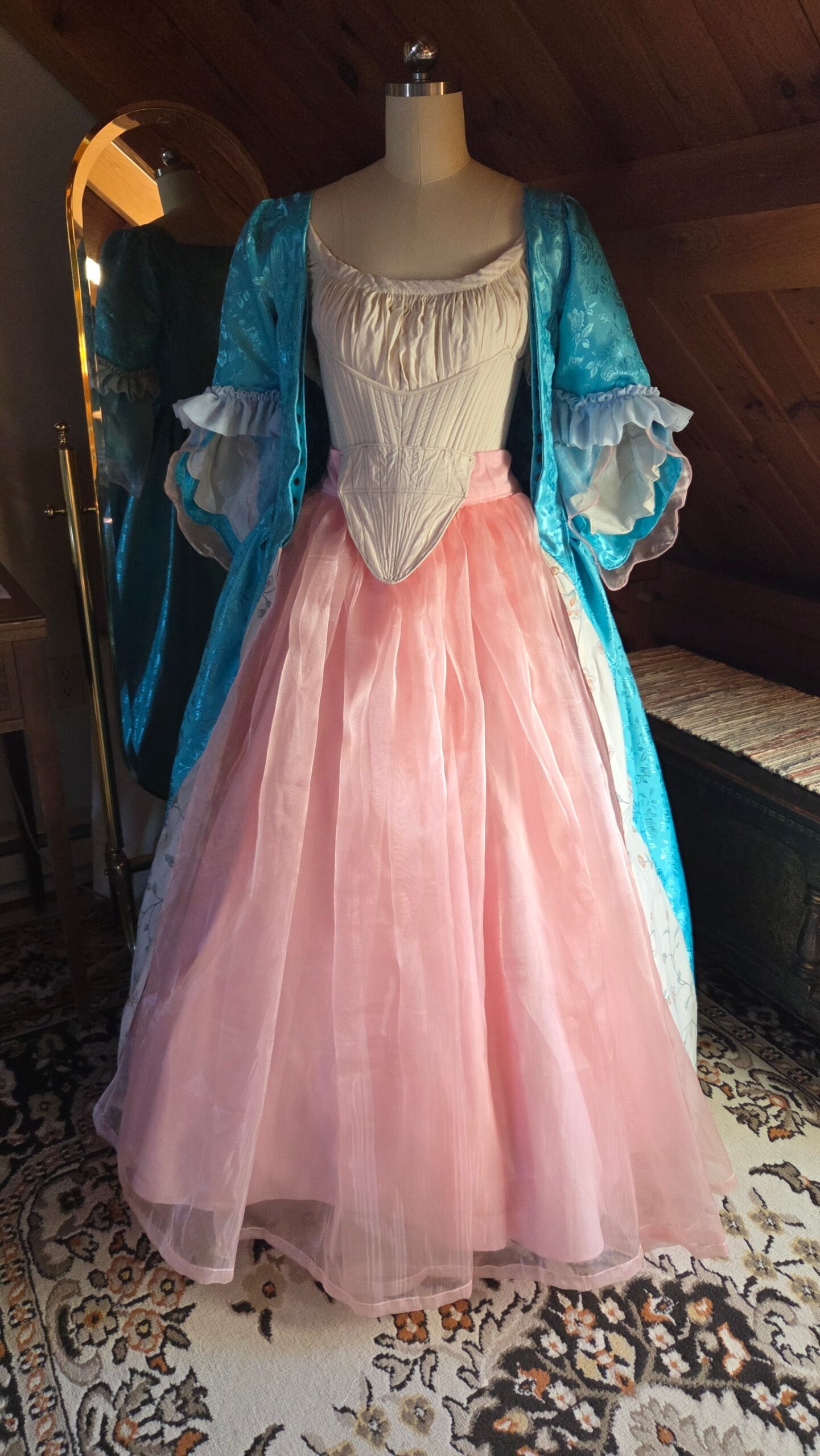
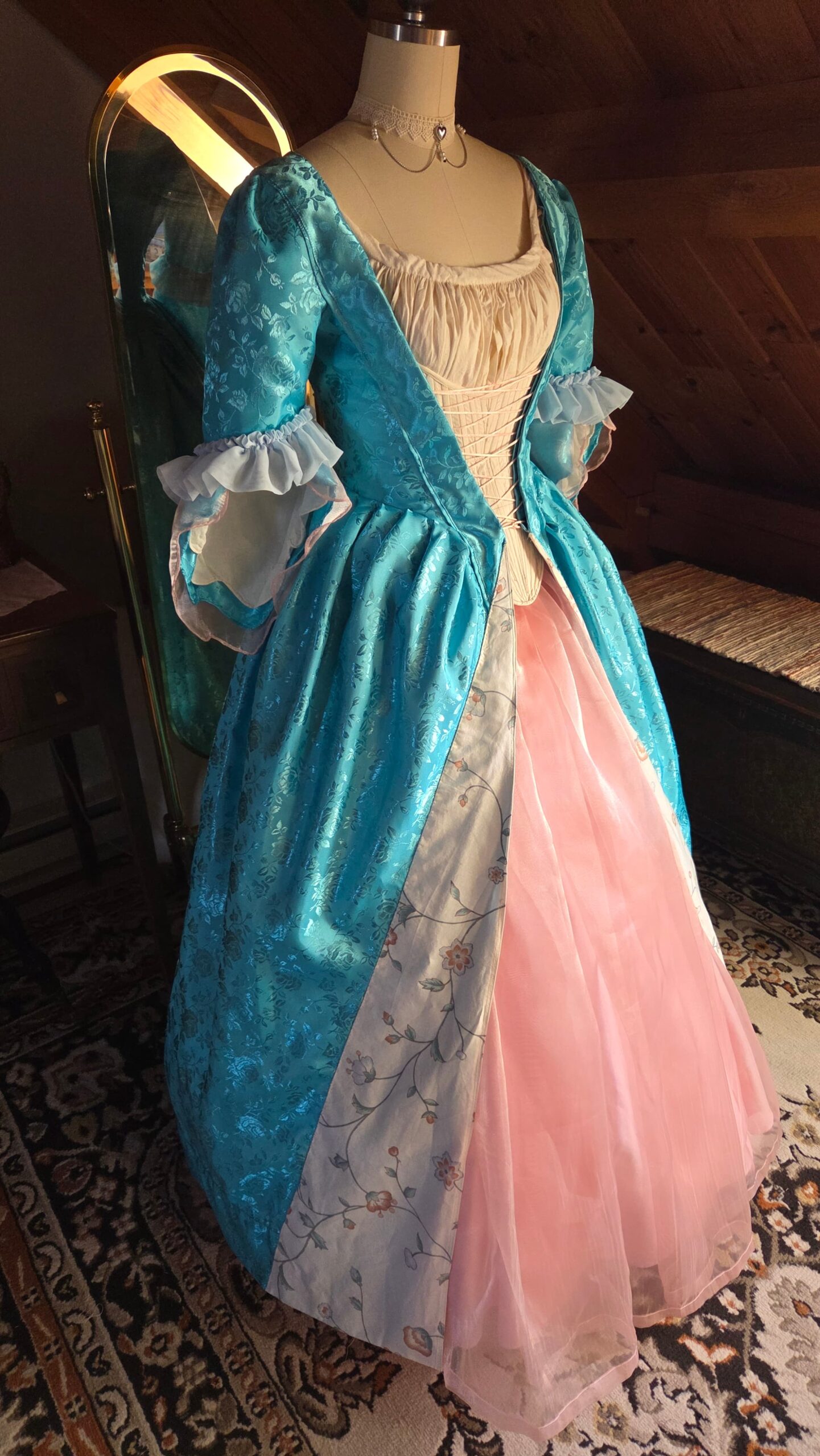
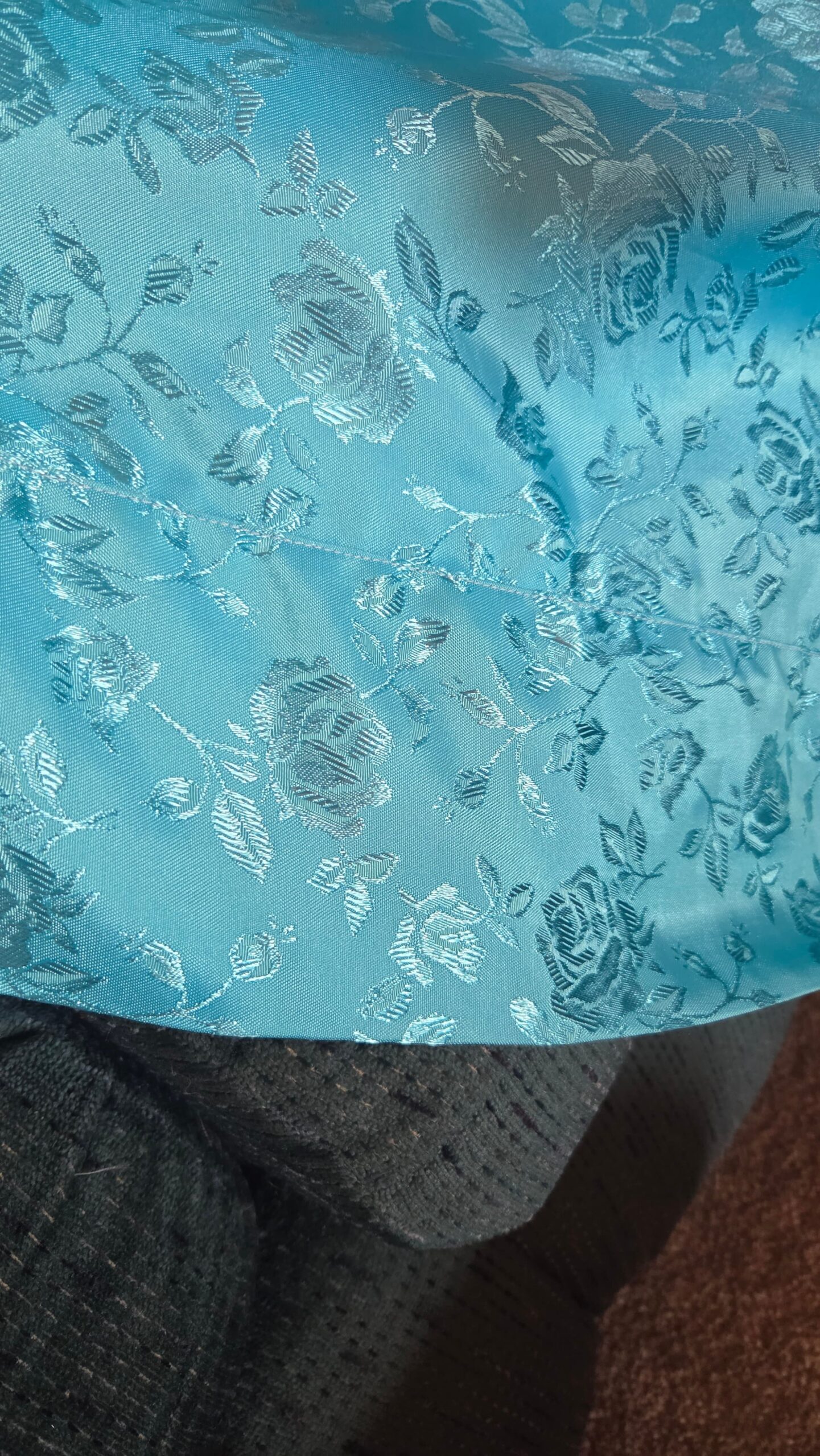
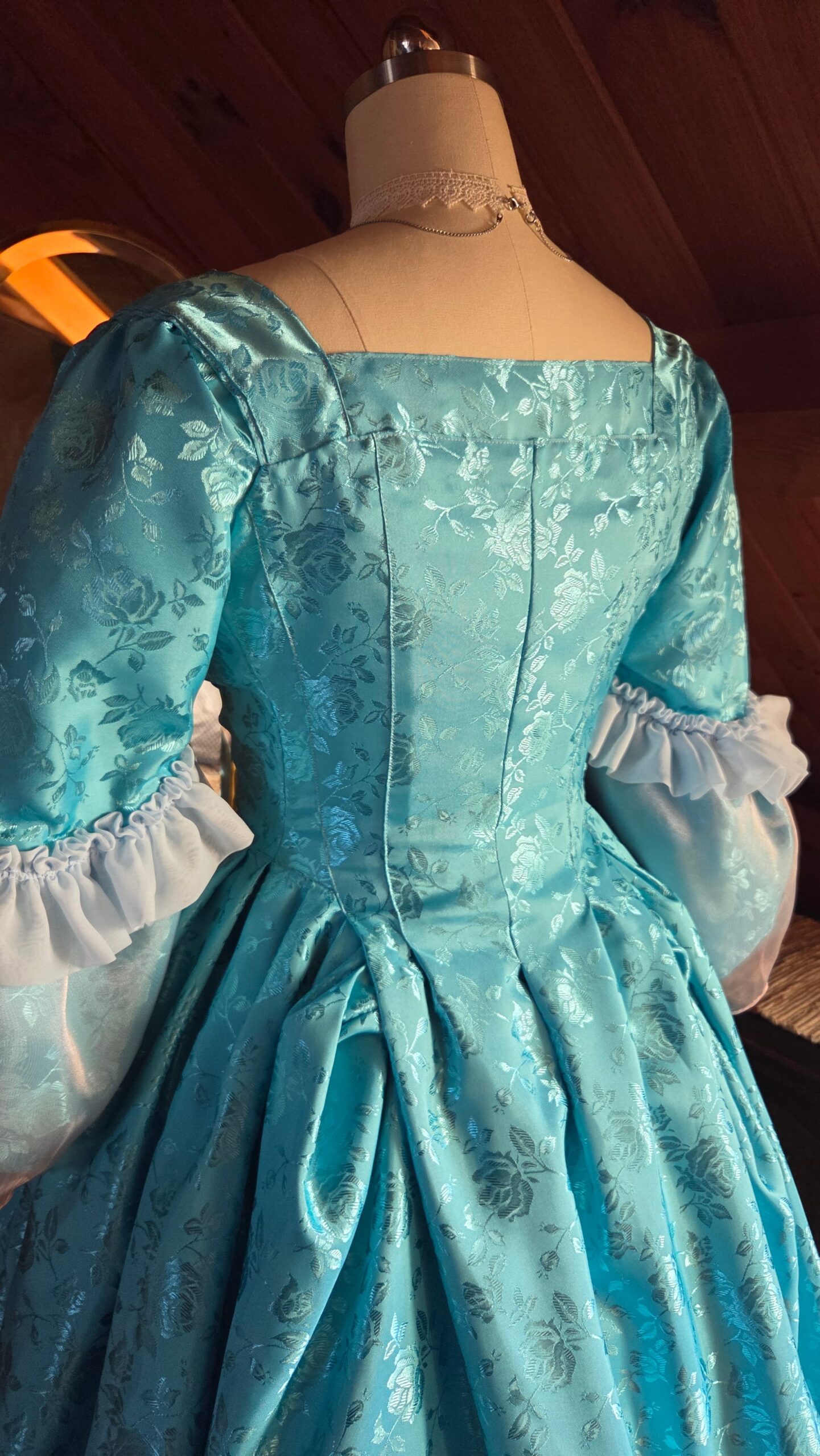
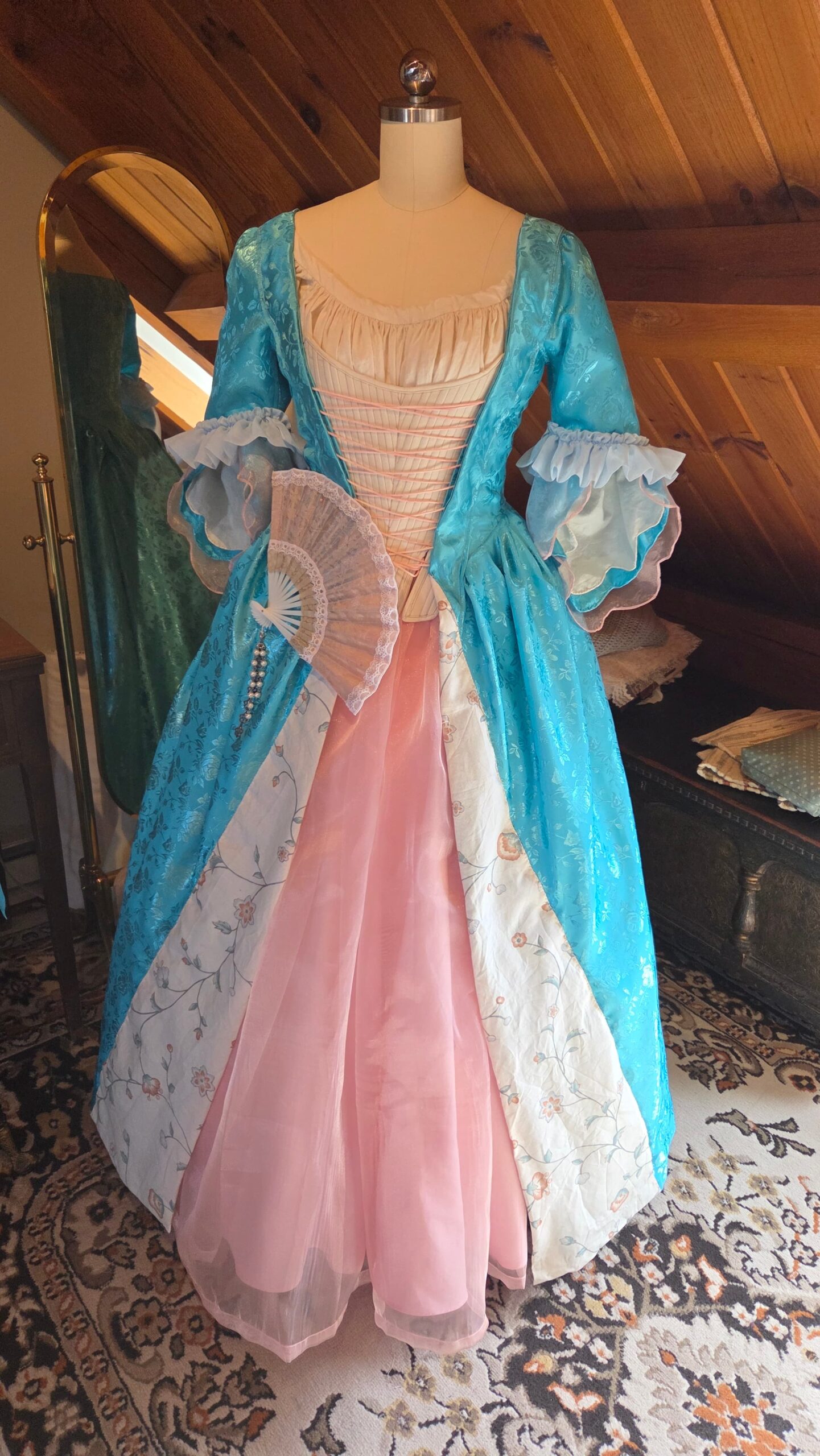
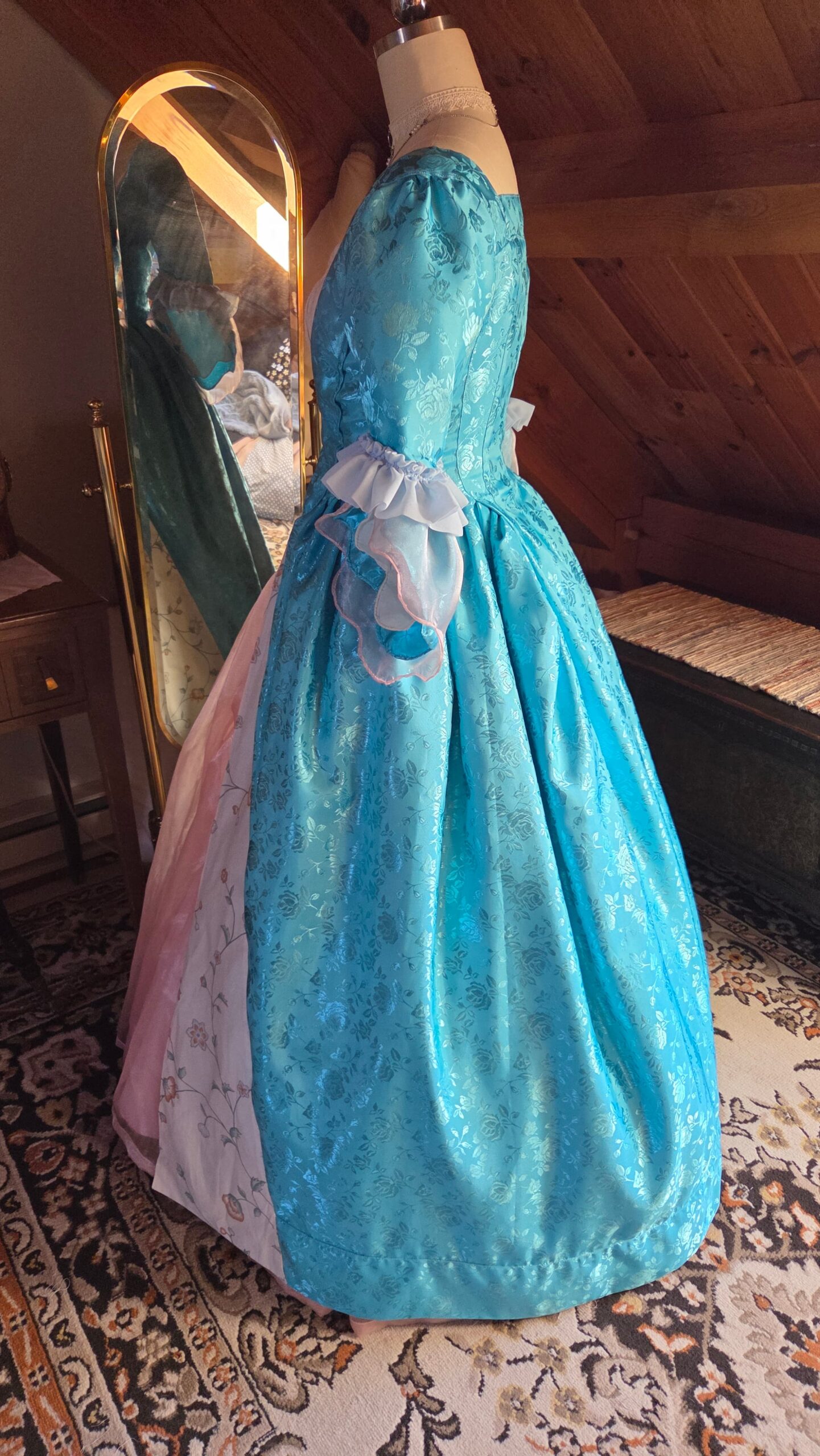
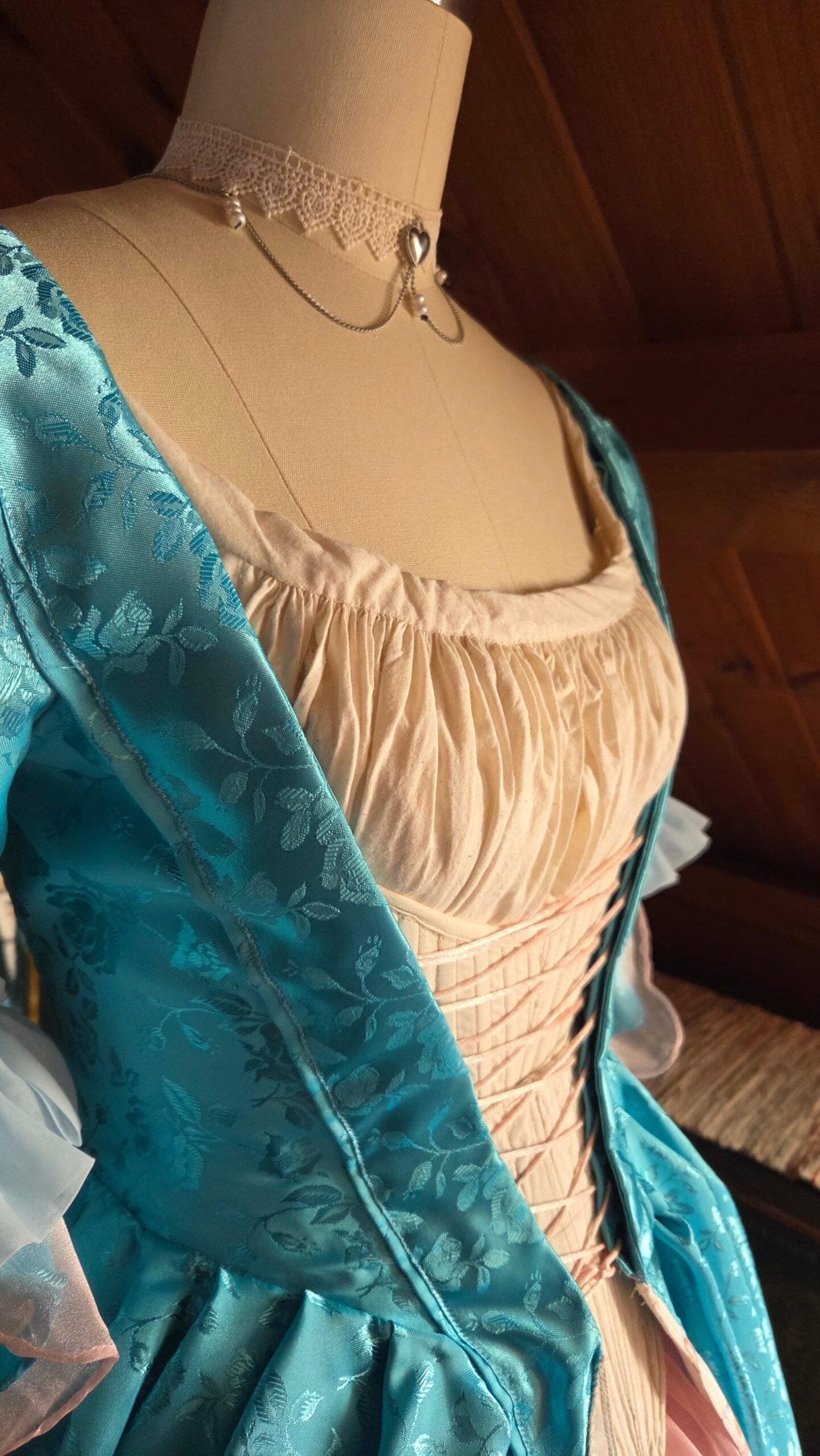
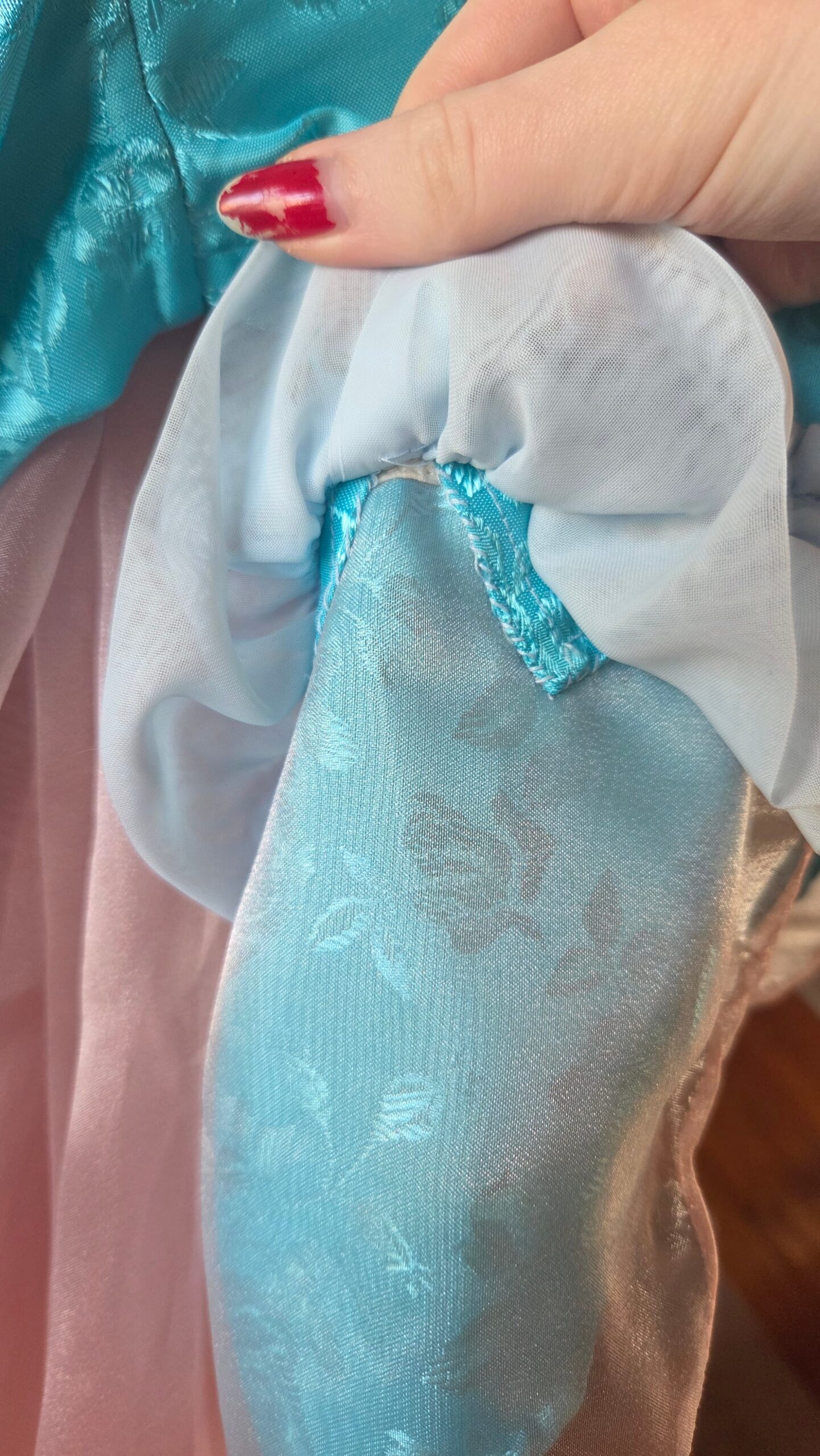
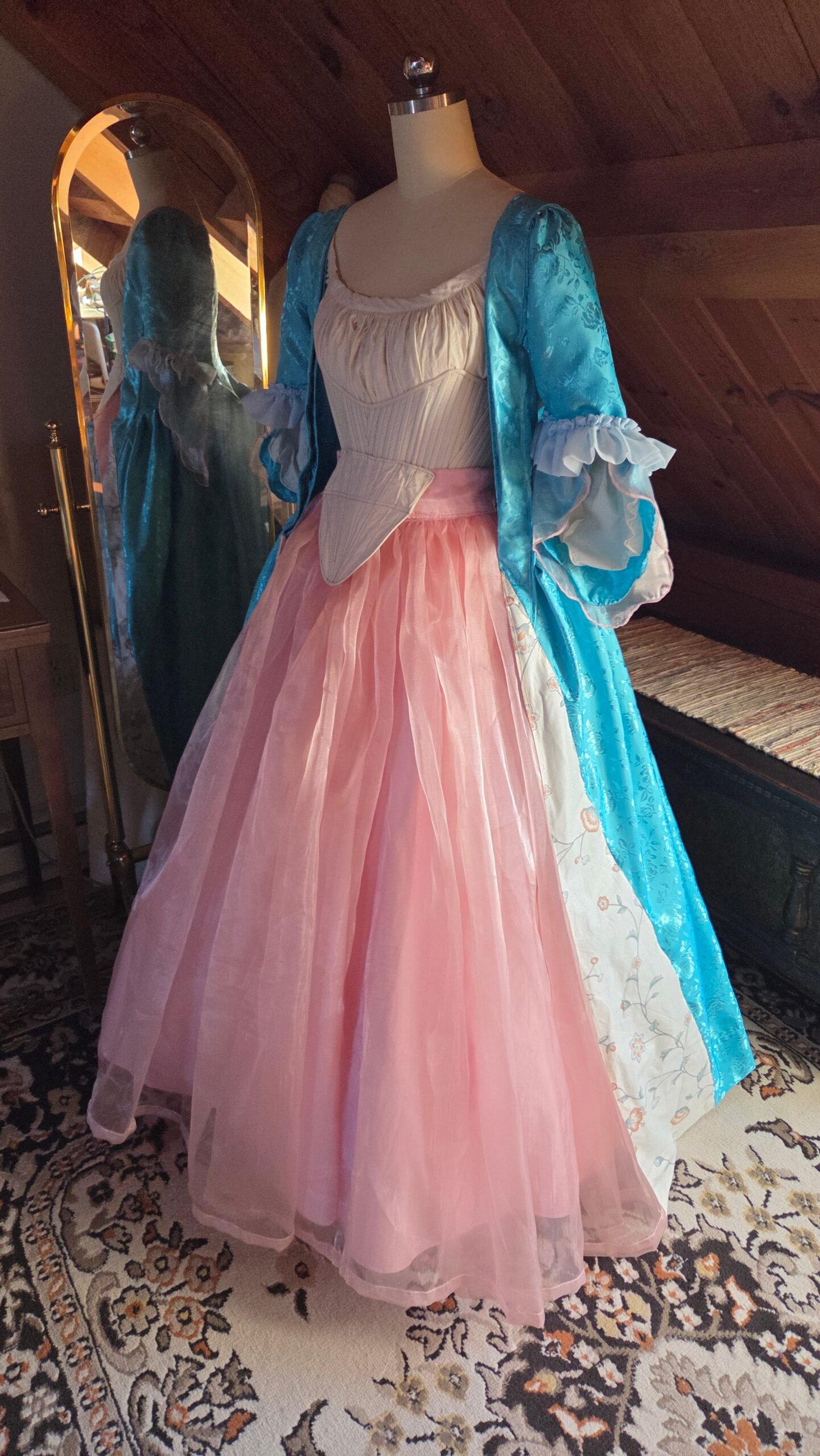
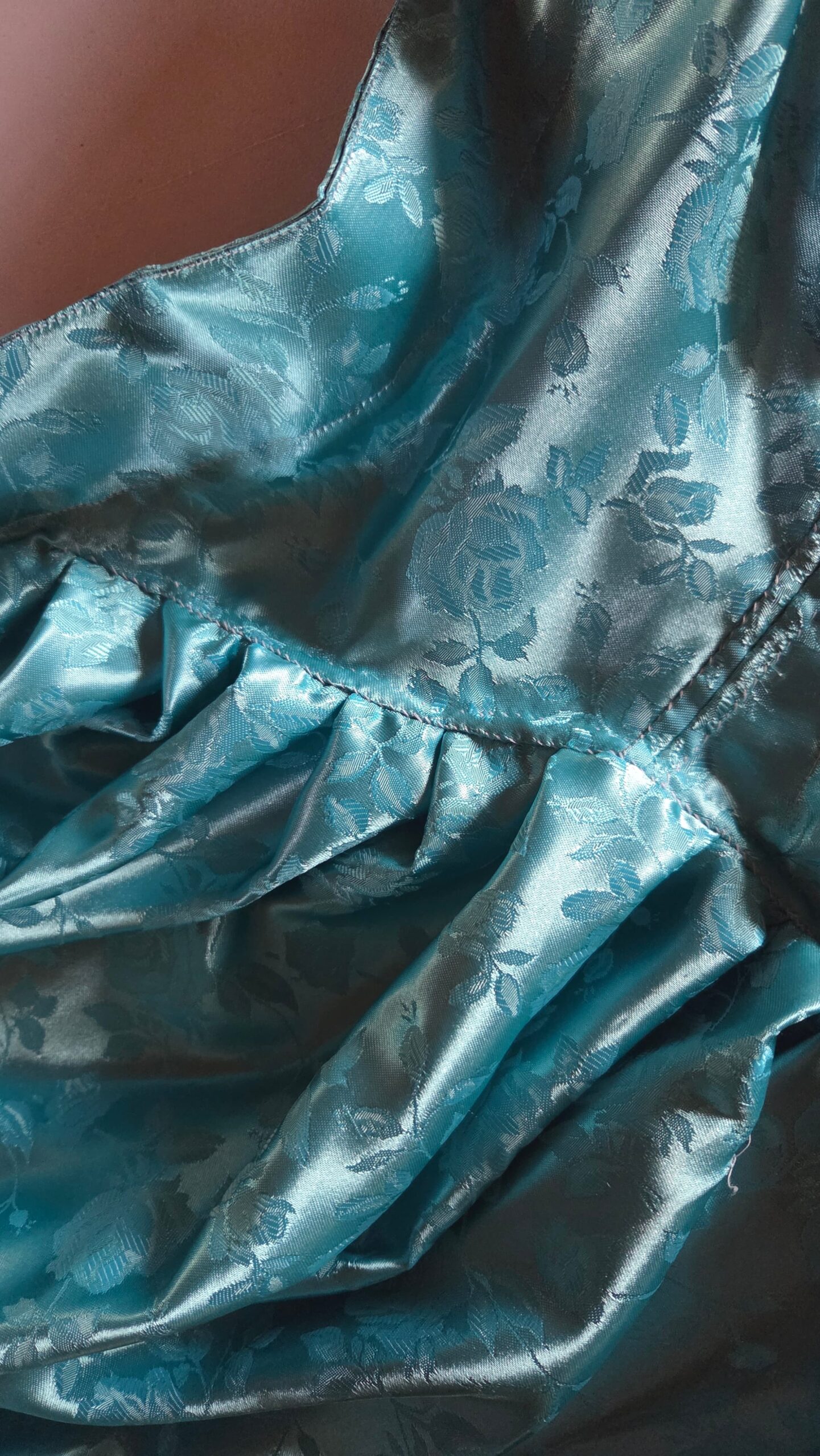
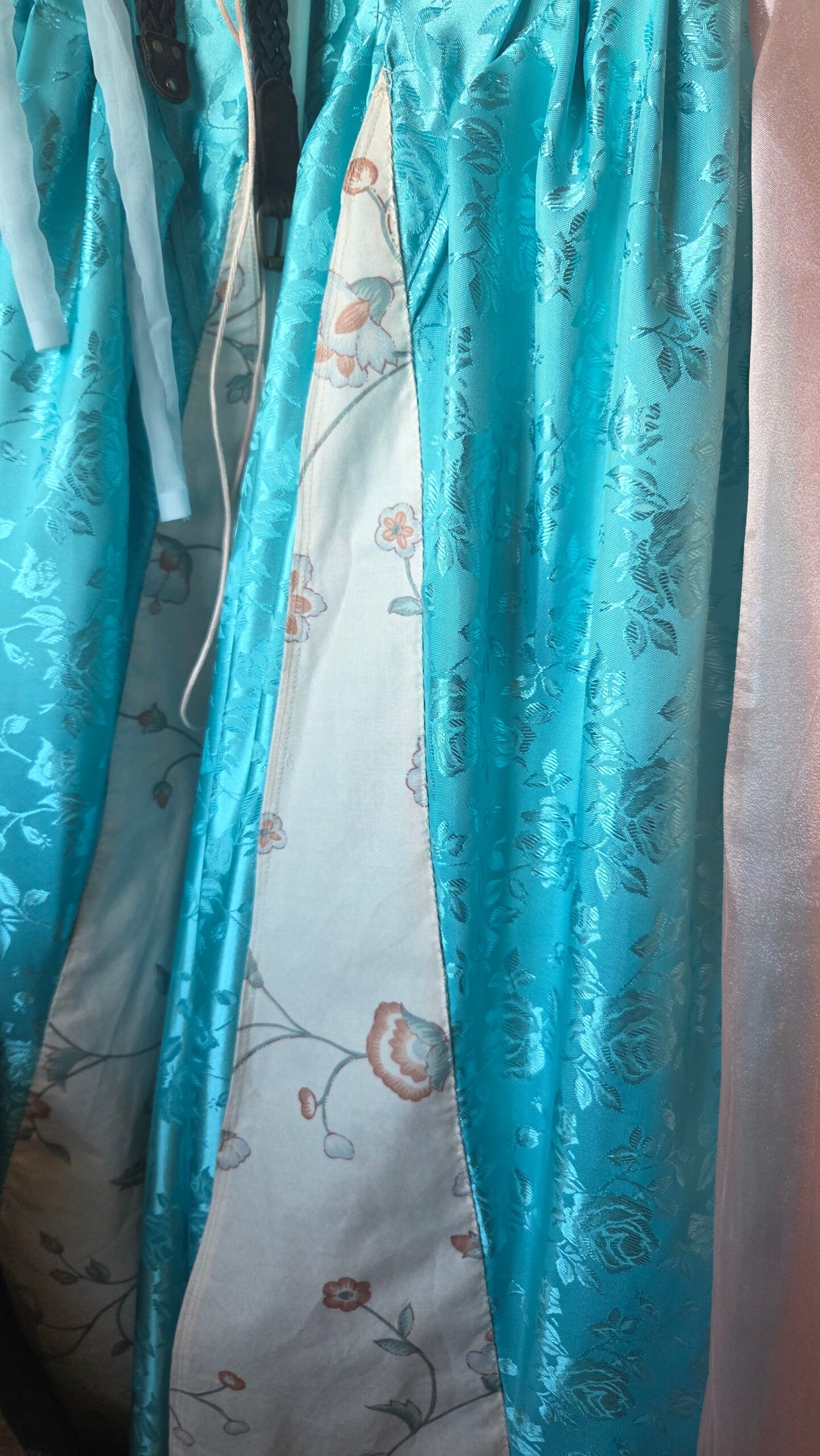
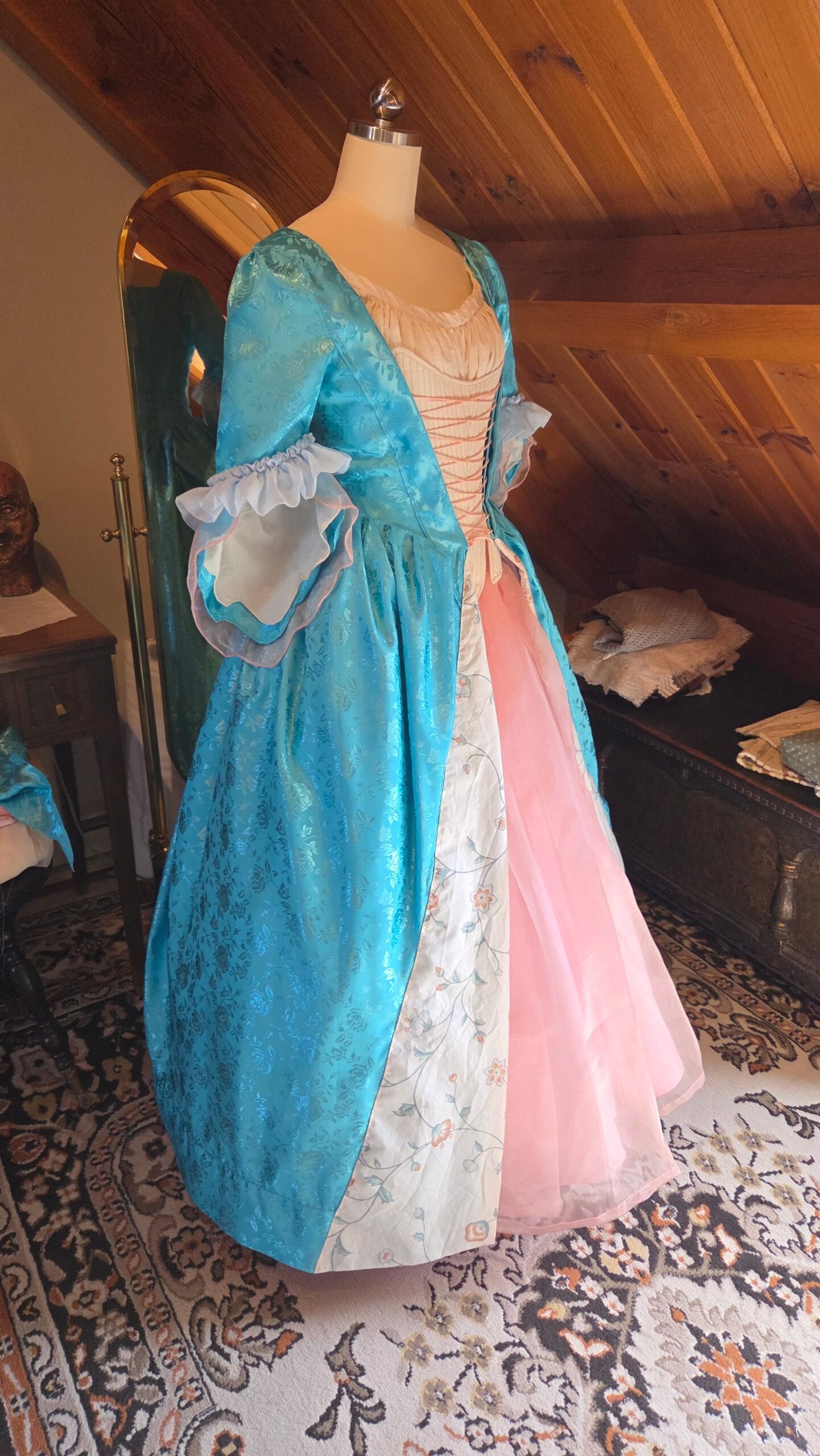
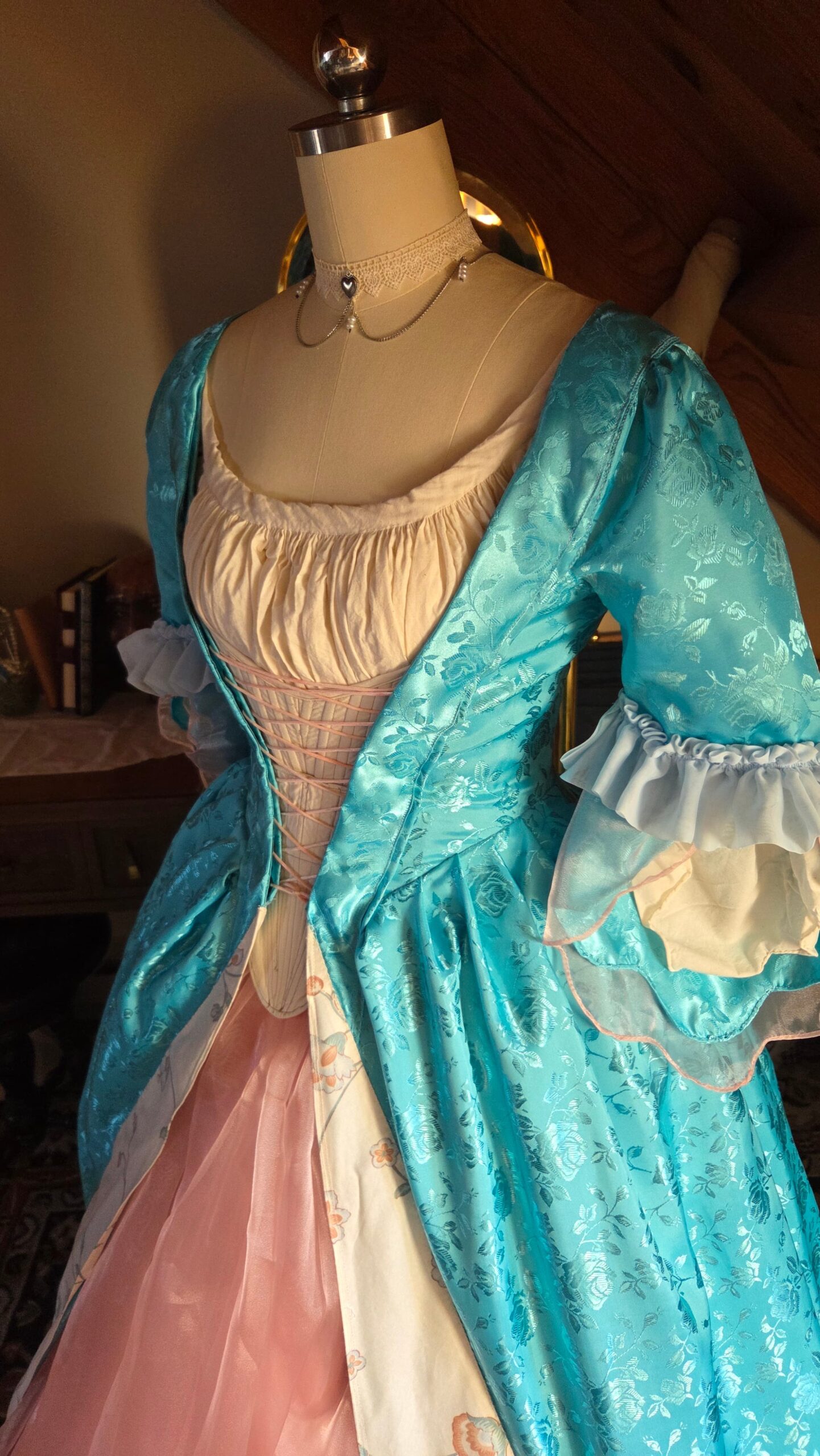
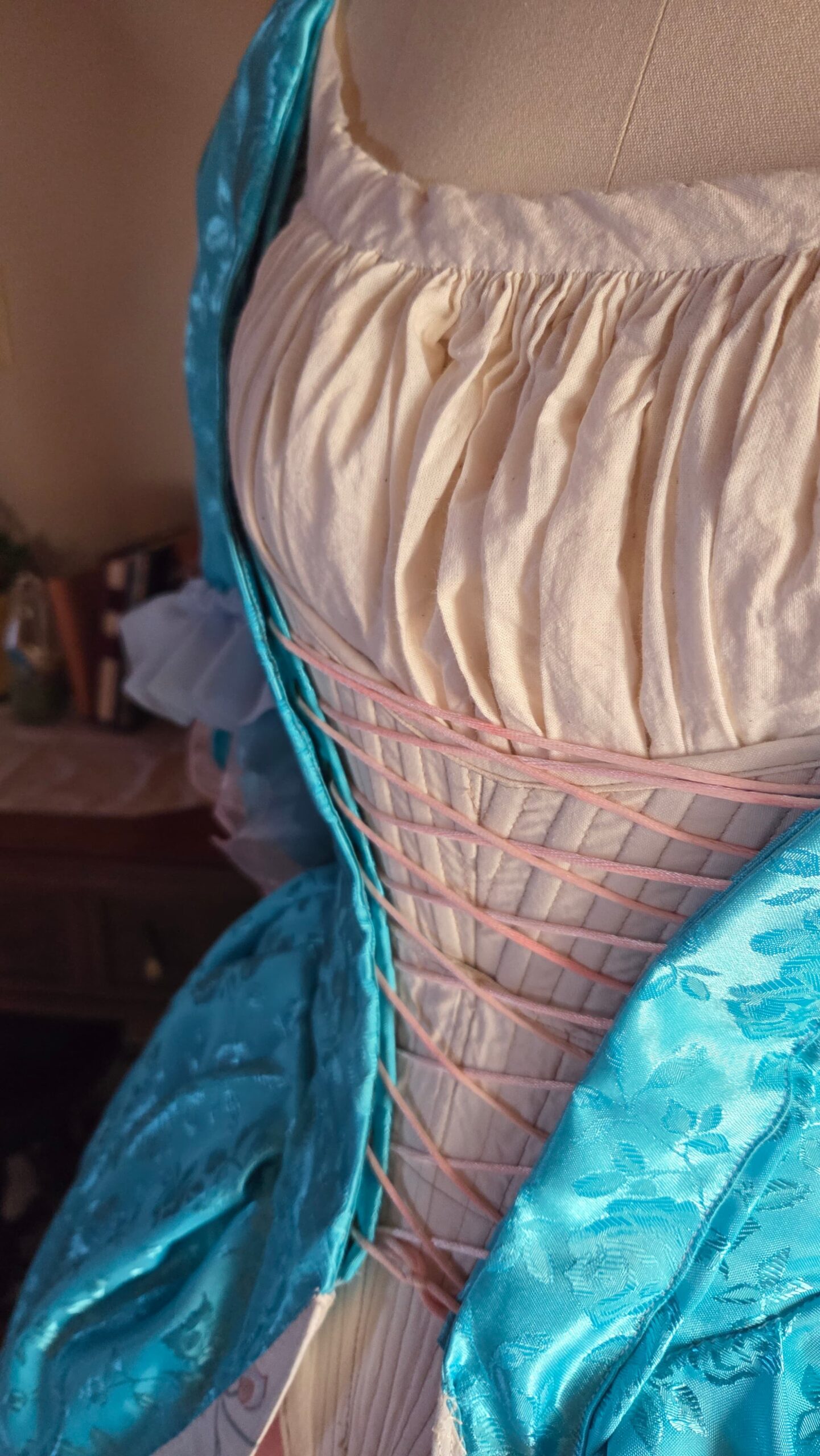
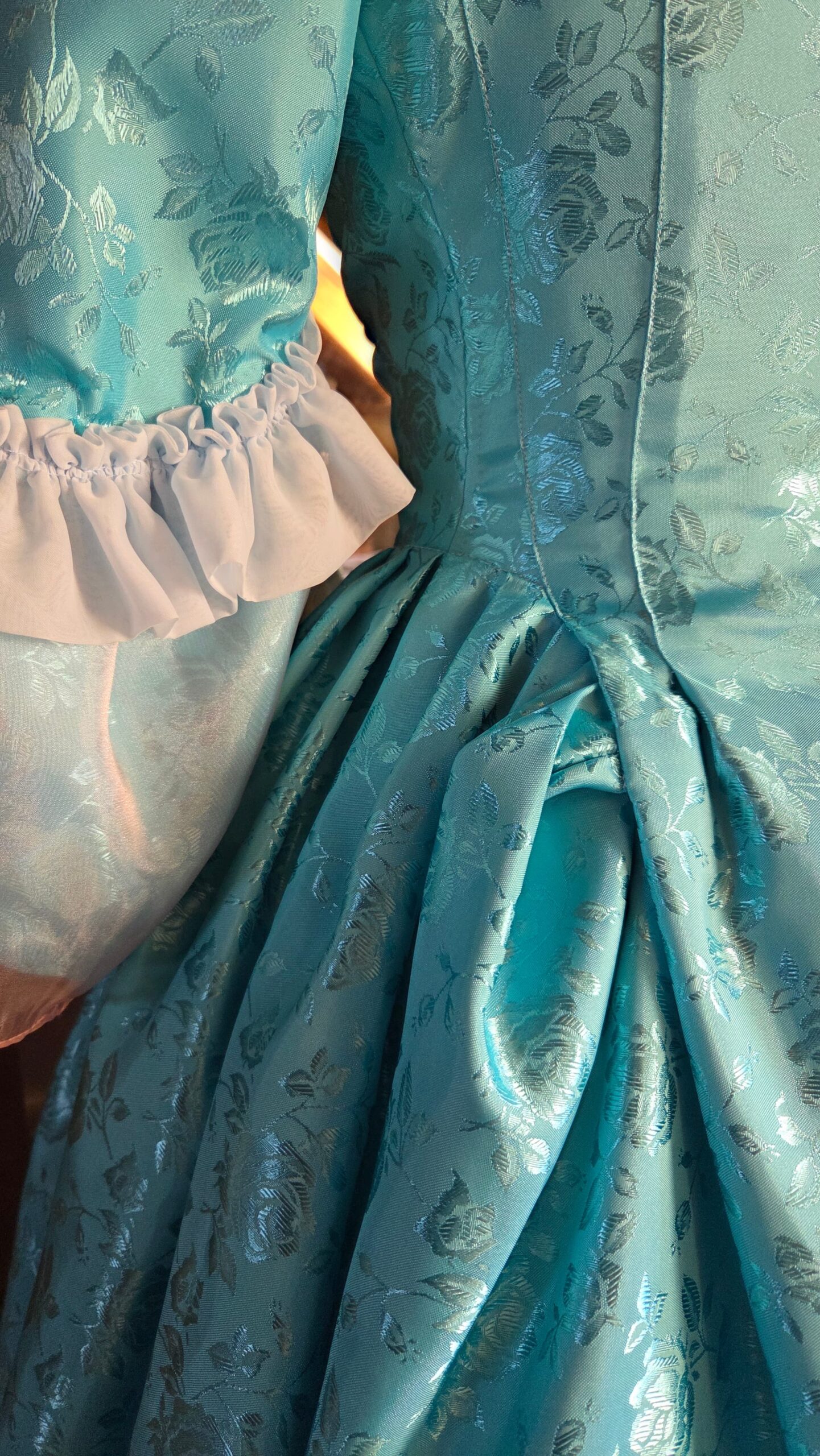
To create the overdress, I used Diagram XVI (Mantua 1740–50) from Waugh and Woodward’s The Cut of Women’s Clothes, 1600–1930. The garment is made from blue polyester silk jacquard, chosen for its resemblance to the brocade, damask, and satin fabrics that would have been used historically. As the centerpiece of the ensemble, it’s the element that unifies every other layer, bringing the original costume to life through a historically inspired lens.
The One Piece Dress: The Genius of the Mantua Gown
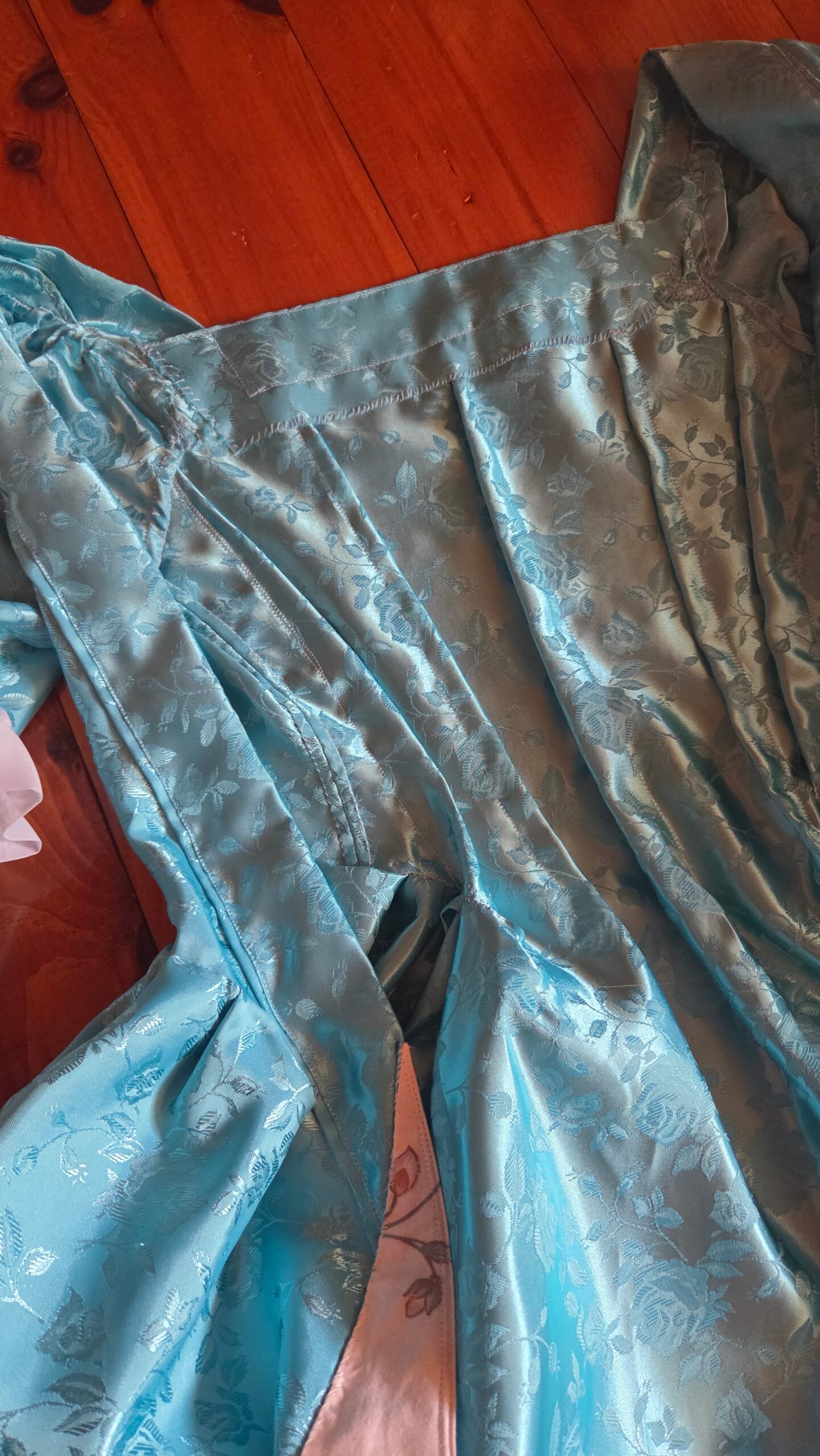
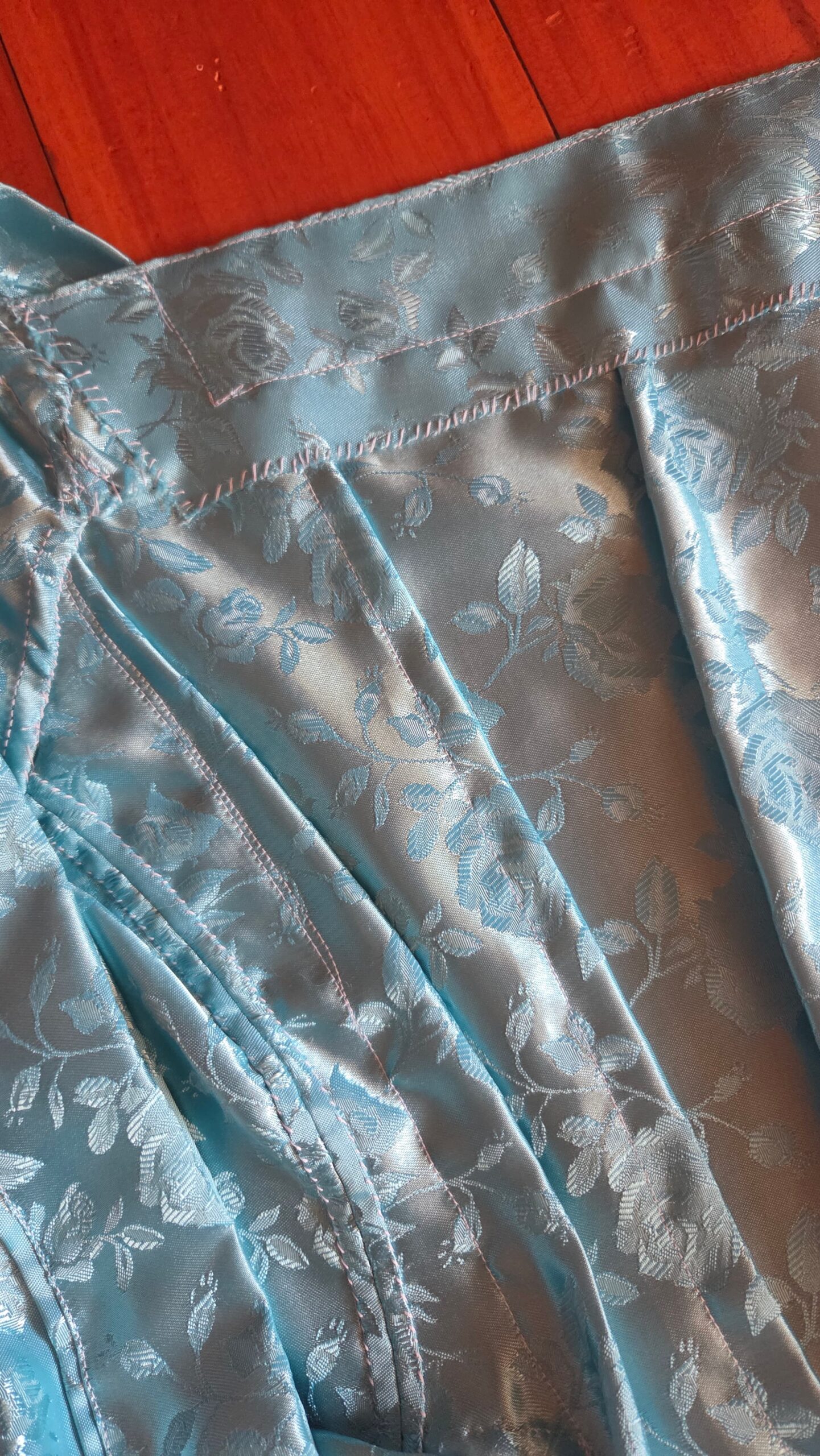
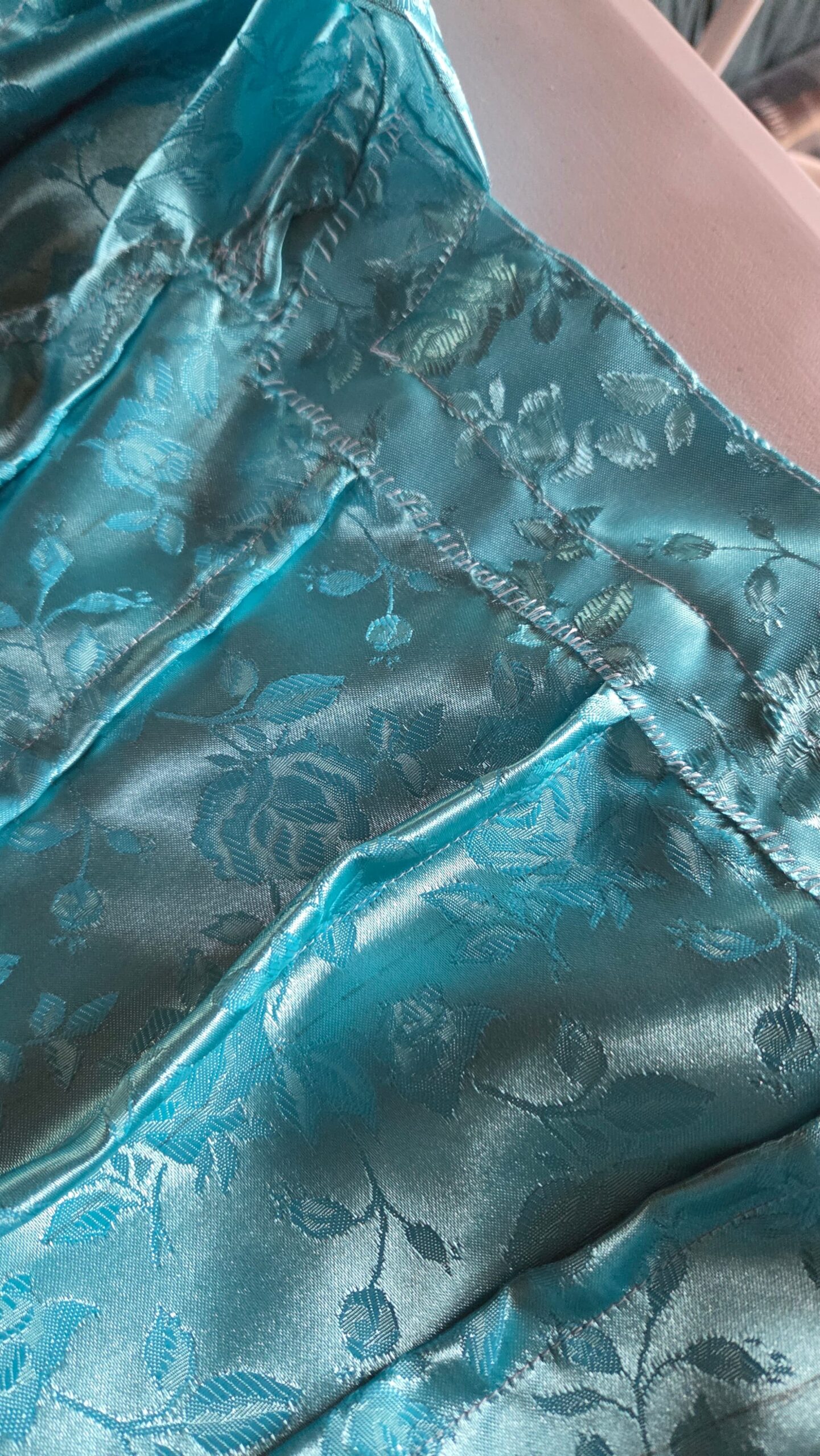
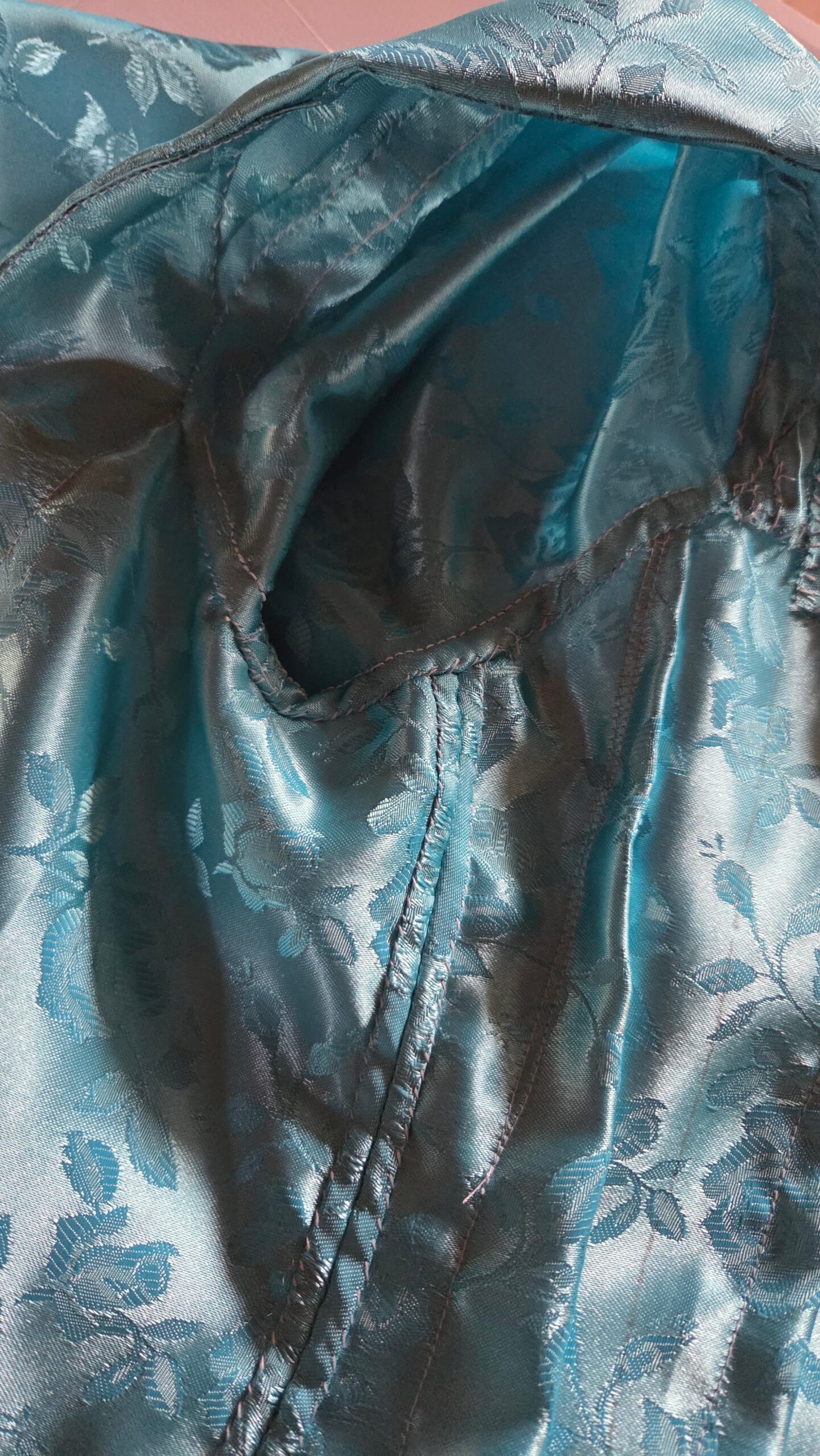
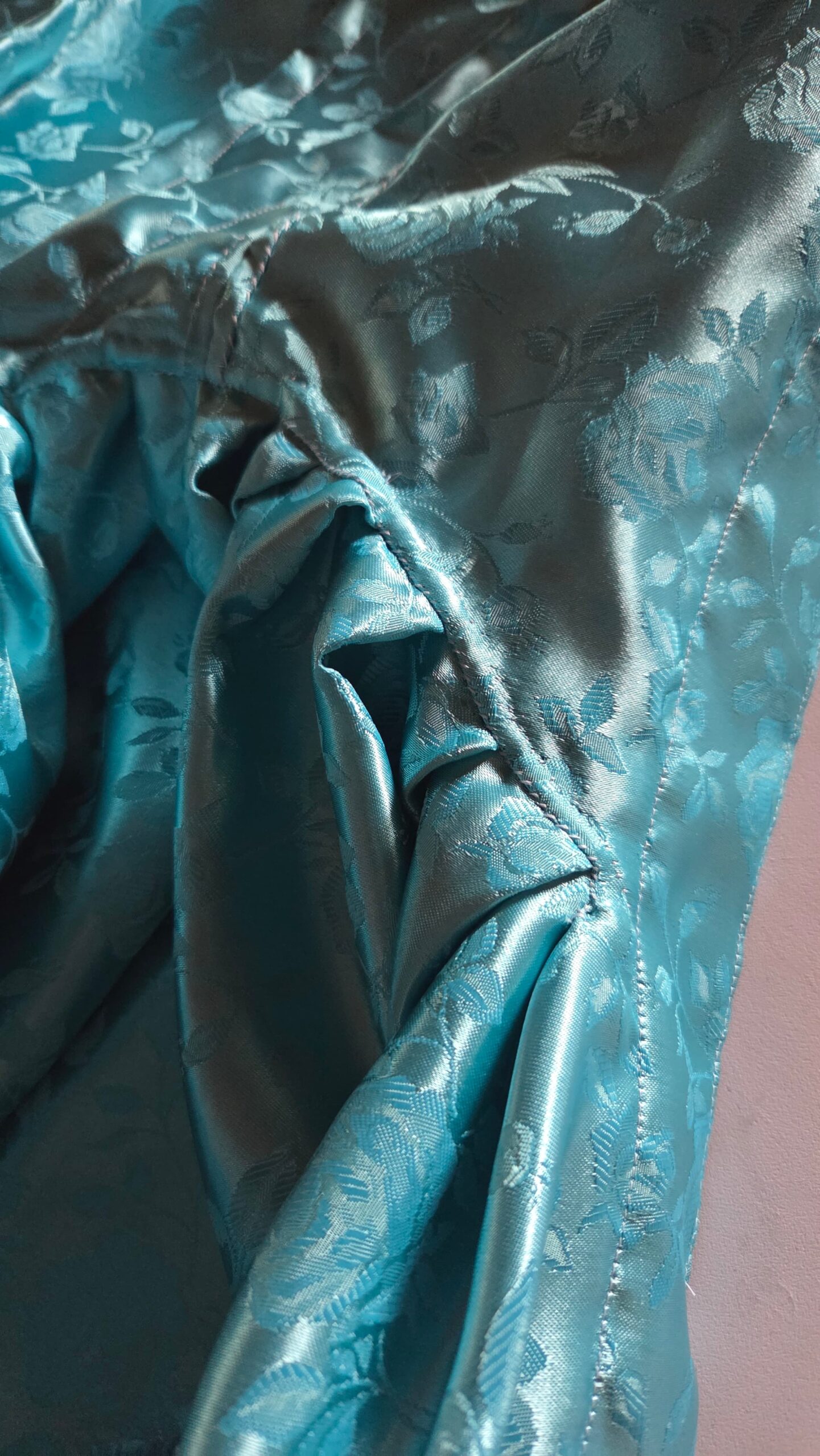
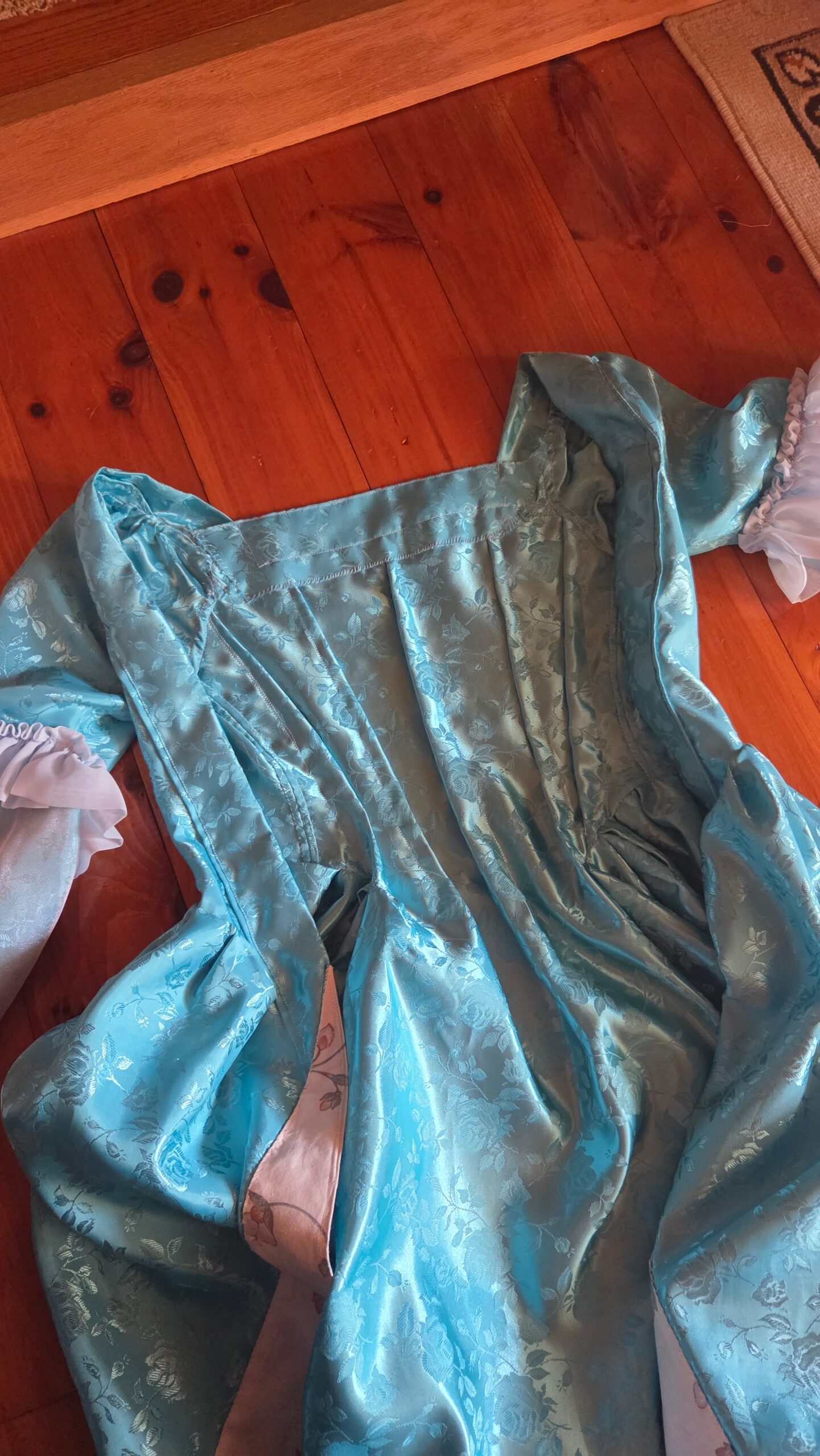
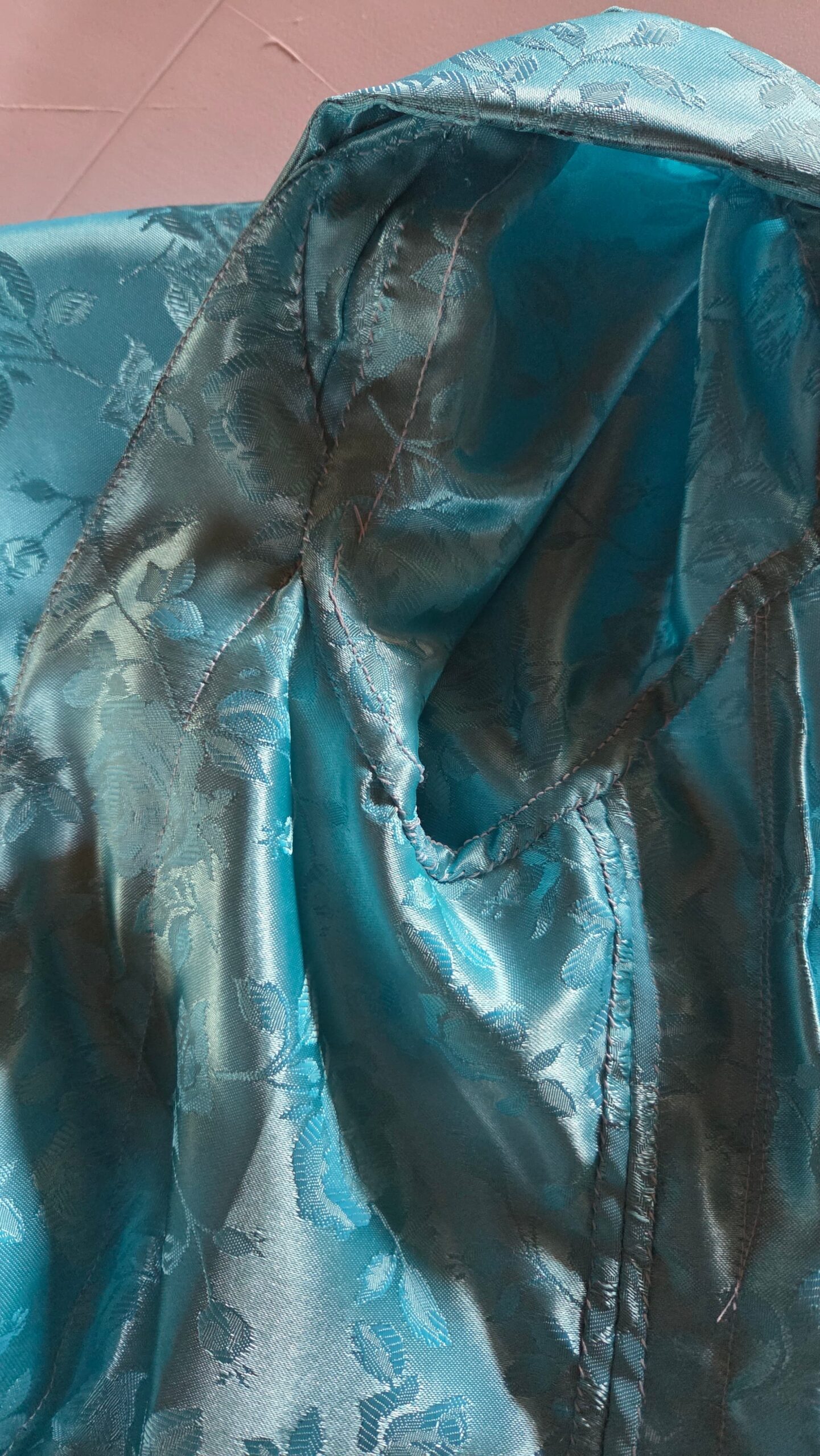
What makes the mantua gown so striking is that it is constructed from one primary piece of fabric, cleverly shaped to create the rich pleats, gathers, and fullness that appear far more complex than they are. This design was both practical and elegant, reducing
fabric waste and limiting the number of raw seams, which were often left unfinished in this era. It also allowed the gown to be surprisingly adjustable in size, provided the first set of gathers remained generous enough to shift as needed.