Gallery
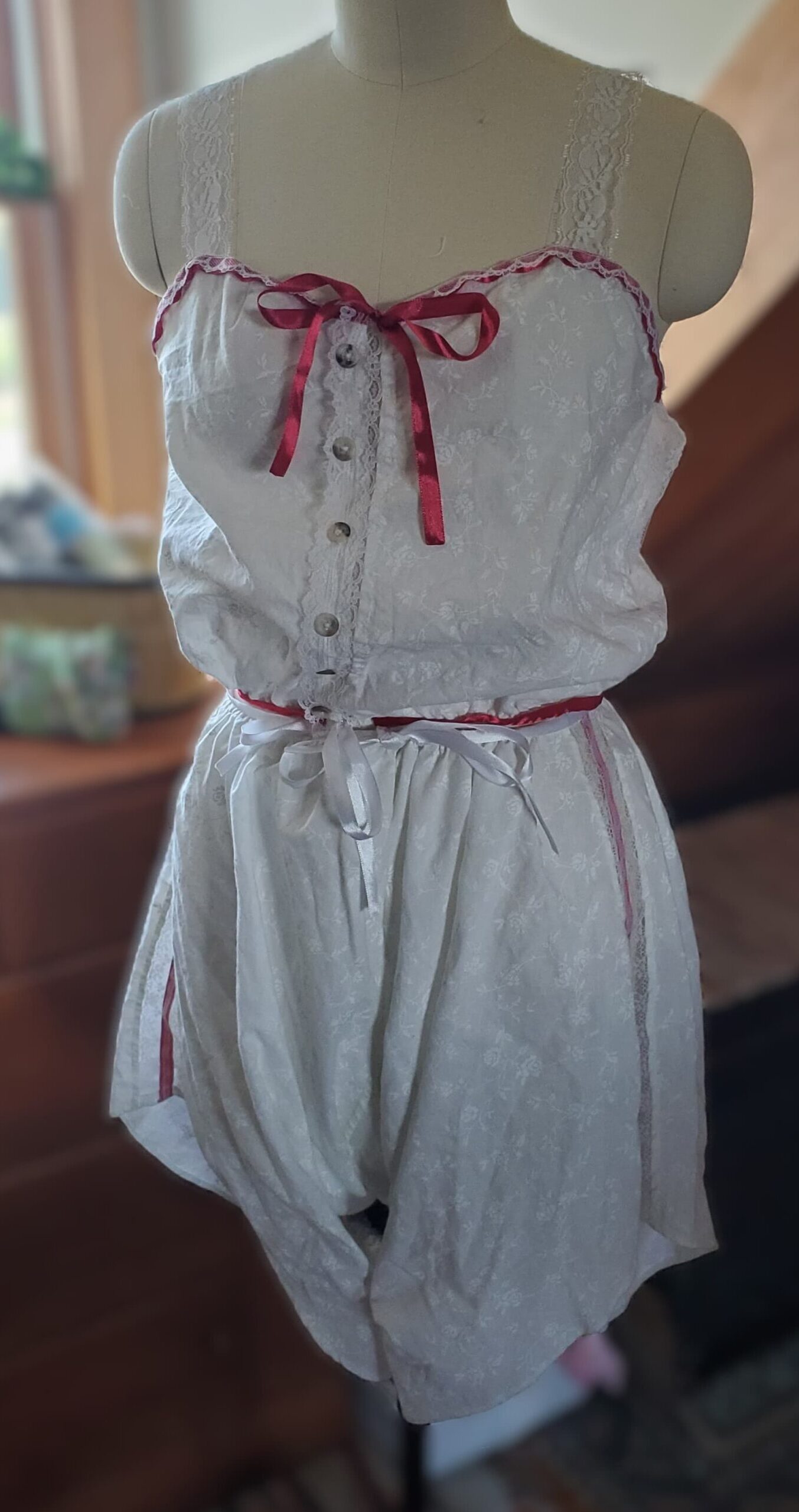
A Pair of Combinations
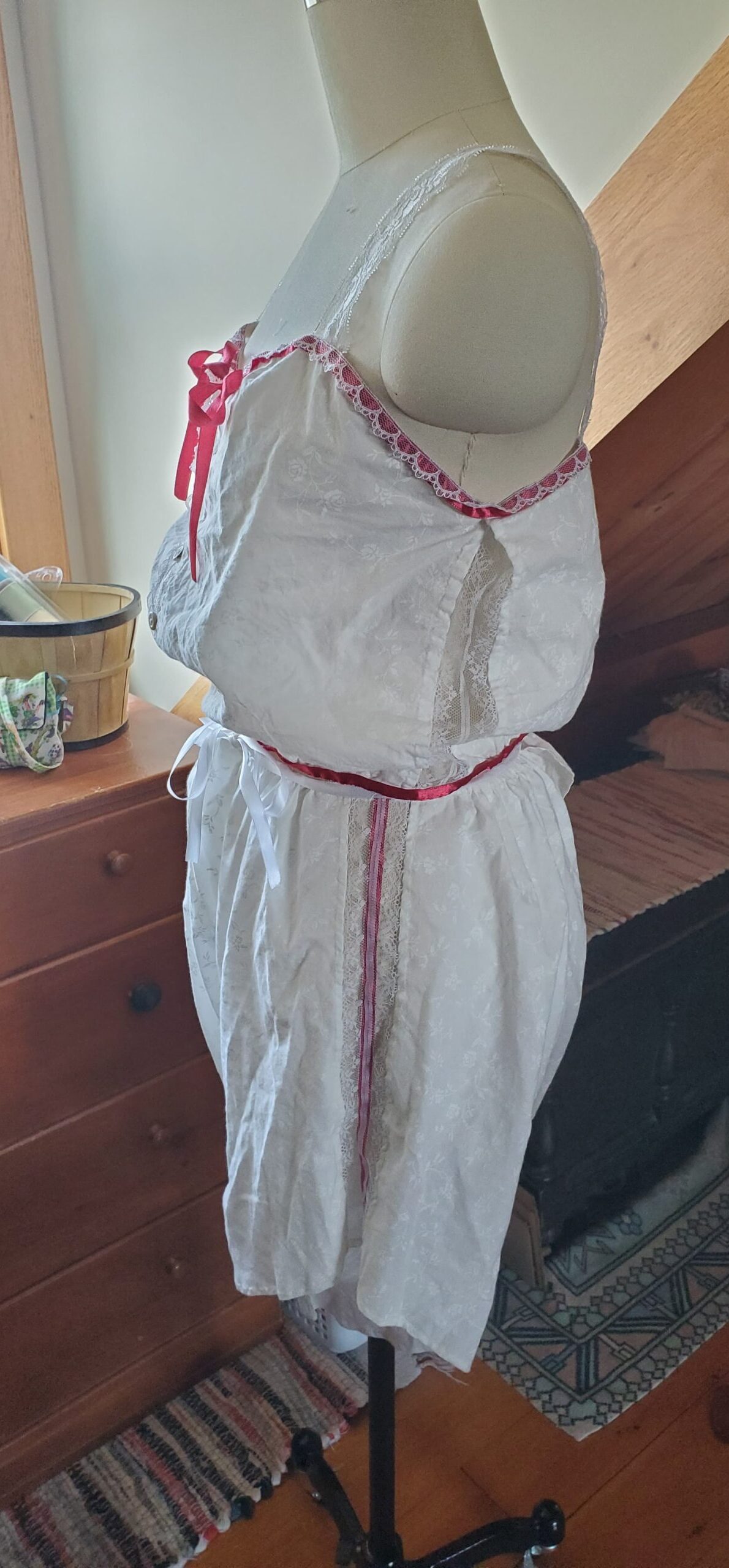
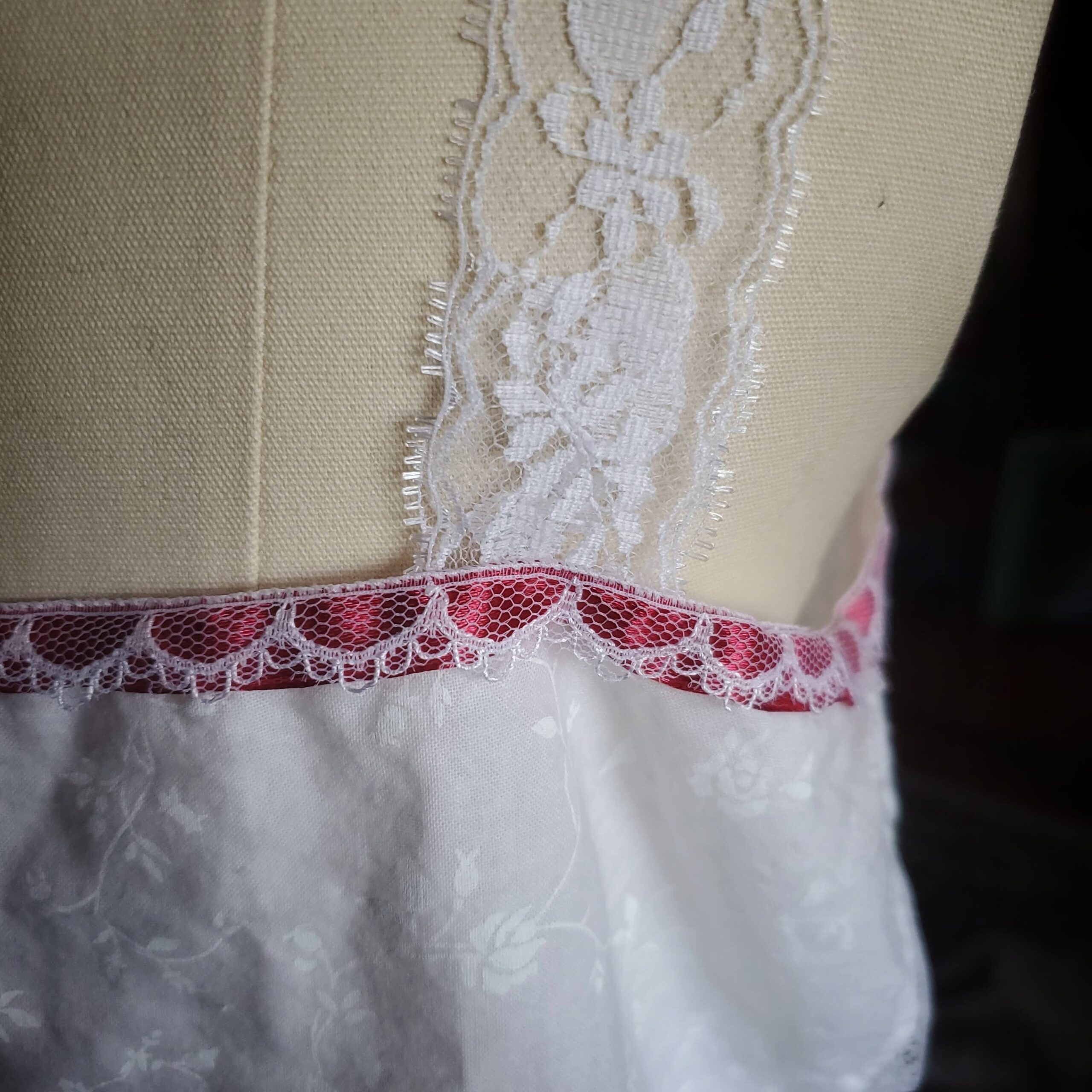
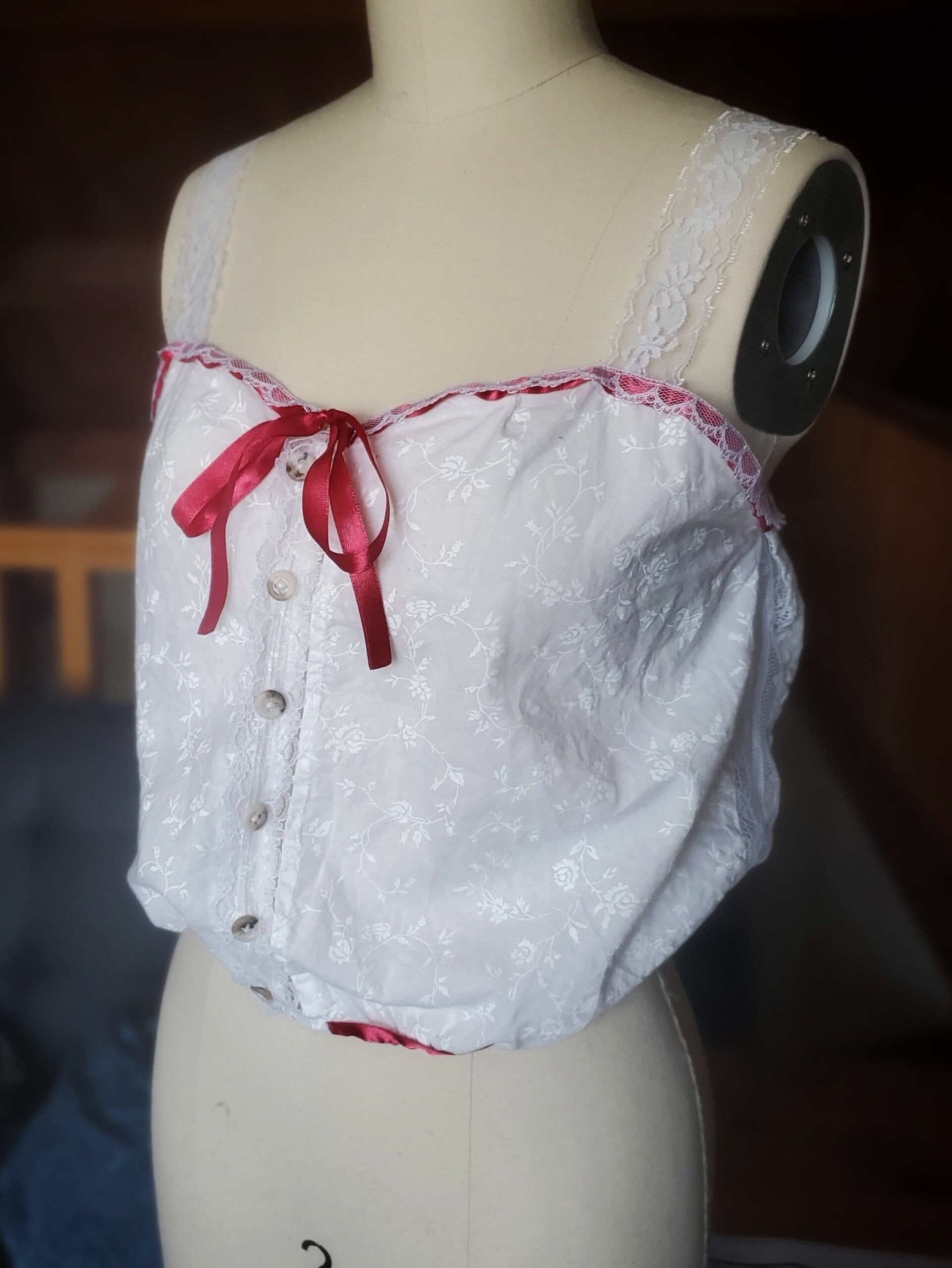
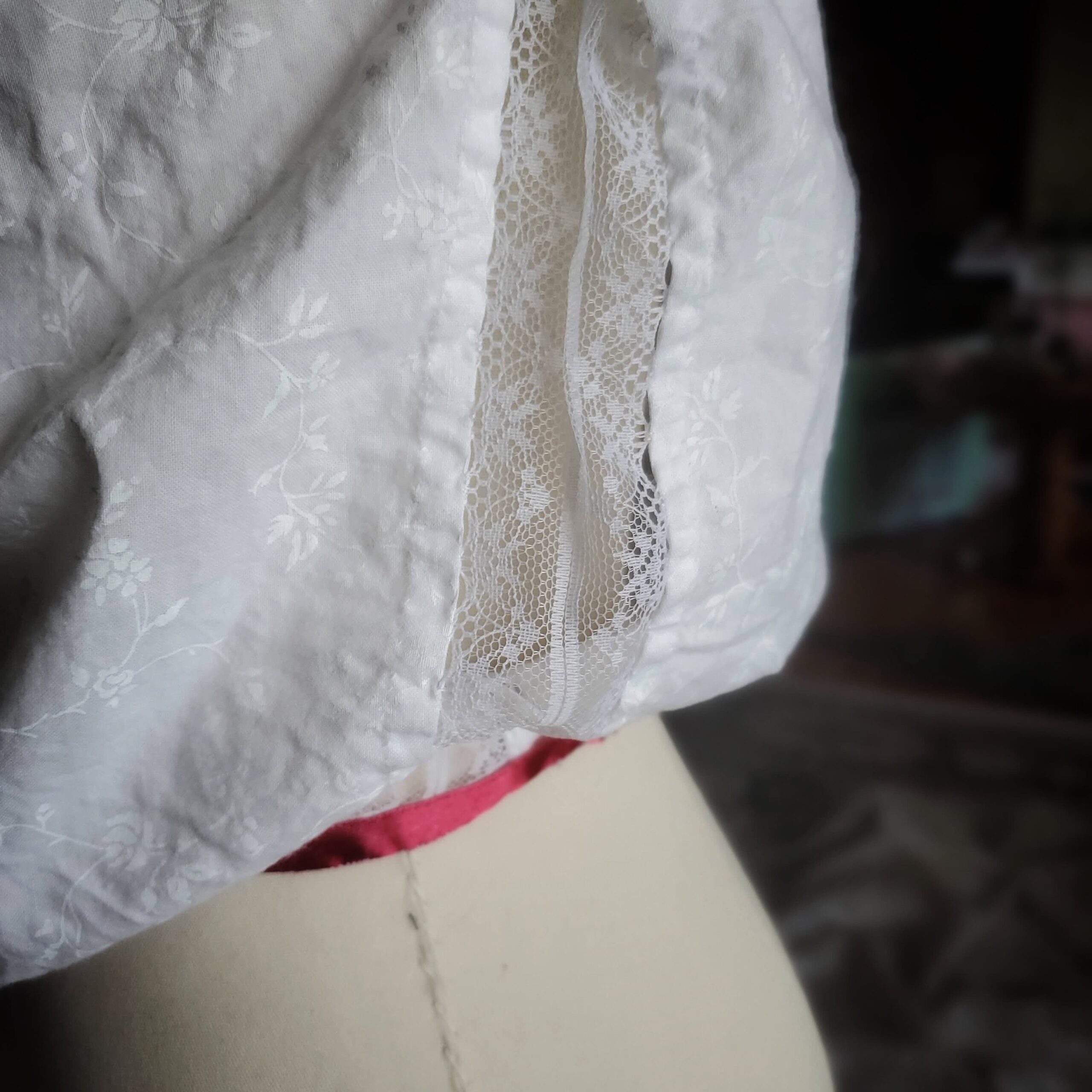
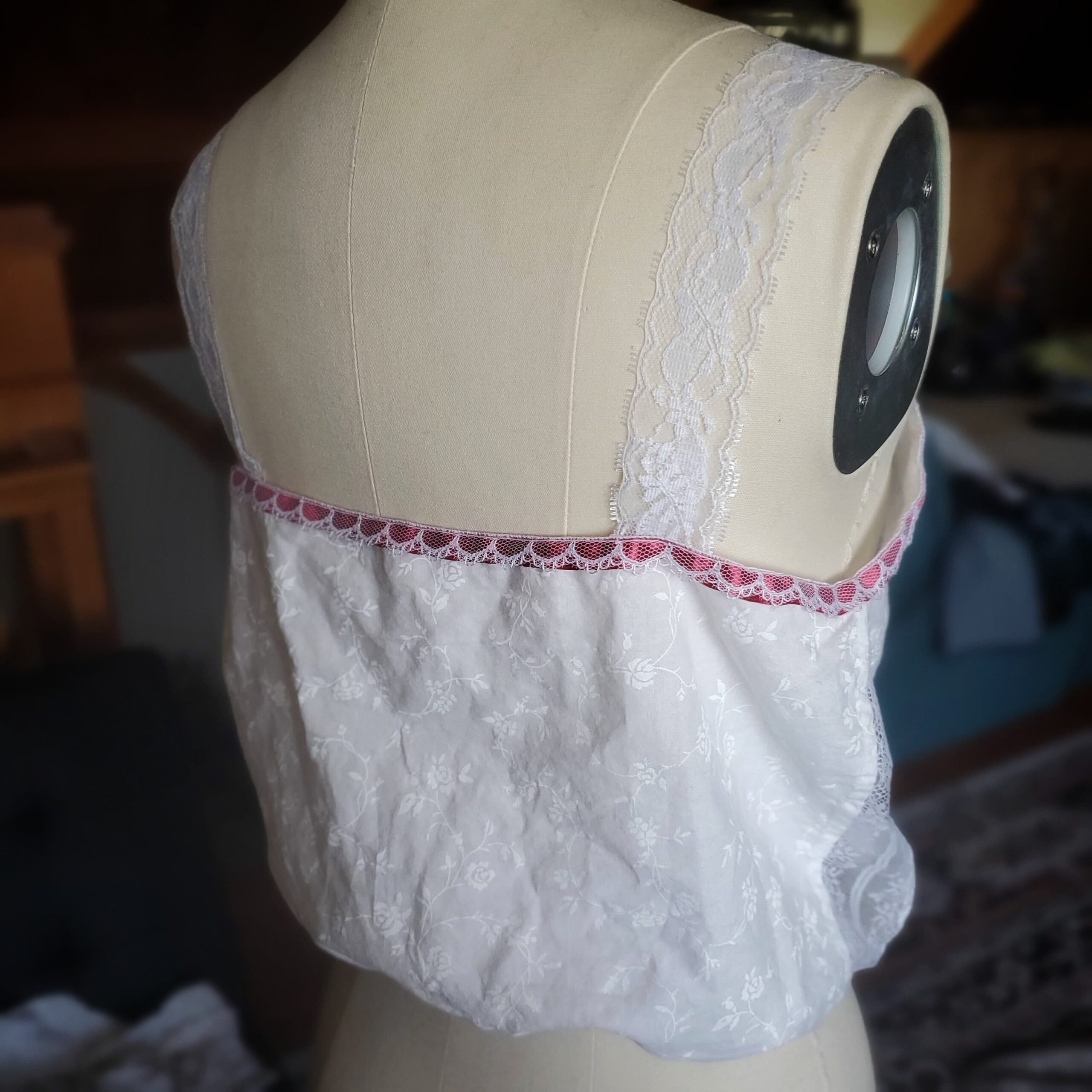
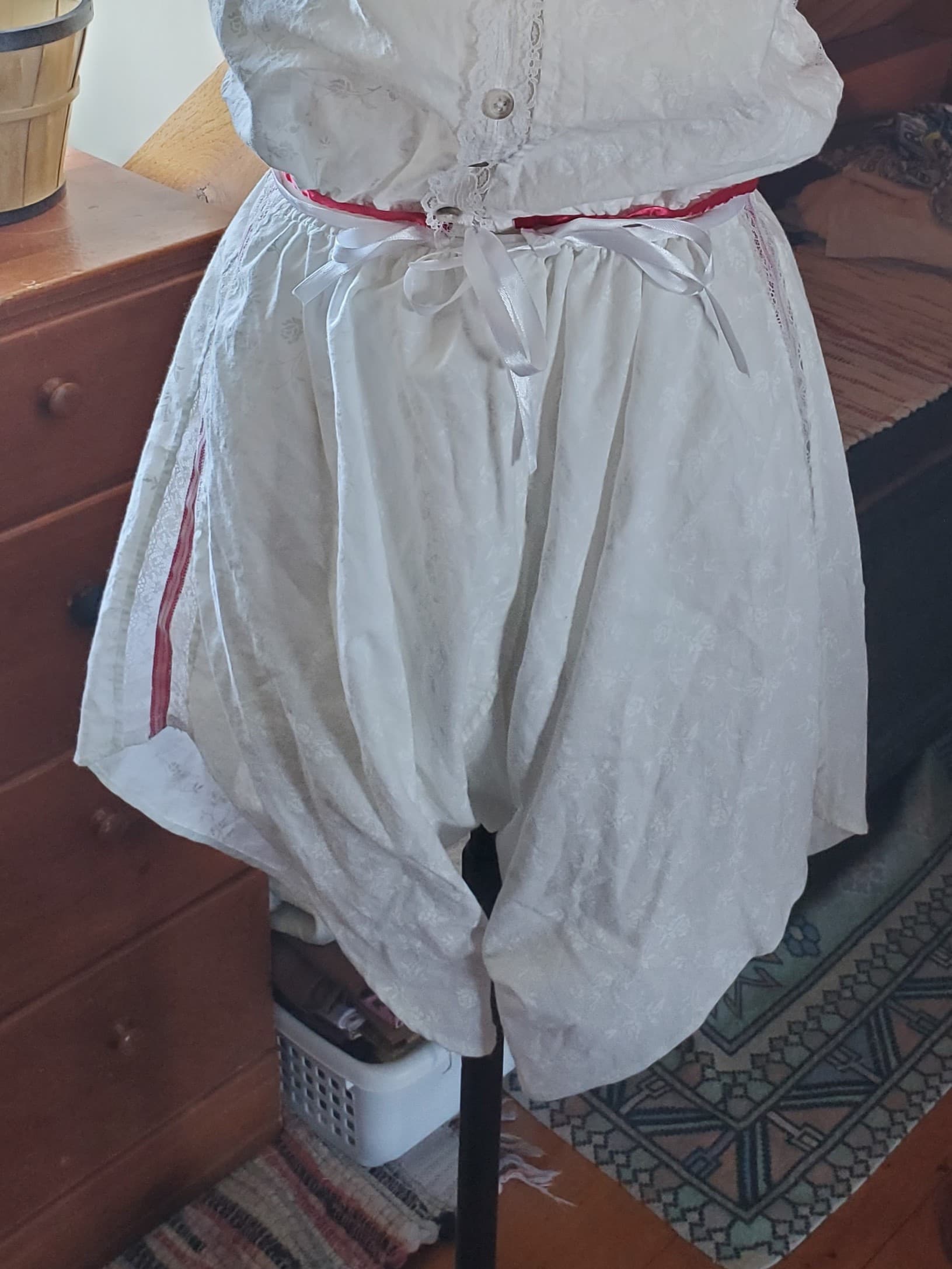
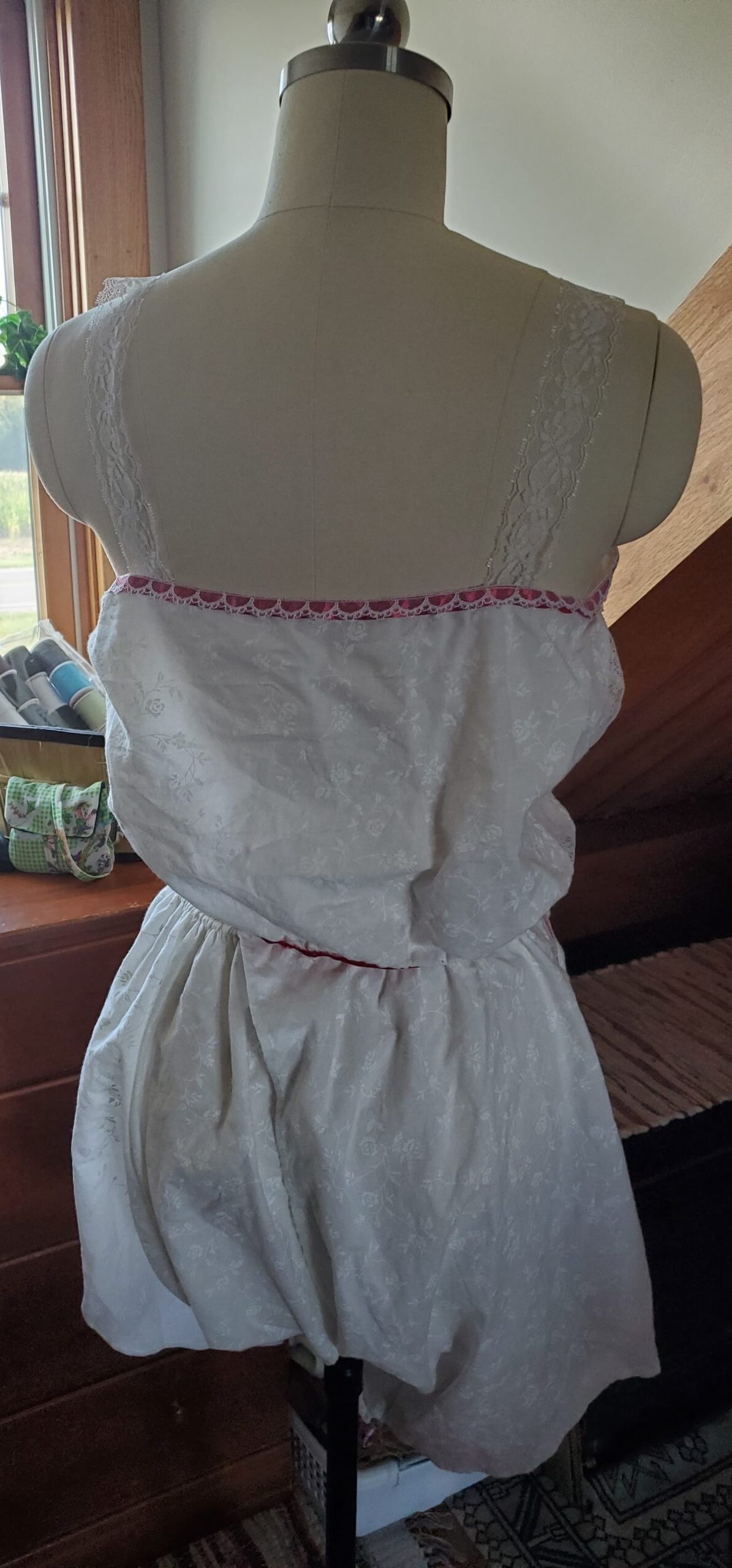
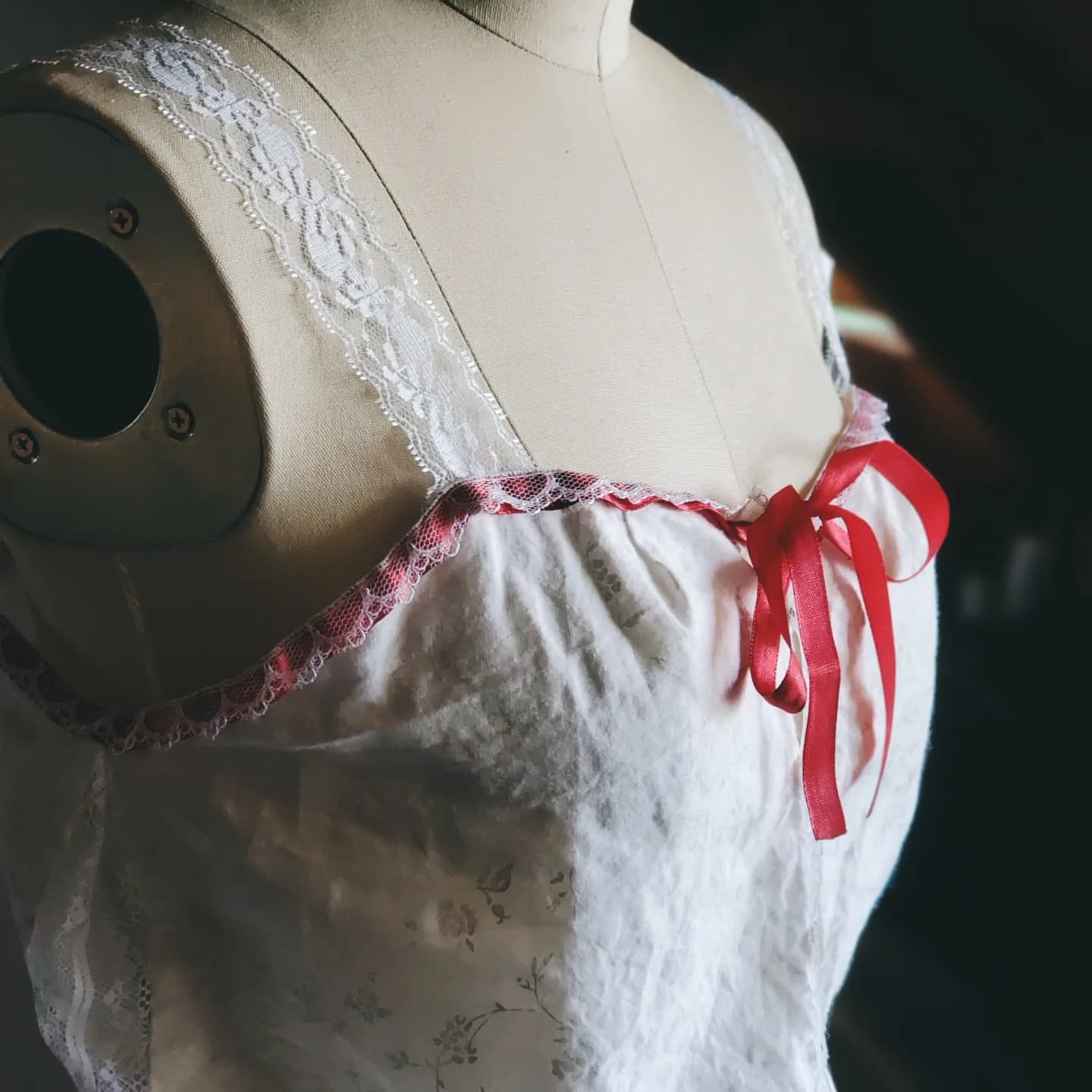
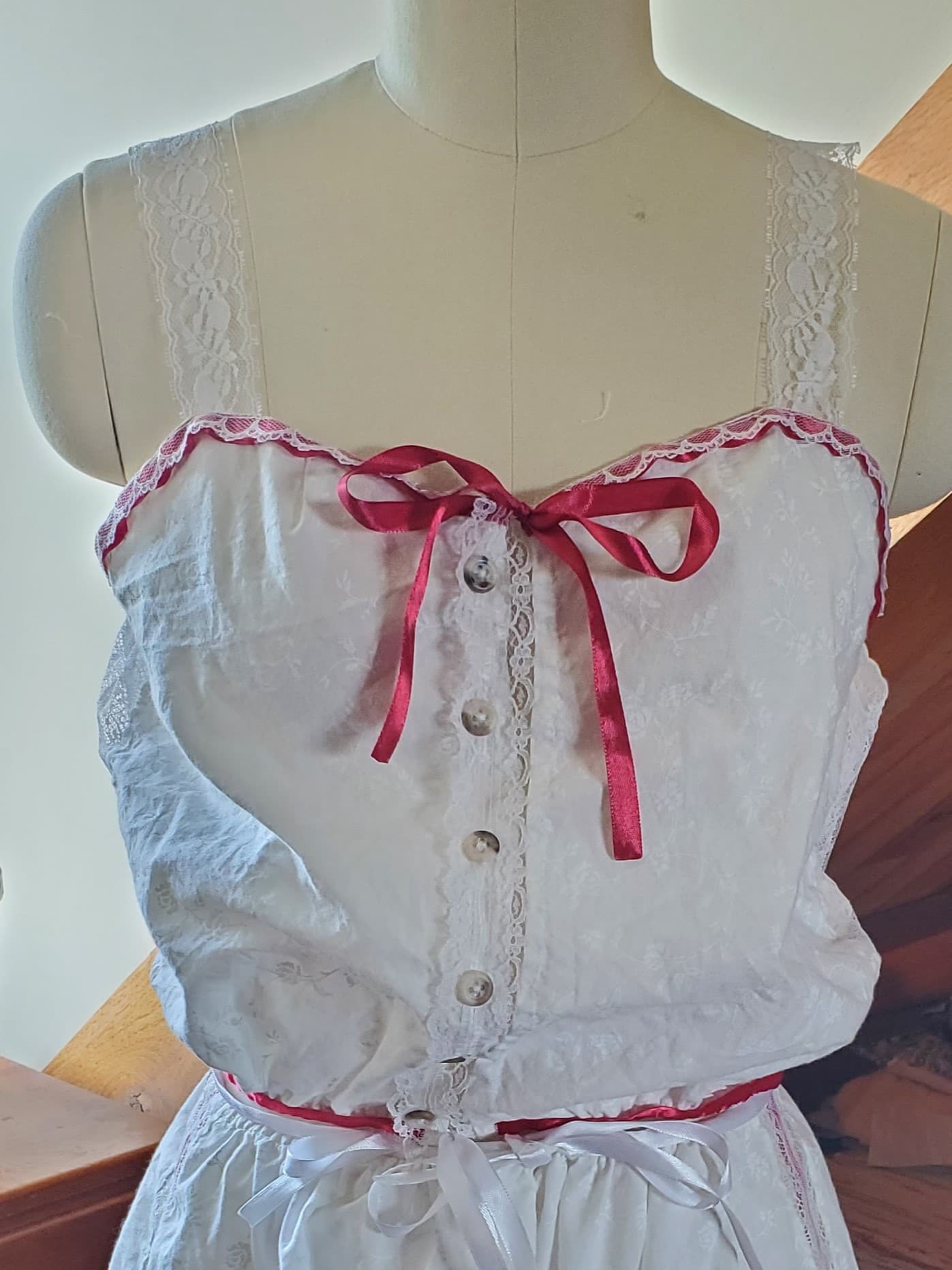
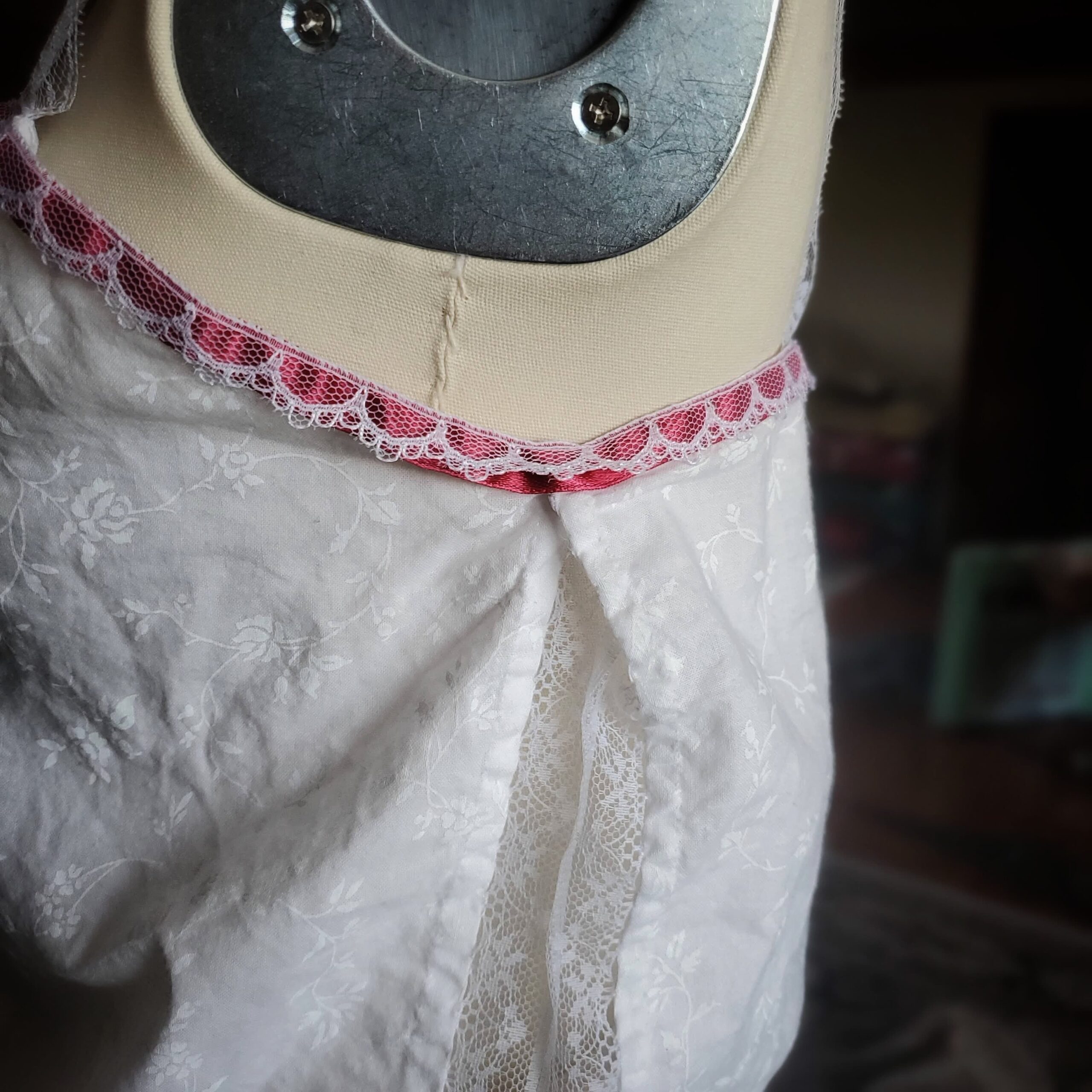
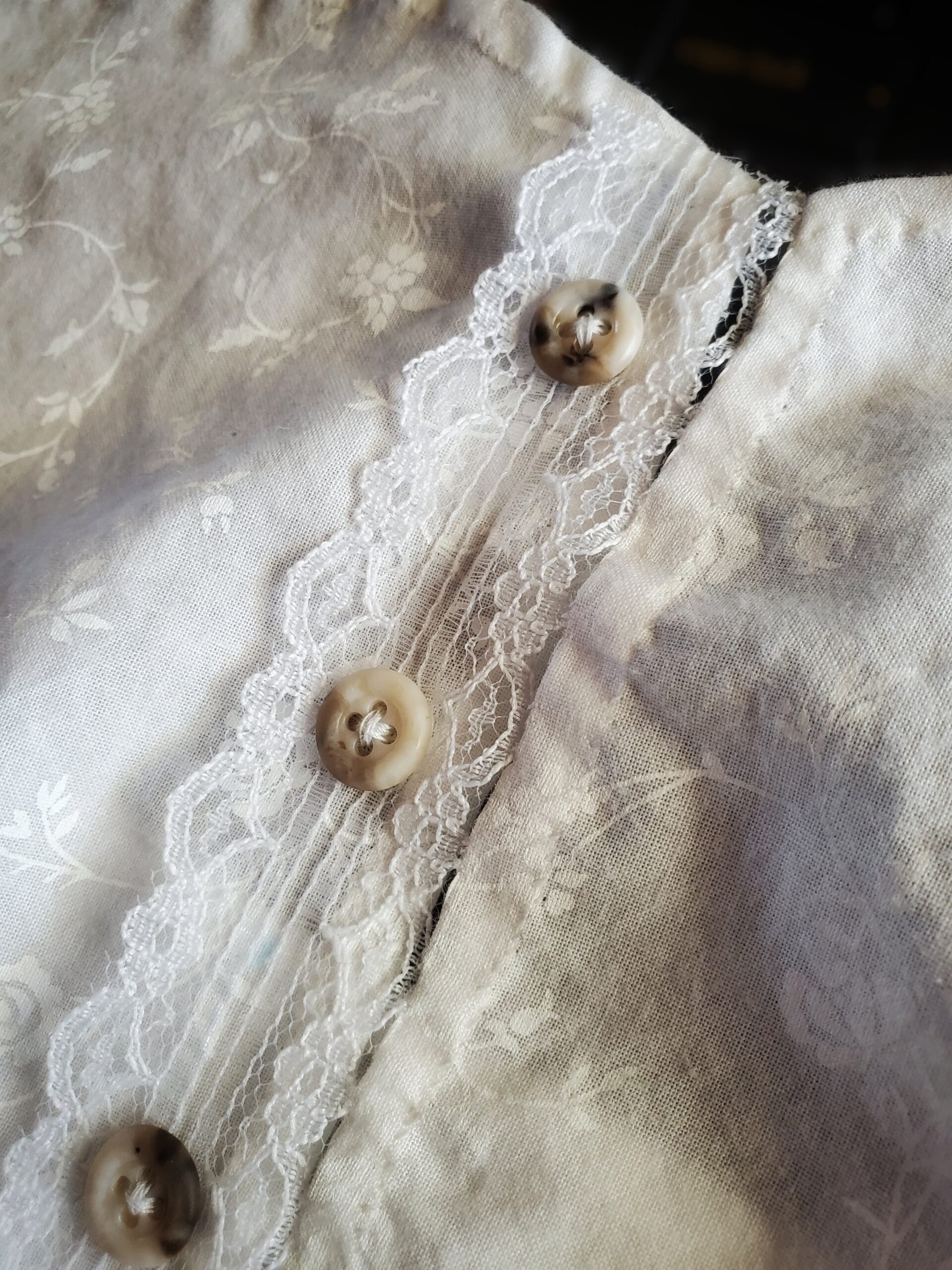
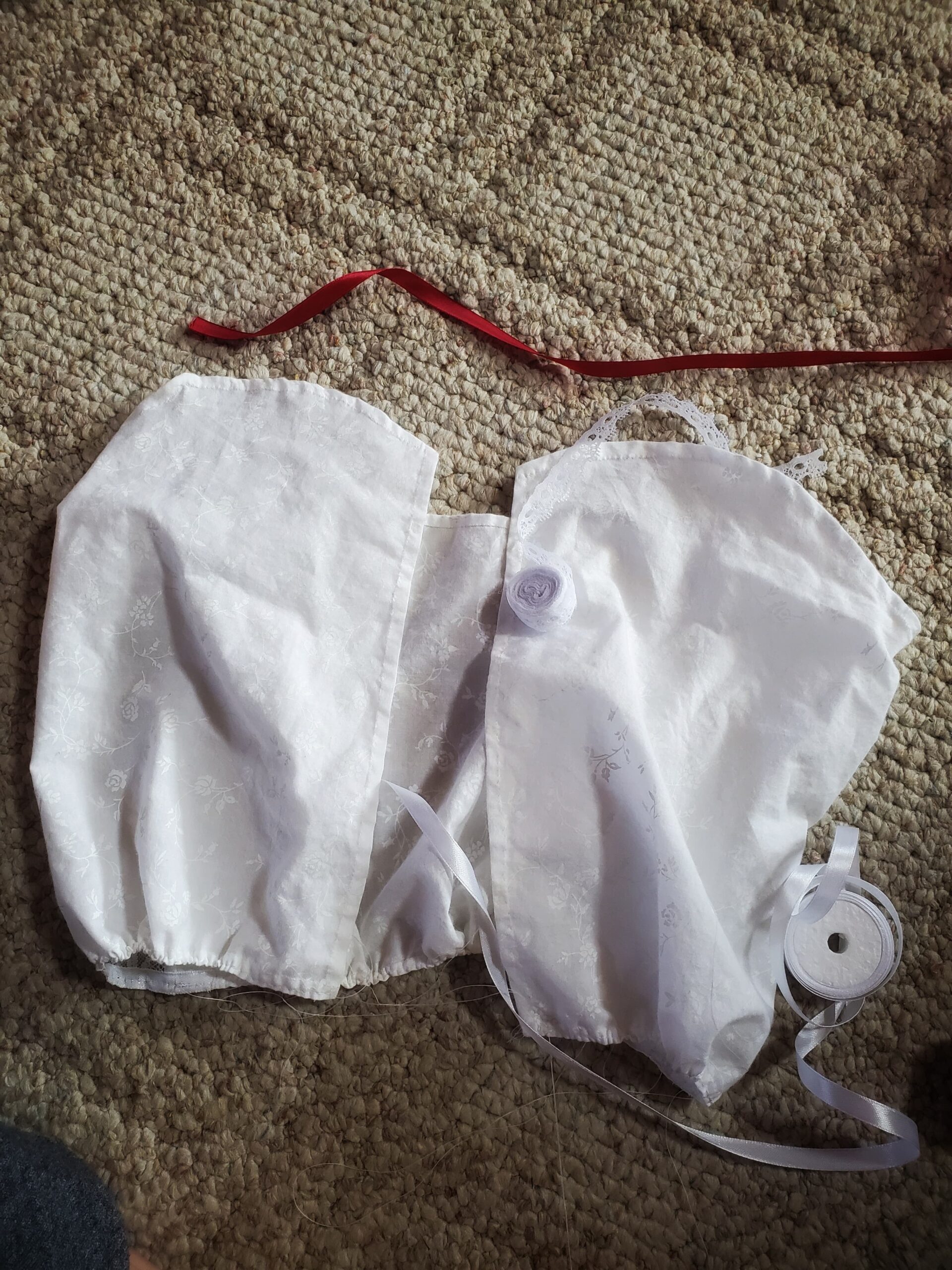
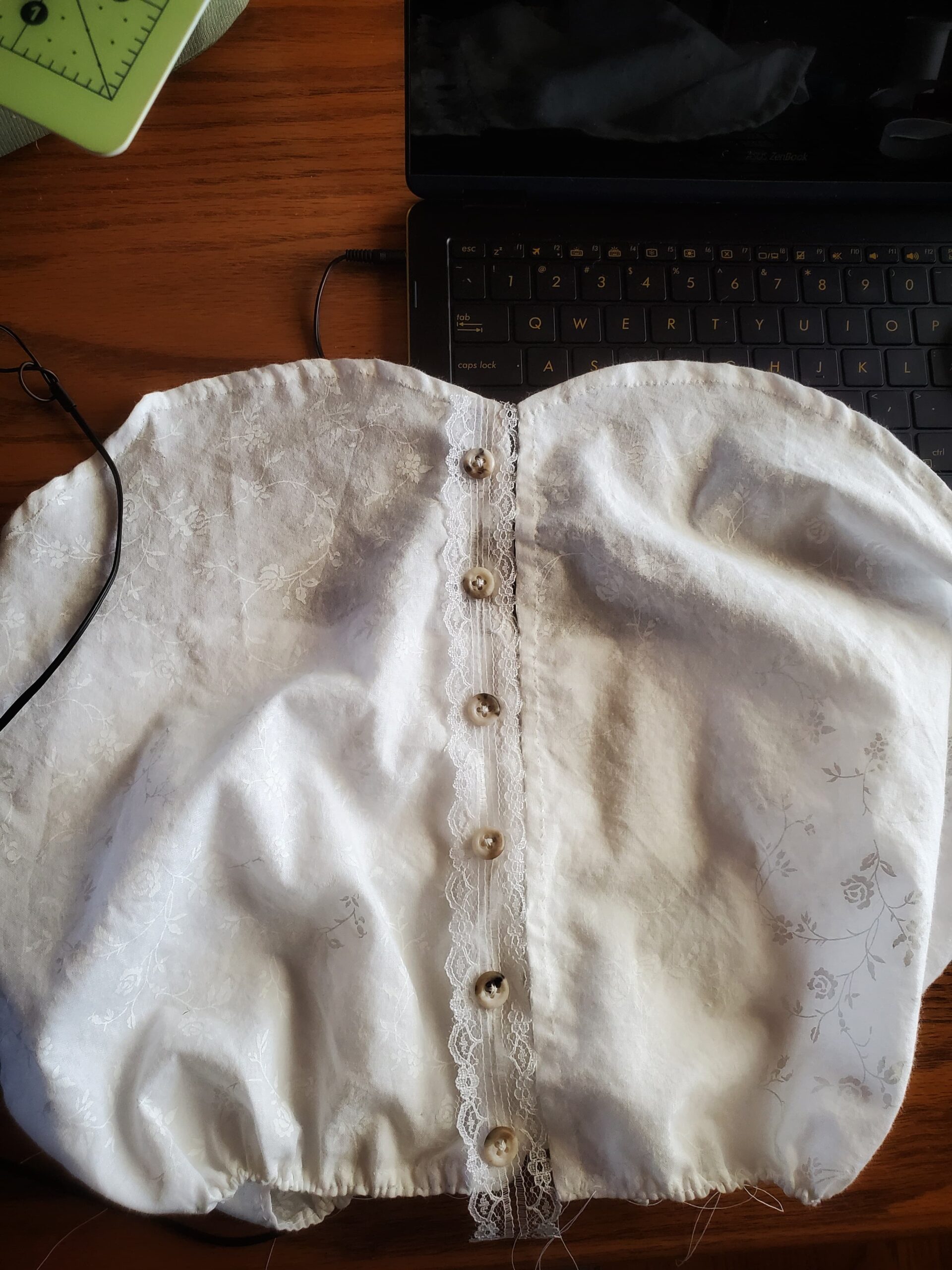
This two-piece outfit was inspired by the delicate and detailed garments from the 18th century. This was a piece I entirely handstitched. From the construction to the lace to the buttons, everything was assembled with care and precision in the hopes of recreating history accurately.
Made with cotton, lace, ribbon, and buttons, this pair of combinations was my first attempt in sewing from a historical pattern reference. Overall, I consider it a success, though there are a few things that need fixed or changed to be truly usable in its intended capacity.
A History in 19th Century Undergarments
Combinations were undergarments made from natural fibers—most often cotton—designed to make wearing a corset more comfortable. They created a soft layer between the body and the structured garments worn on top, helping protect both the skin and the outer clothing from friction, sweat, and wear. Their simple construction made them practical, breathable, and easy to launder, which was essential for everyday use.
These garments became especially popular from the late 1870s through the 1910s, a period when women’s fashion favored smooth silhouettes and multiple layers.
Combinations replaced the separate chemise and drawers that had been common earlier, offering a streamlined alternative that reduced bulk under tightly fitted bodices and corsets. Their one‑piece design also made dressing quicker and more comfortable.
Outside of this specific era, however, women typically relied on a chemise or a chemise paired with drawers as their foundational layer. Each time period had its own preferences and practical needs, but the purpose remained the same: to create a comfortable barrier between the body and the garments that shaped the fashionable silhouette of the day.