Gallery
A Pair of Stays: The Pauper Dress
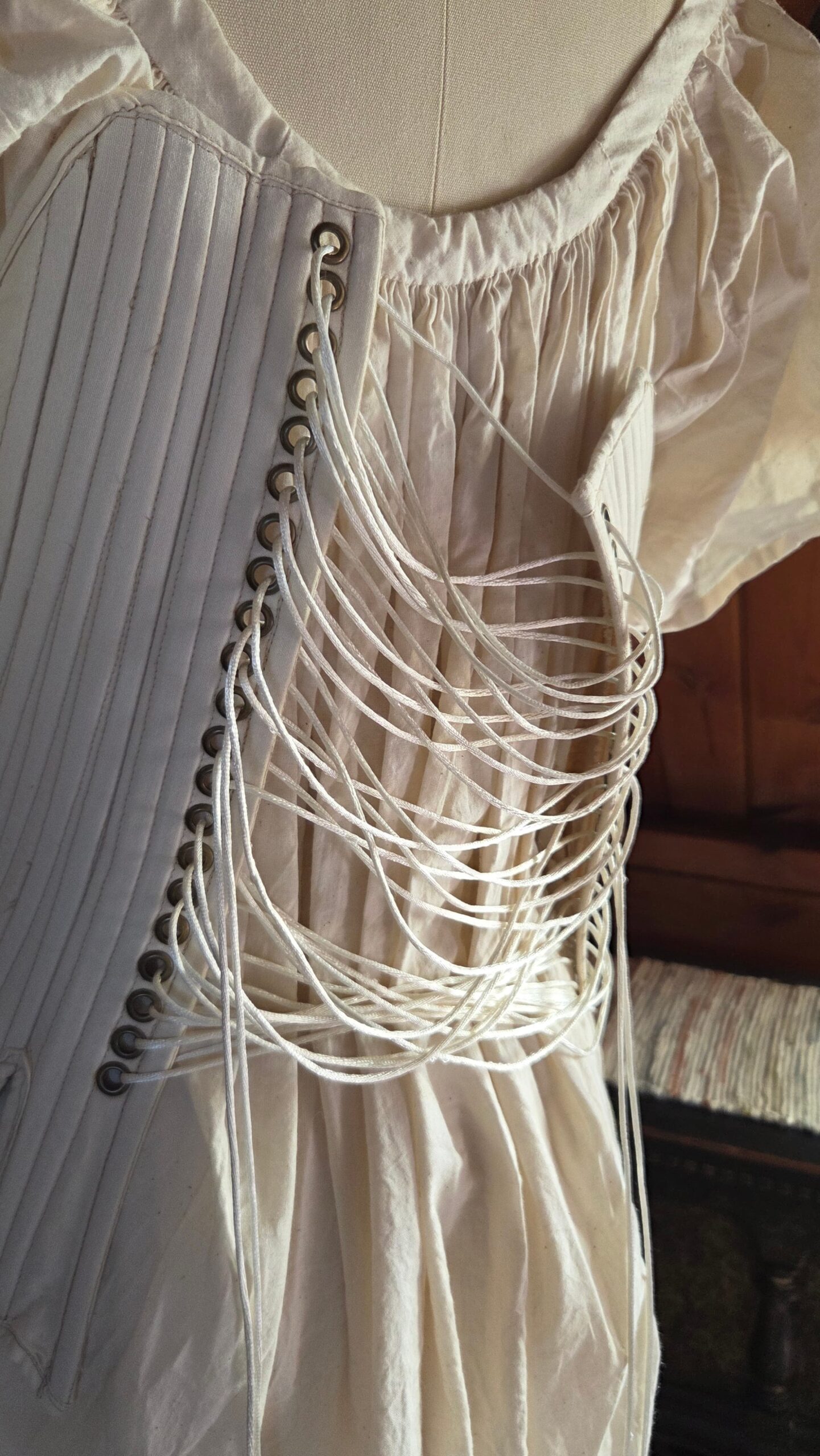
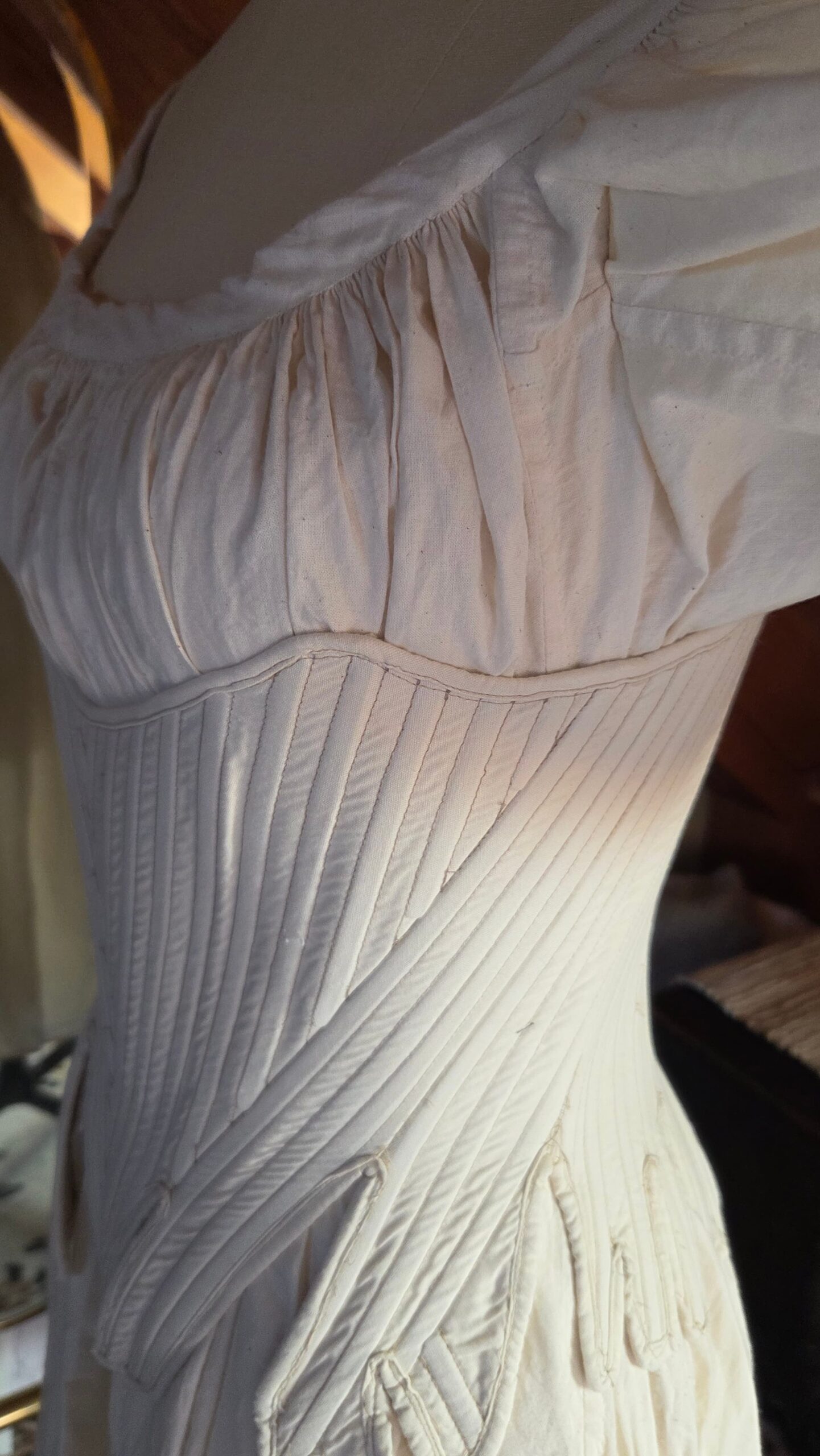
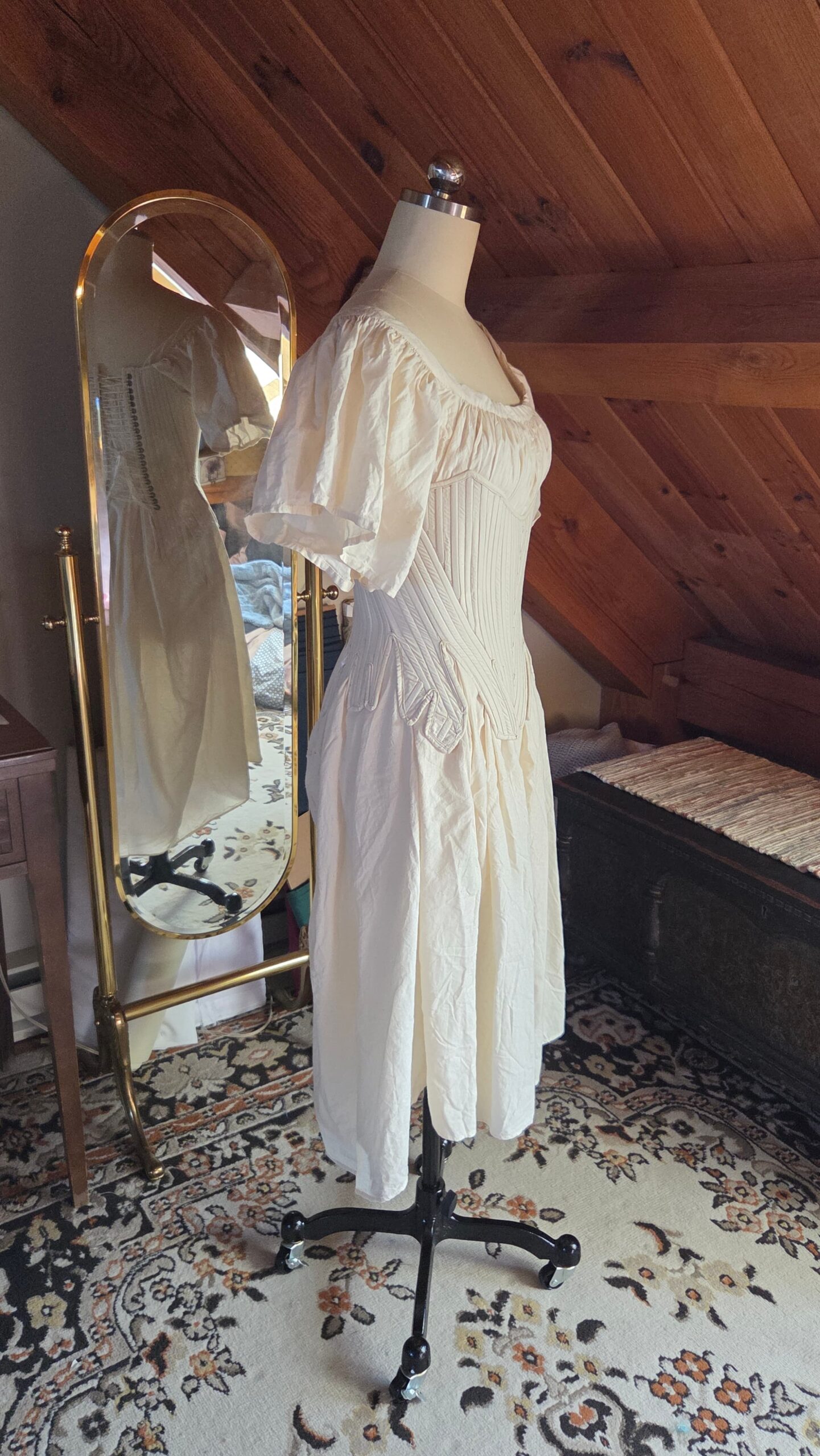
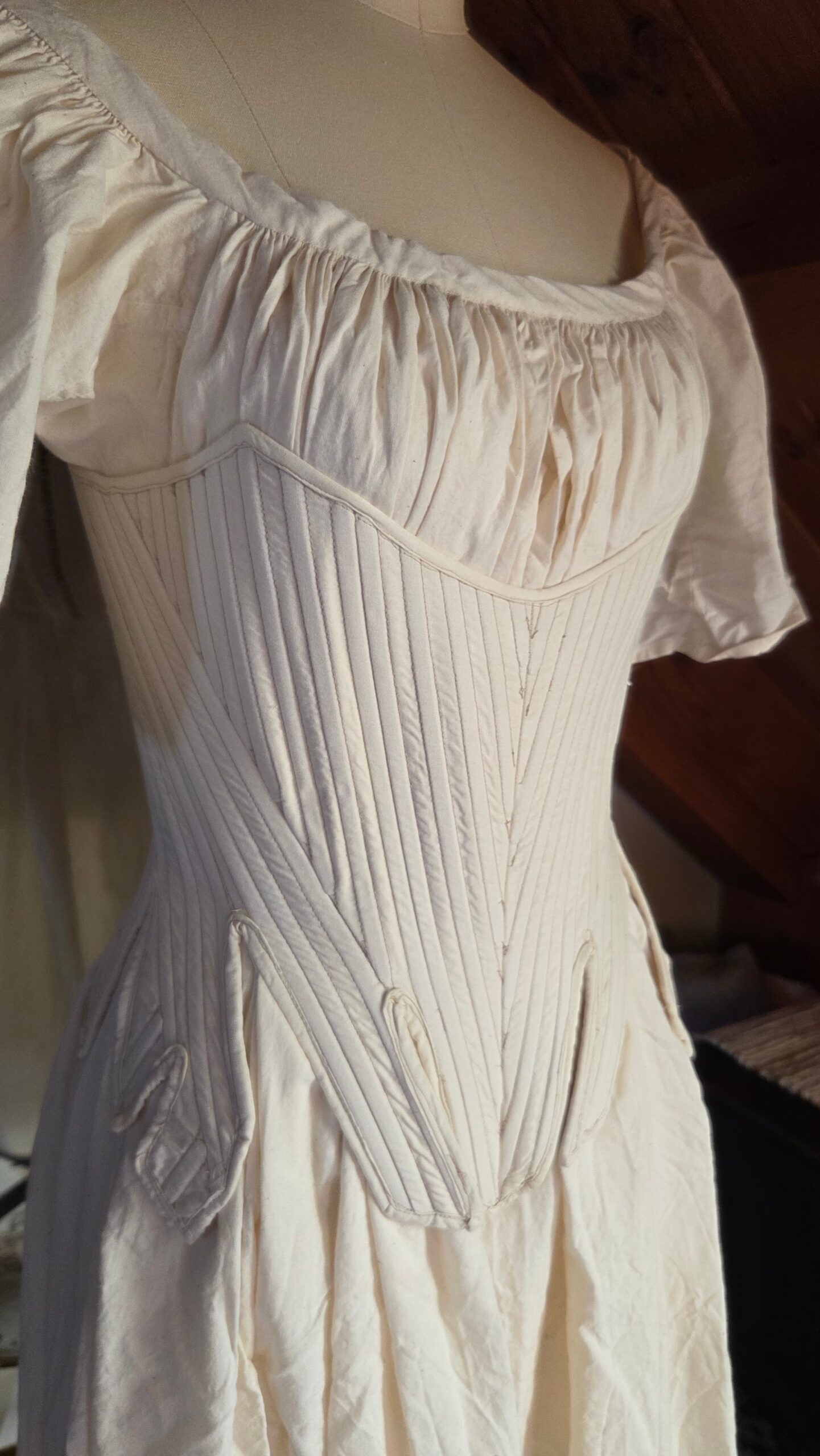
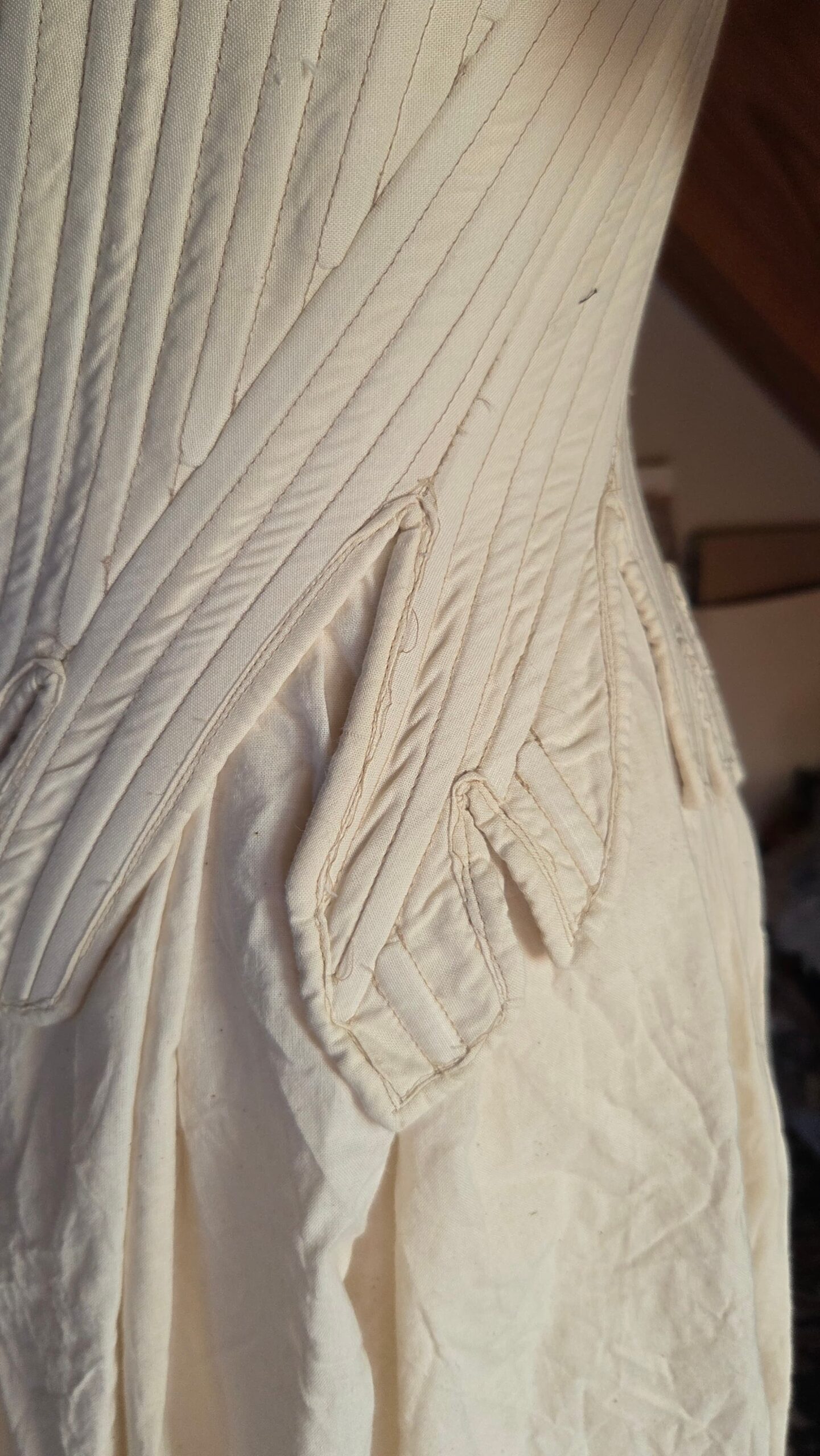
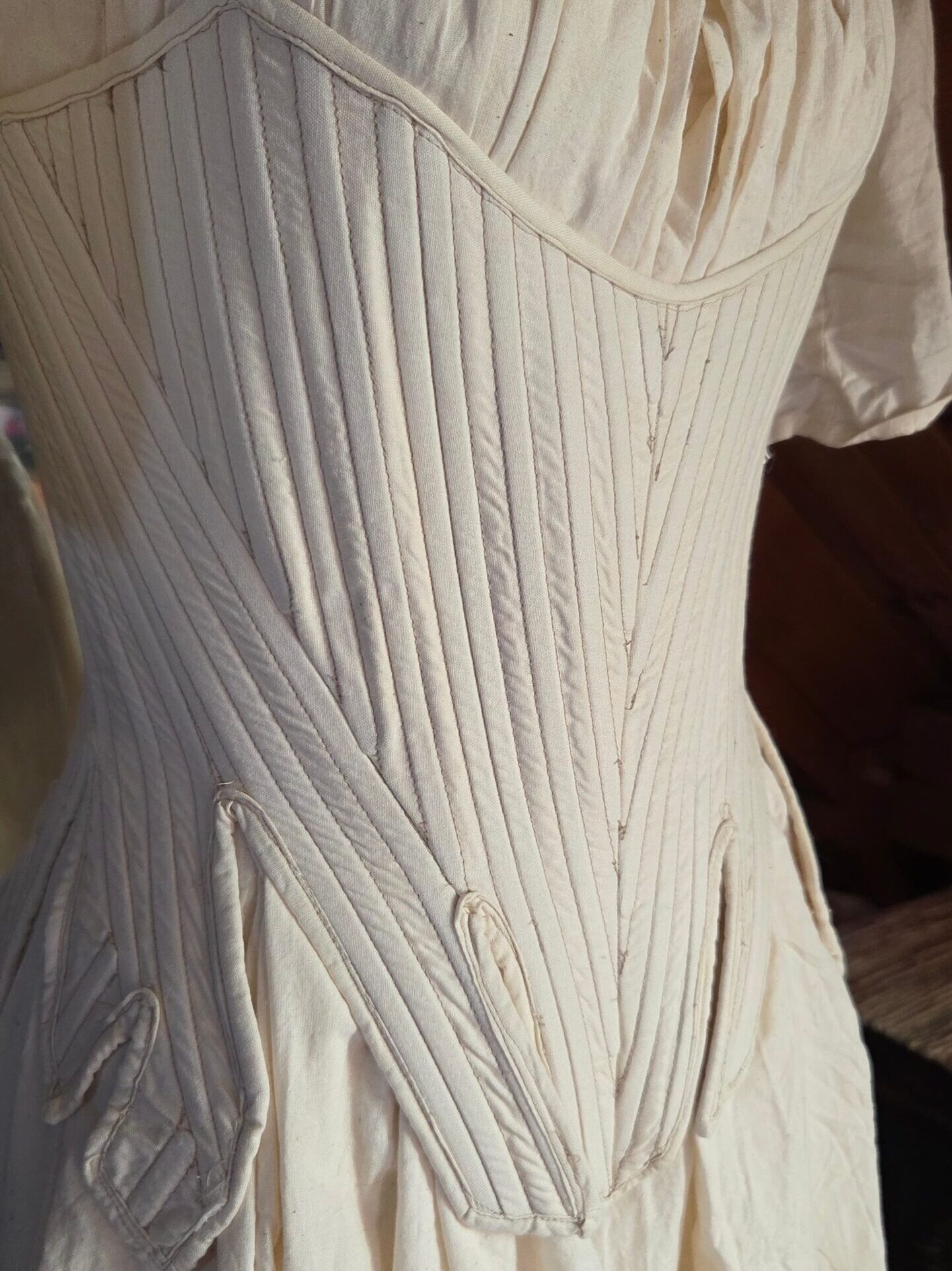
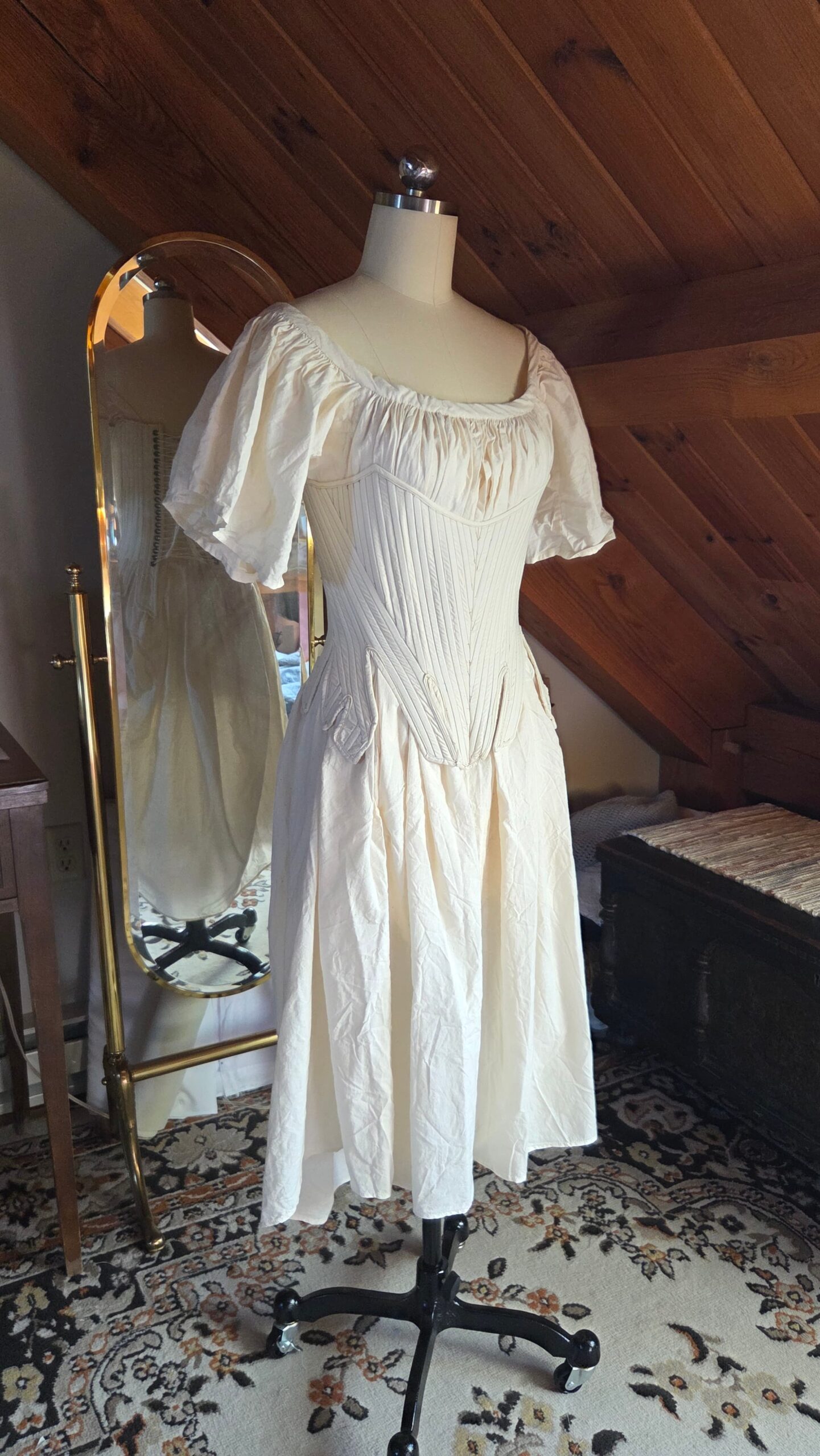
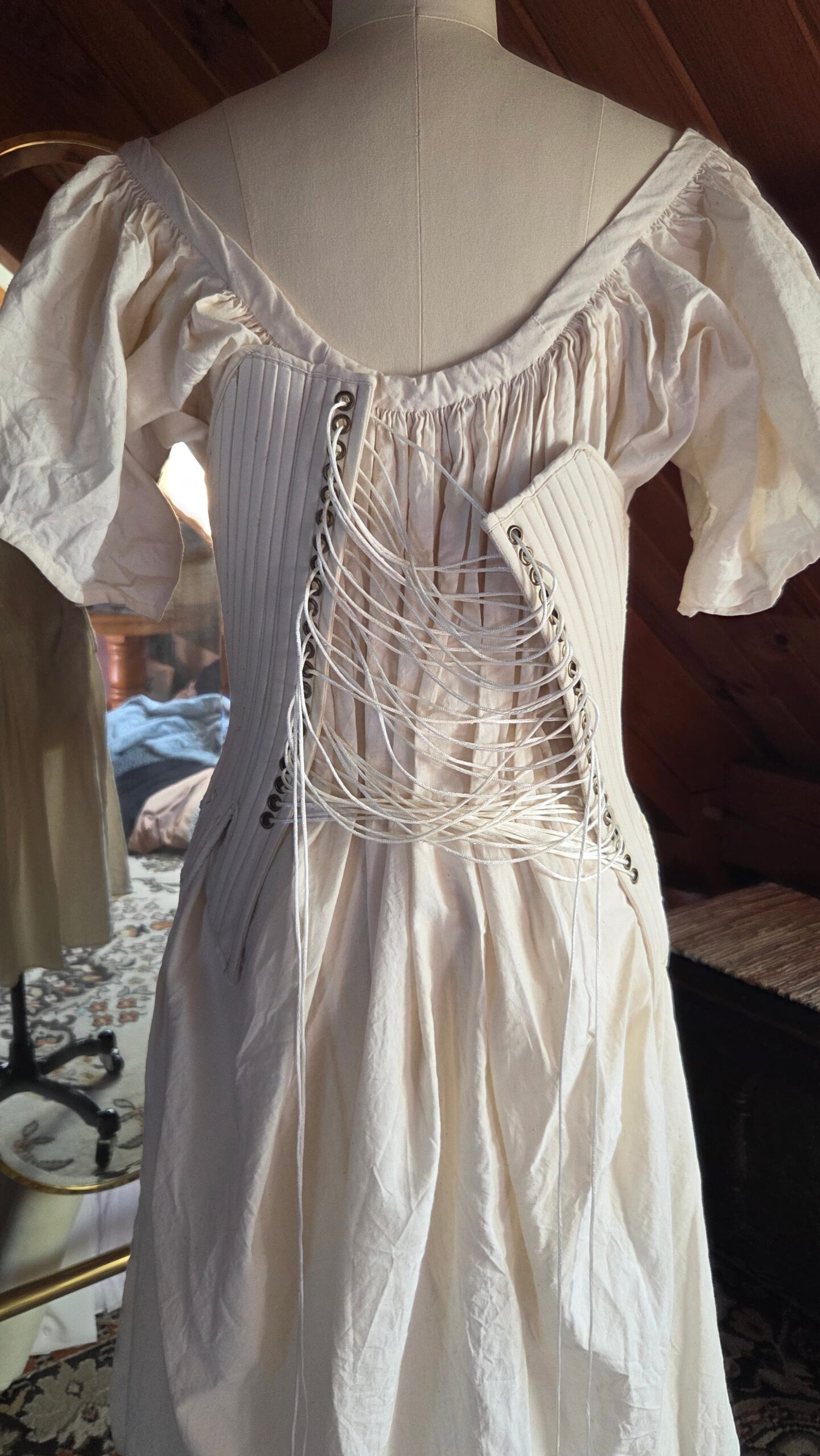
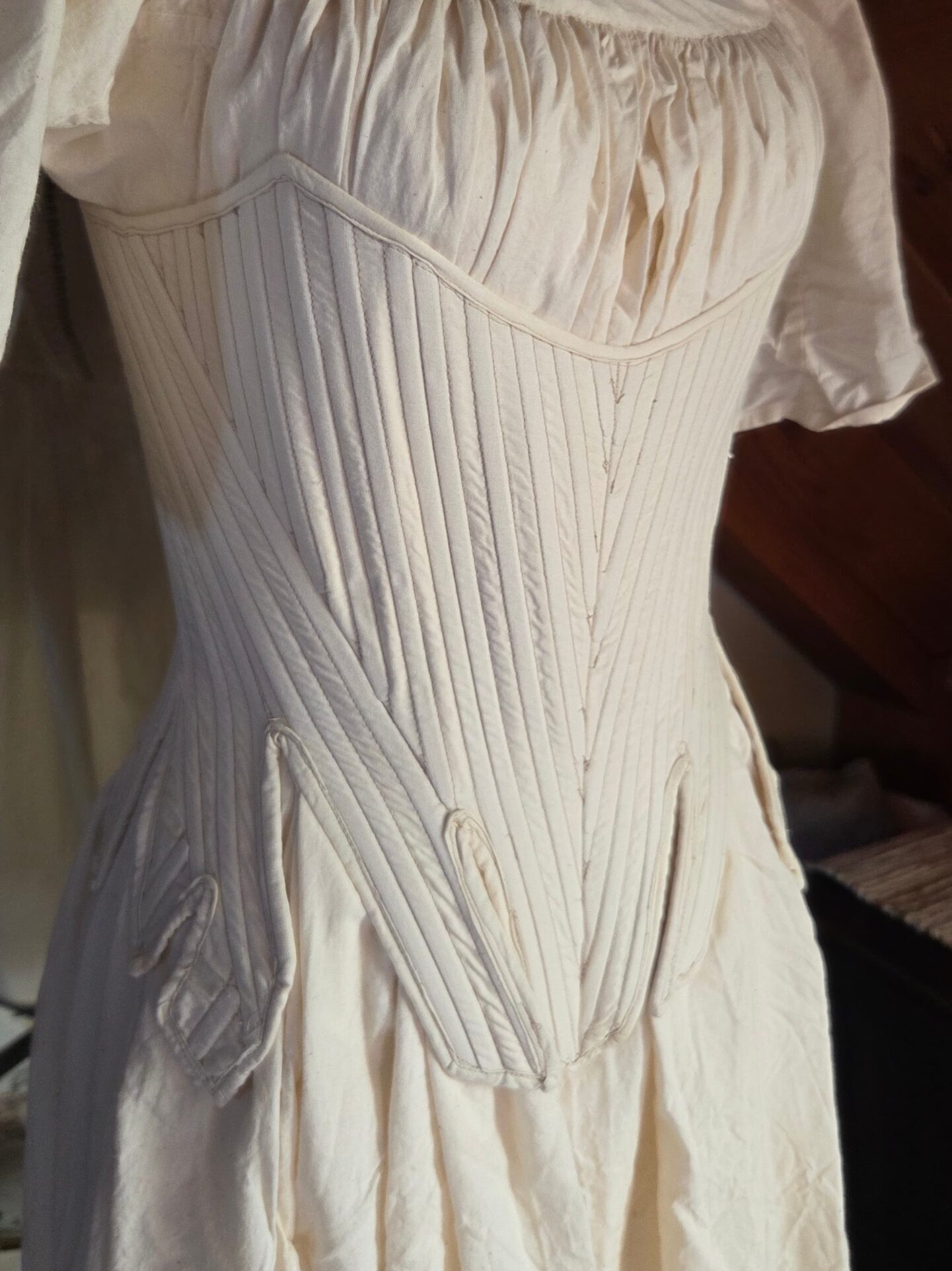
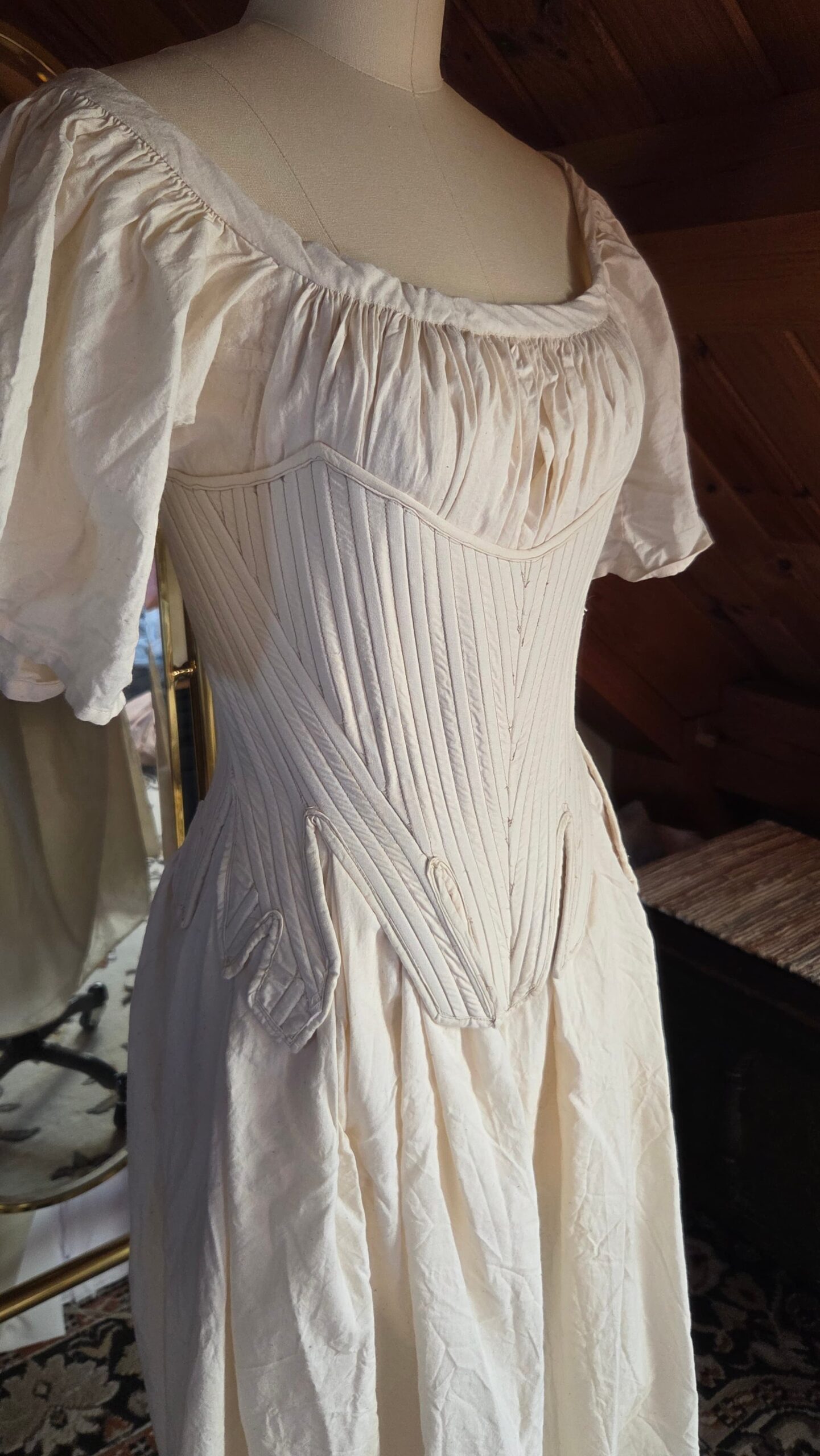
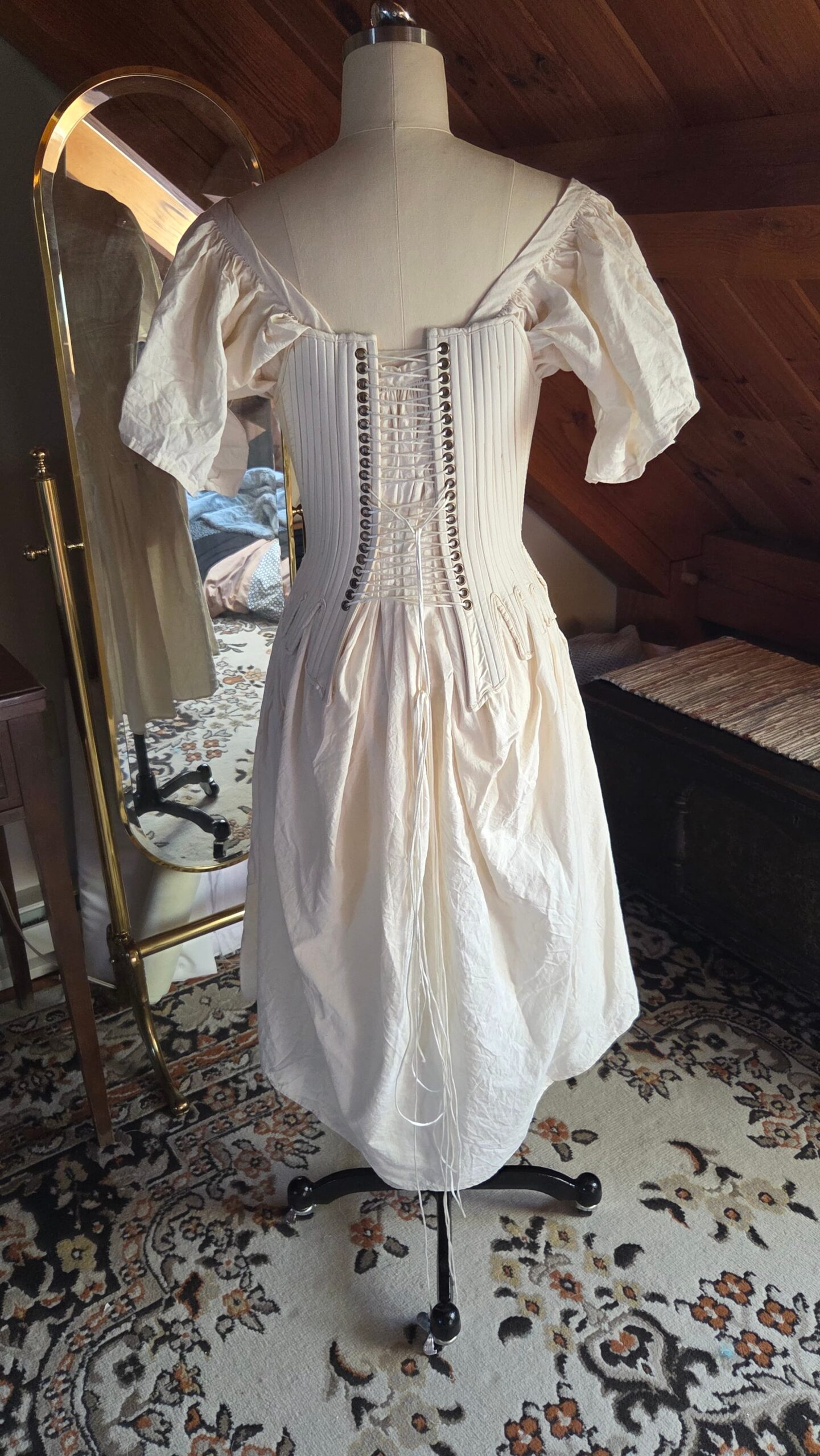
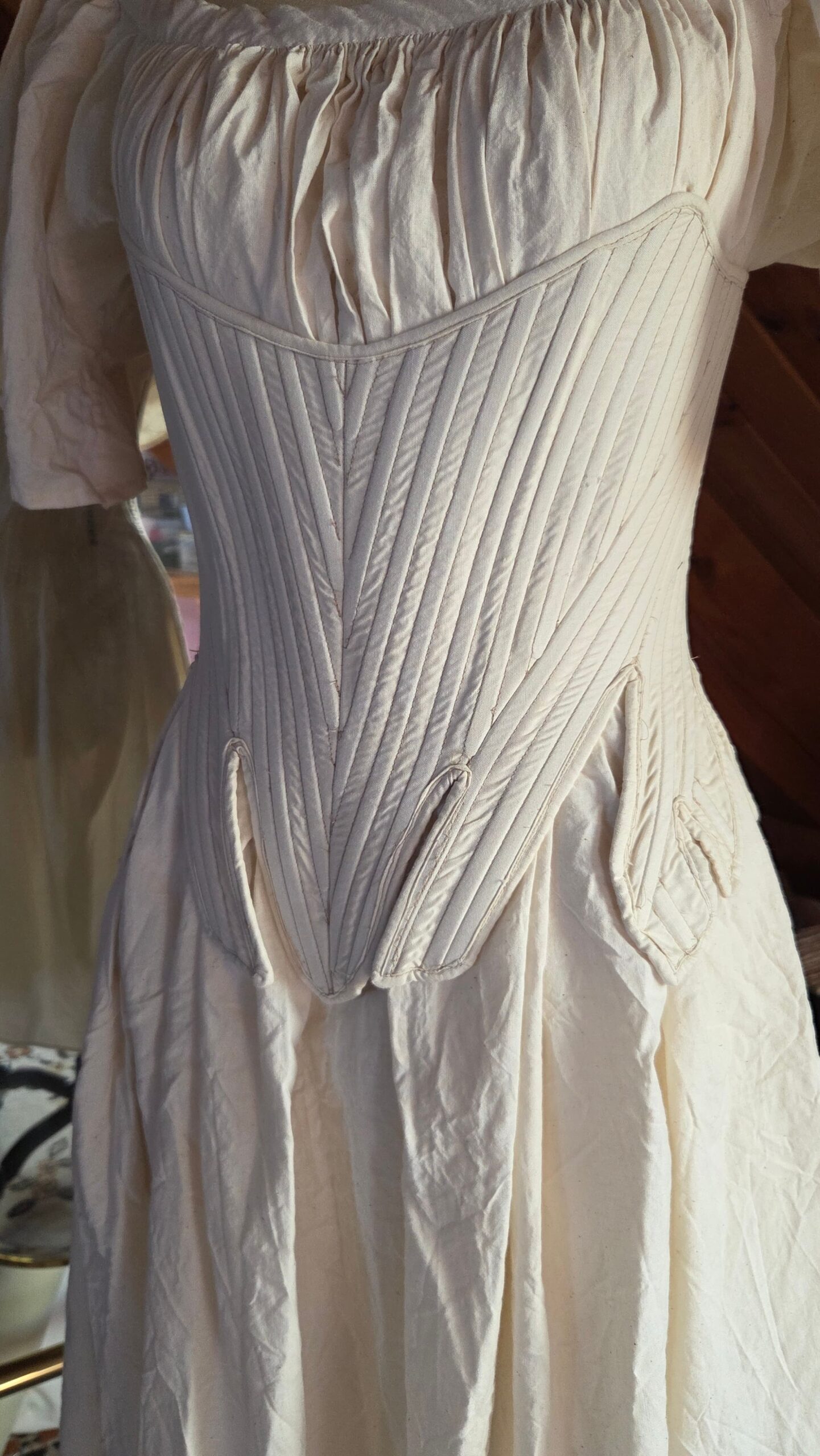
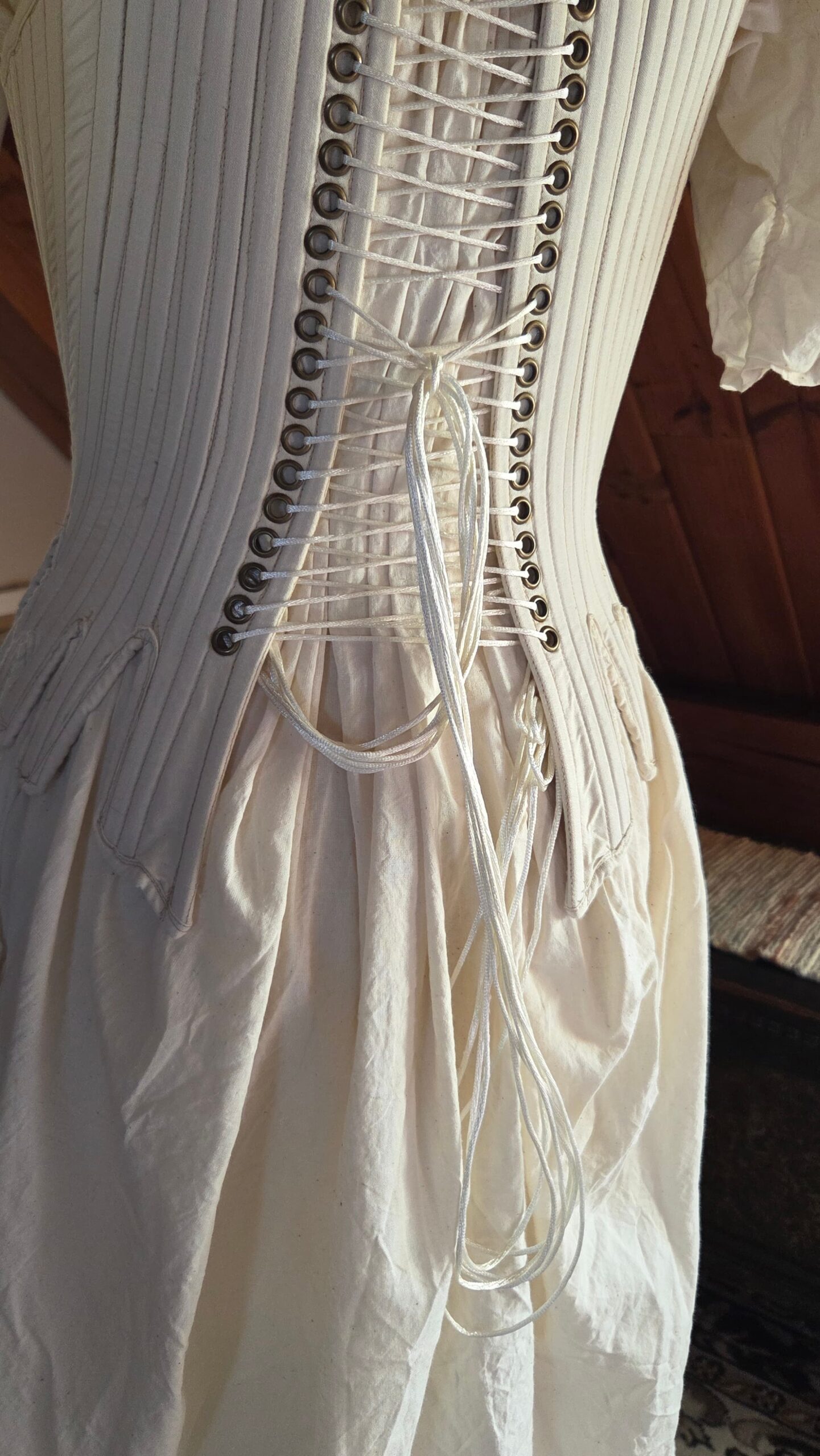
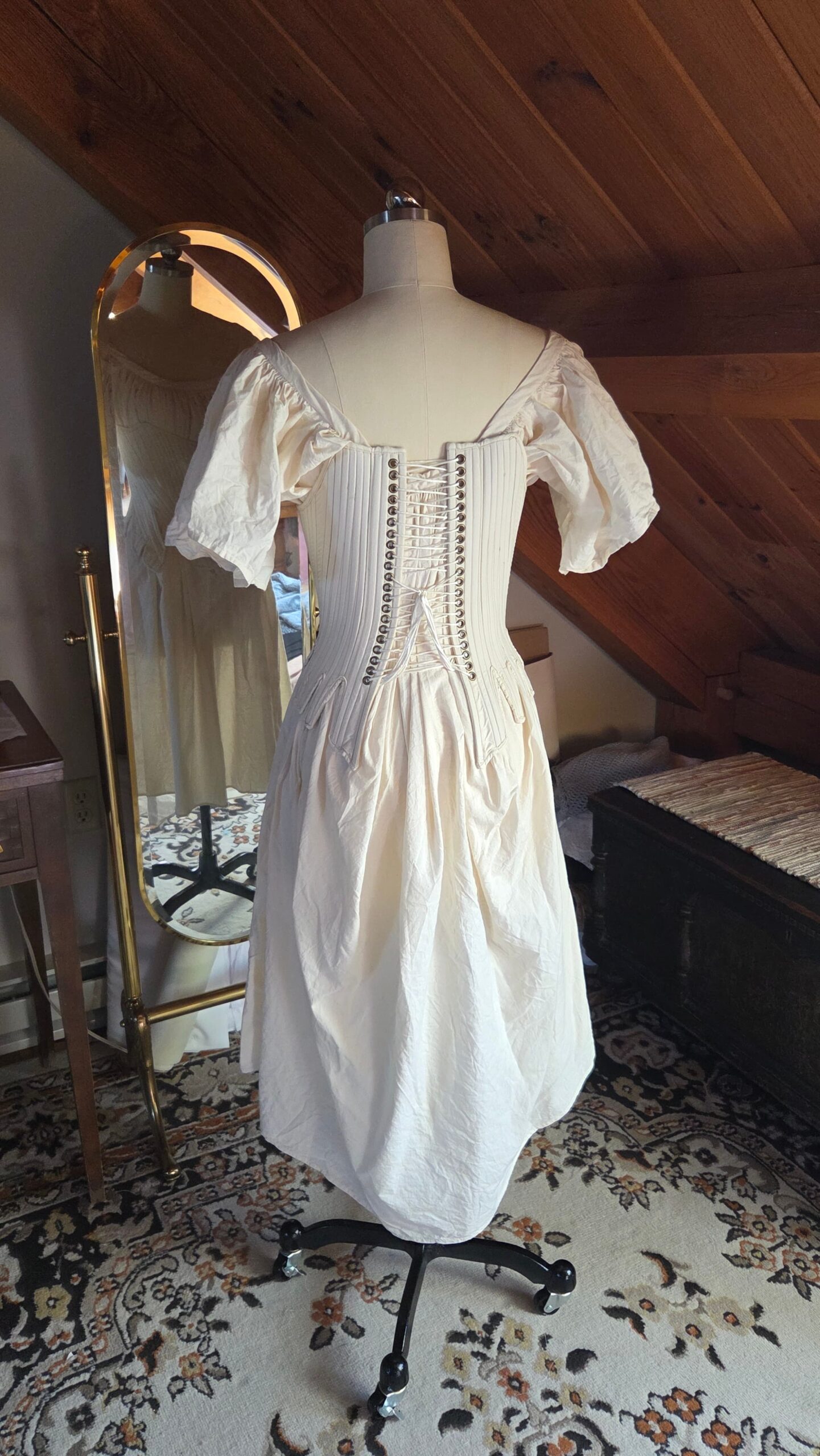
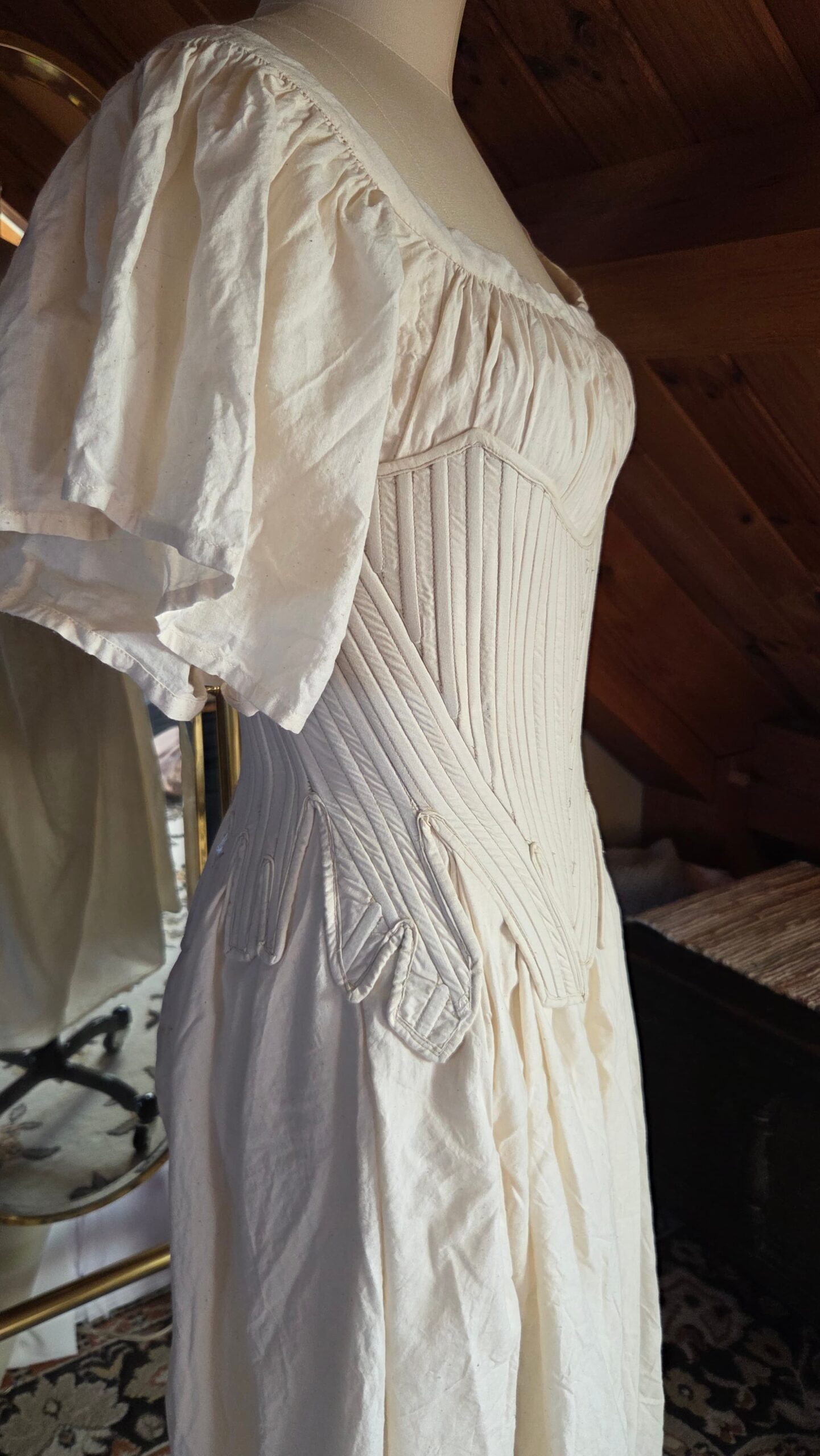
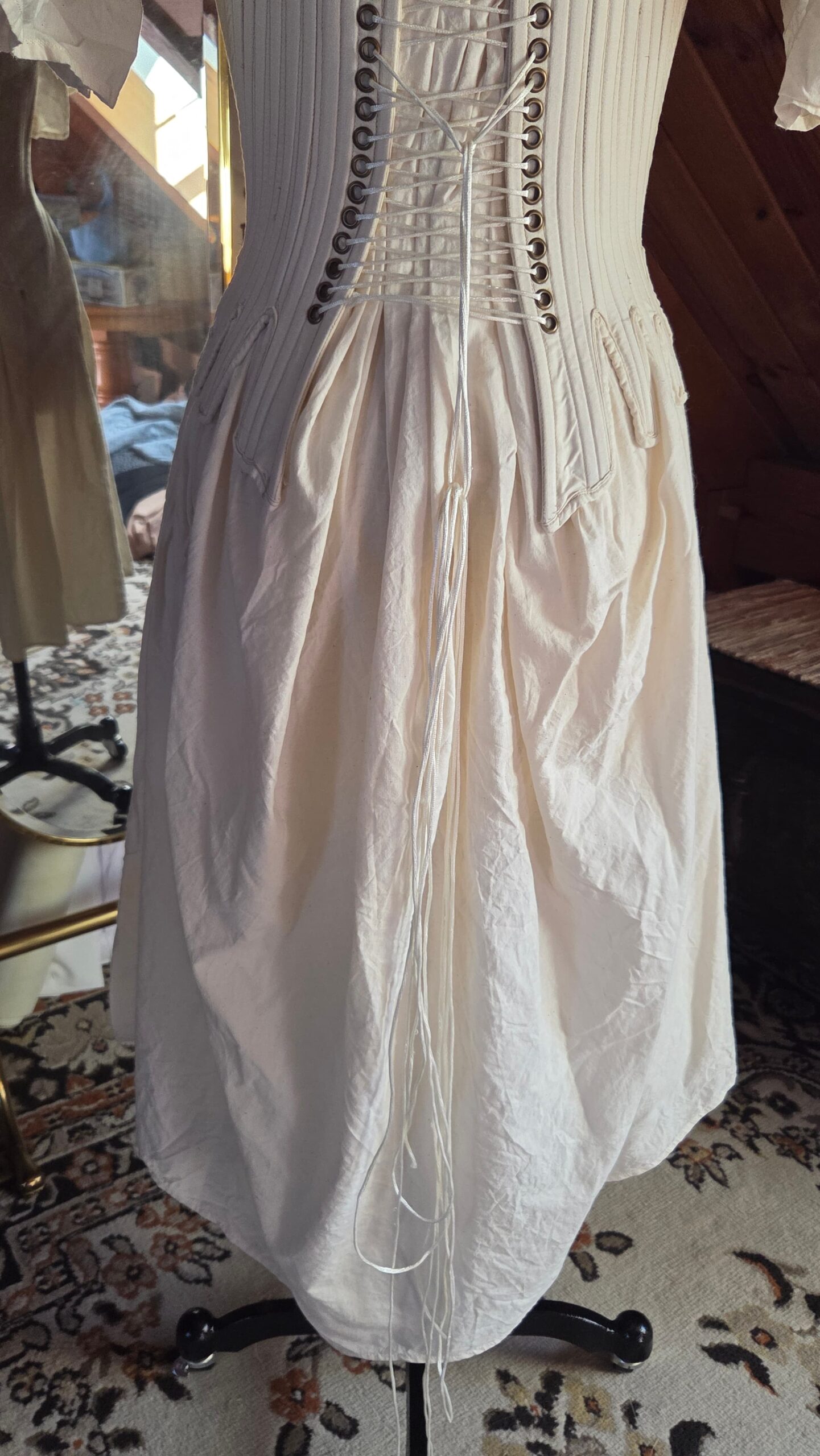
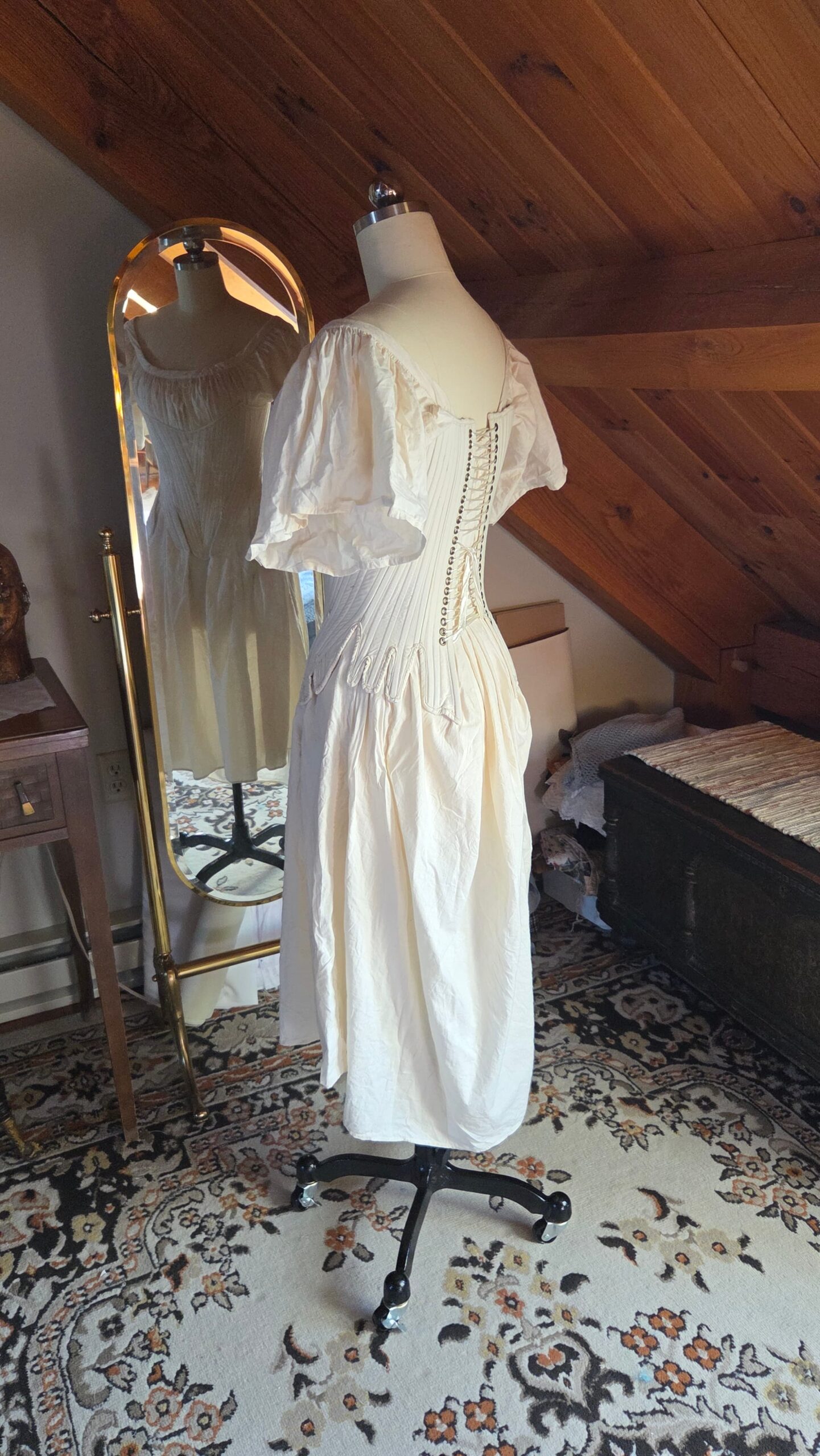
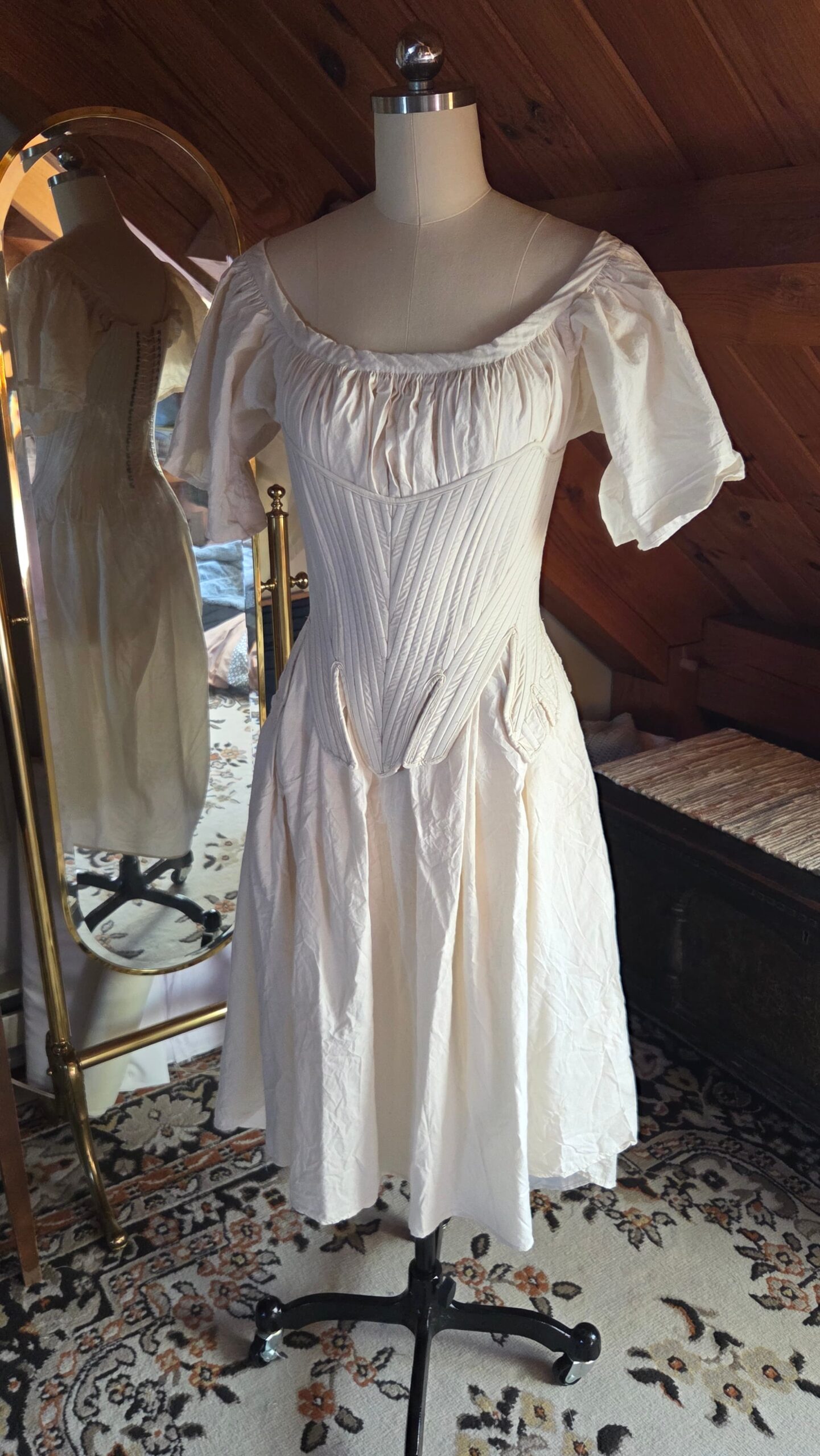
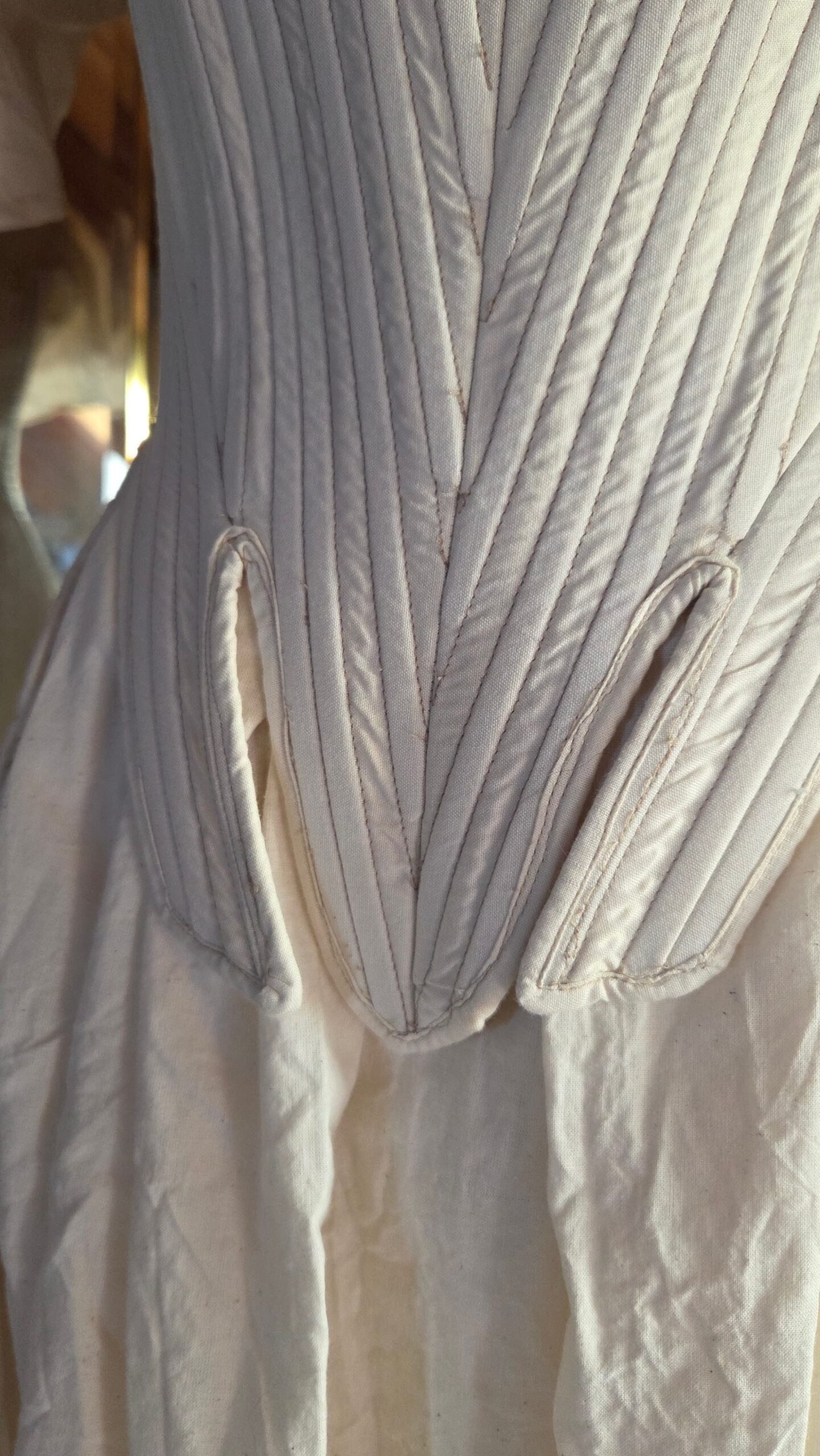
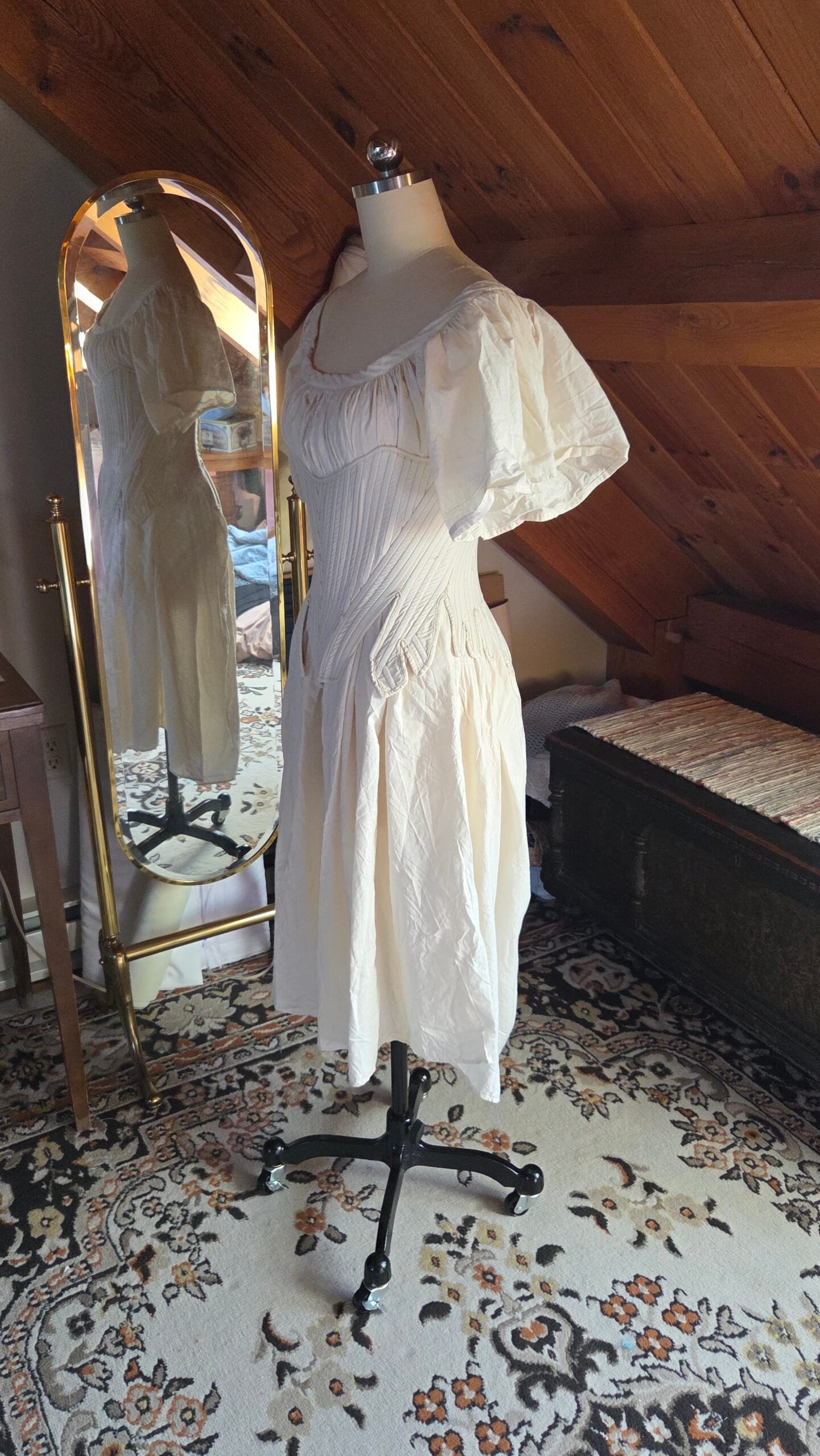
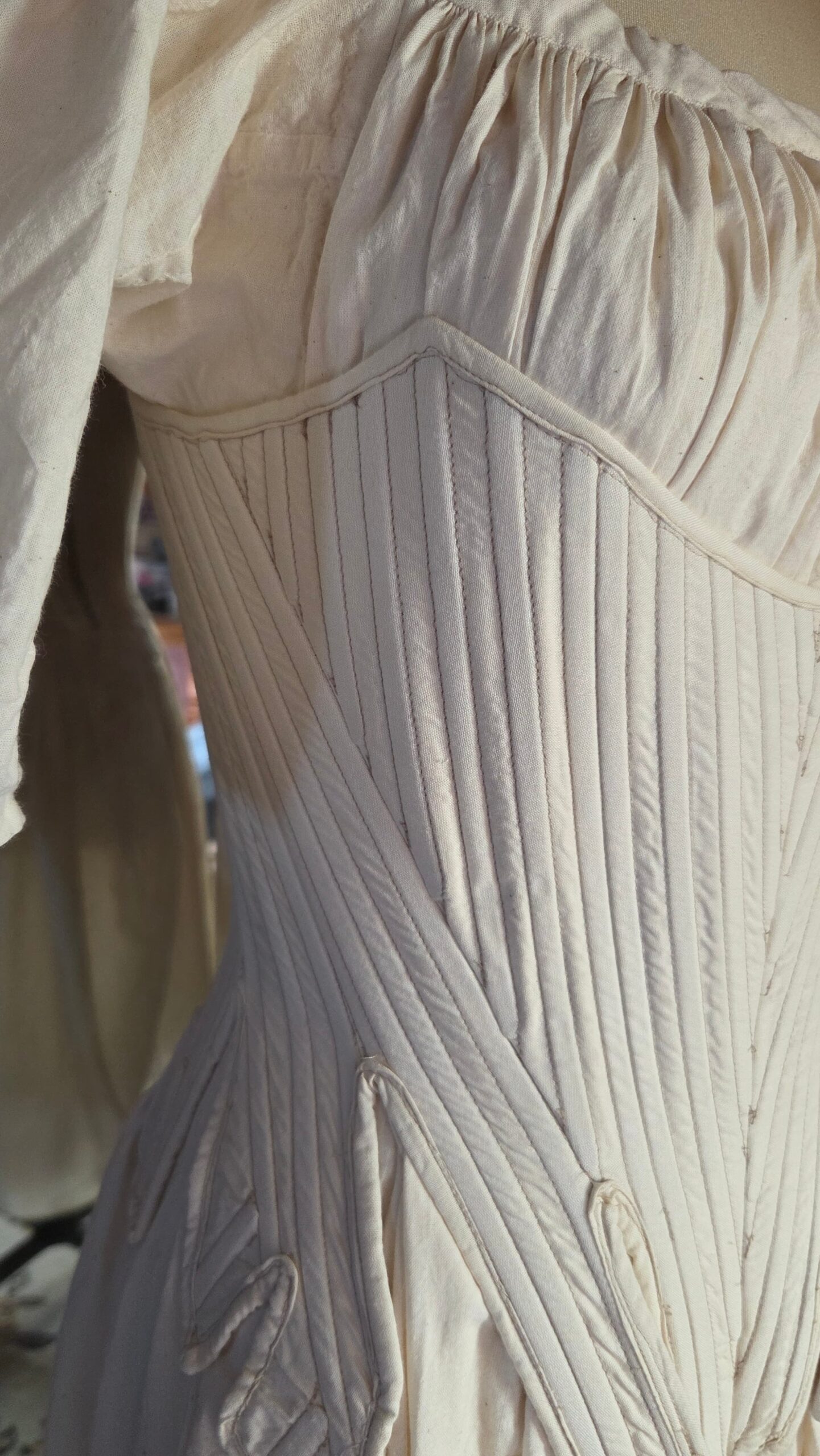
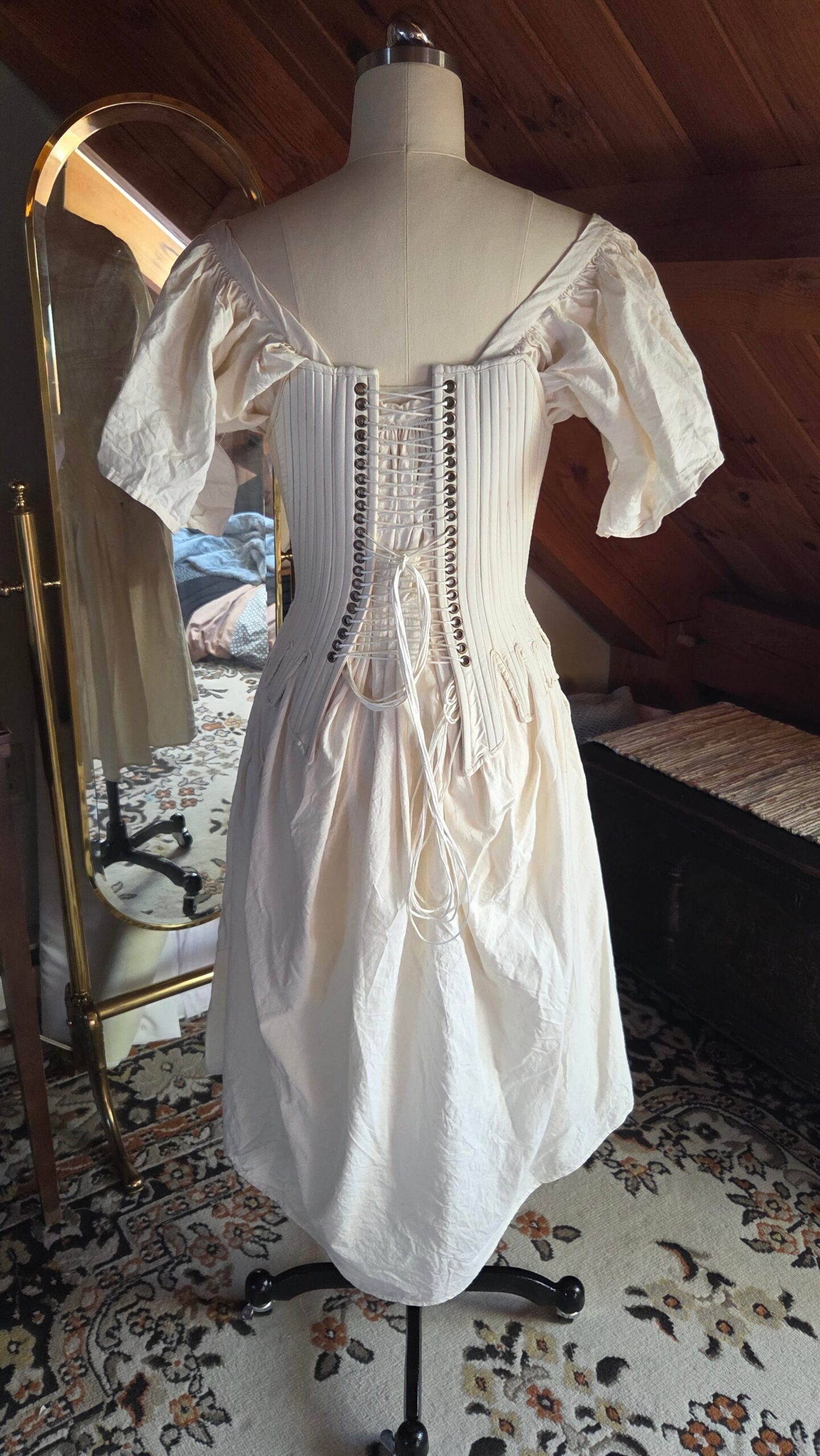
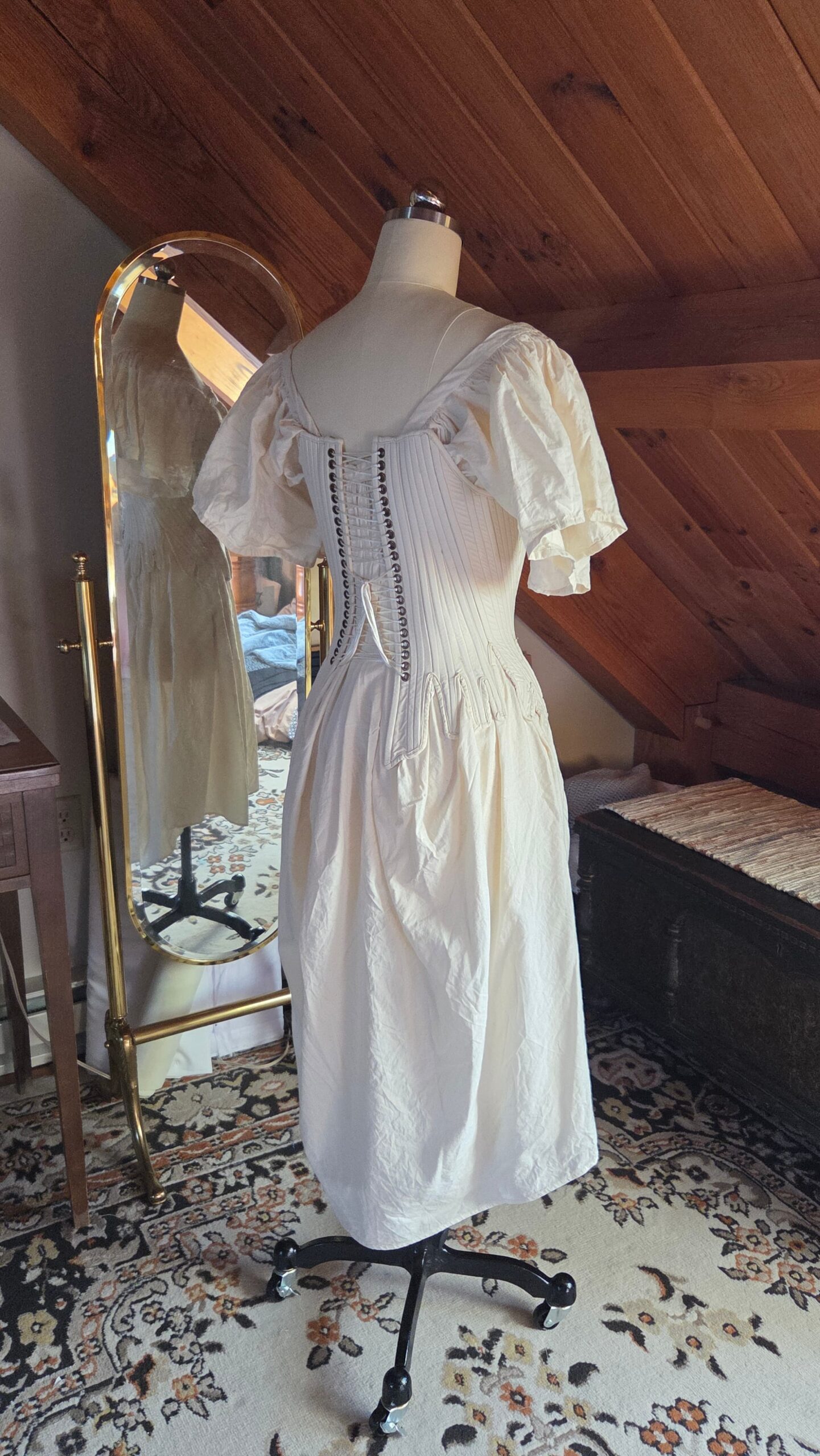
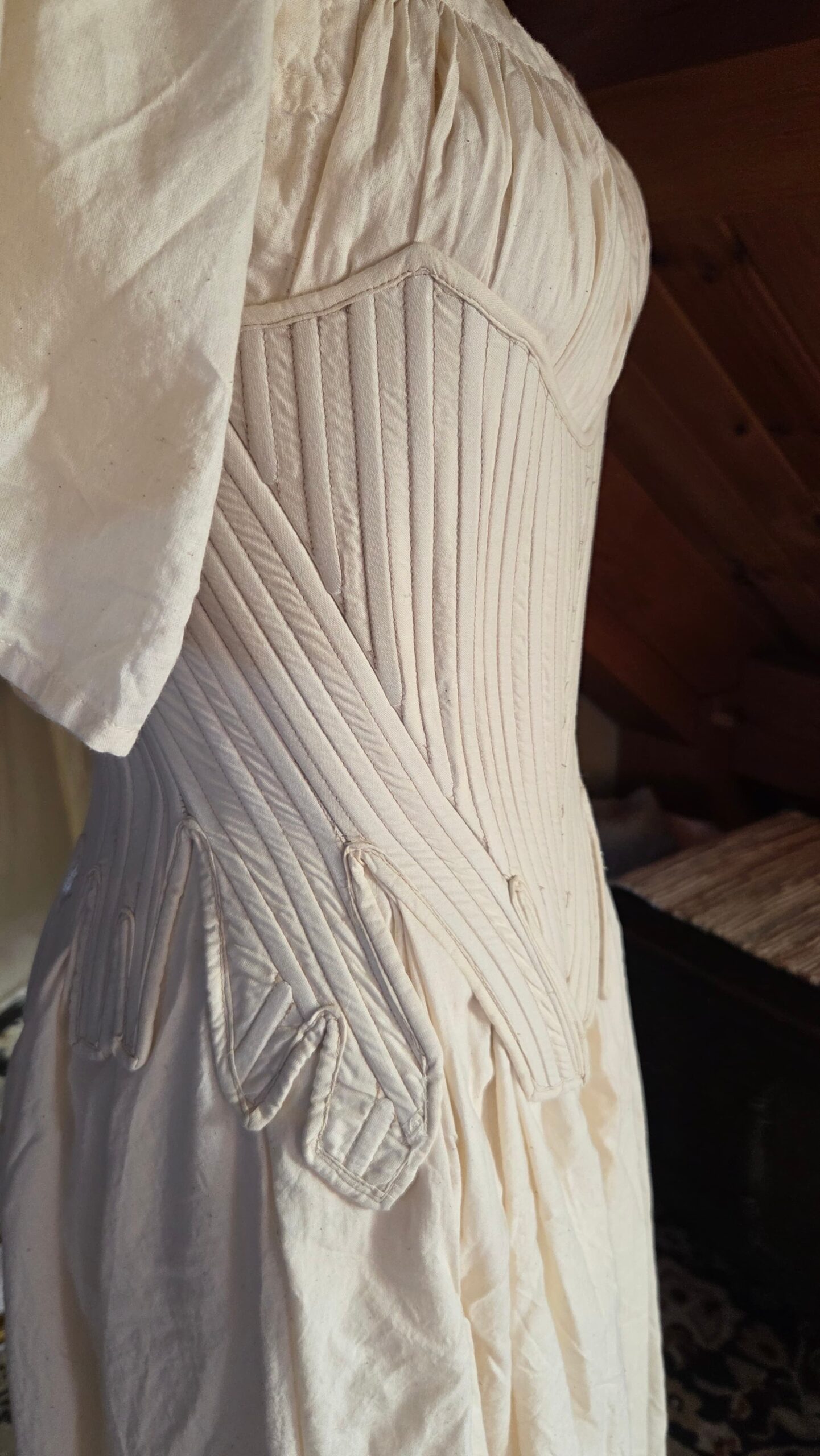
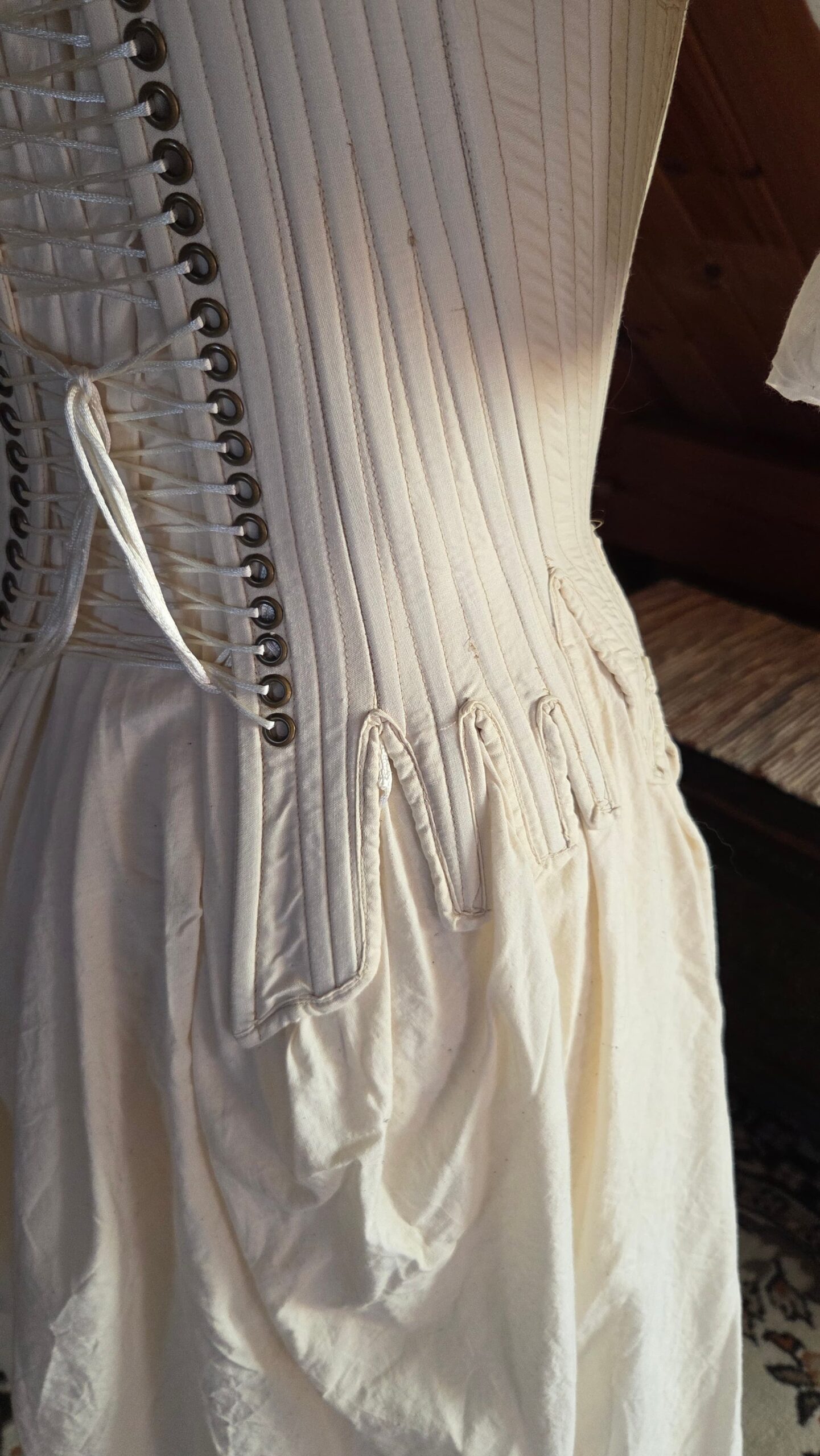
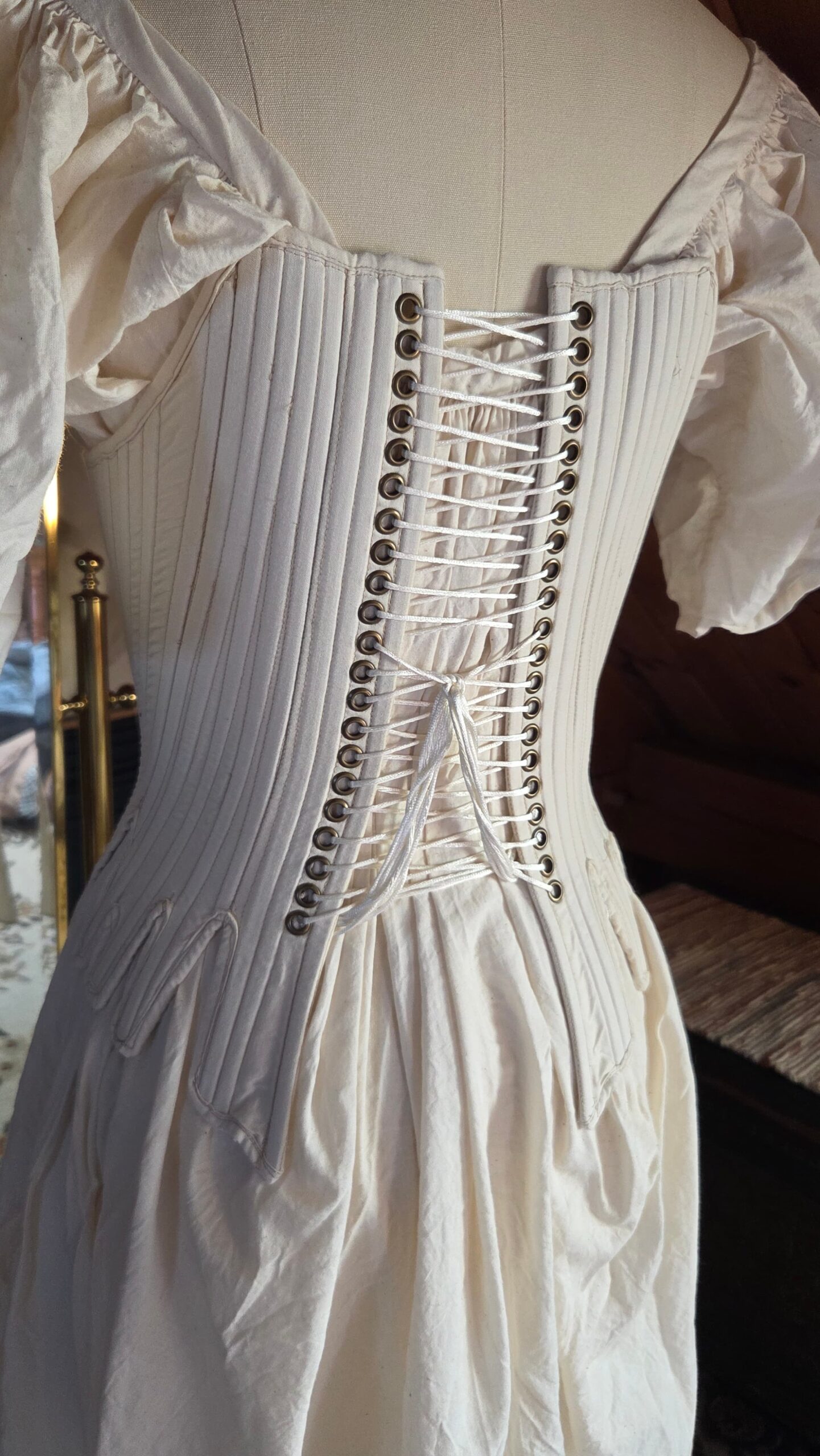
The Pauper Dress from Princess and the Pauper starts with its essential base layers, including this 1760s‑inspired pair of stays. I drafted the pattern using the book Stays and Corsets Volume 2: Historical Patterns Translated for the Modern Body by Mandy Barrington, and constructed the stays with duck-cloth for the lining, a practical substitute for the more traditional cotton coutil. The outer fabric is a simple cotton muslin, and the piece is heavily boned with plastic boning to achieve the right structure. It’s a humble but effective foundation for the dress.
The History of Stays
The purpose of a pair of stays is to shape the silhouette of a dress, creating a smooth, flat, and unwrinkled bodice. Historically, stays were lined with baleen—also known as whalebone—a material that was thin, flexible, and remarkably sturdy,
allowing the garment to hold its shape while still moving with the body. Today, whalebone is no longer used due to laws and regulations, and modern stays rely on plastic or steel boning as the closest functional equivalent.