Gallery
A Plaid Organza Gown
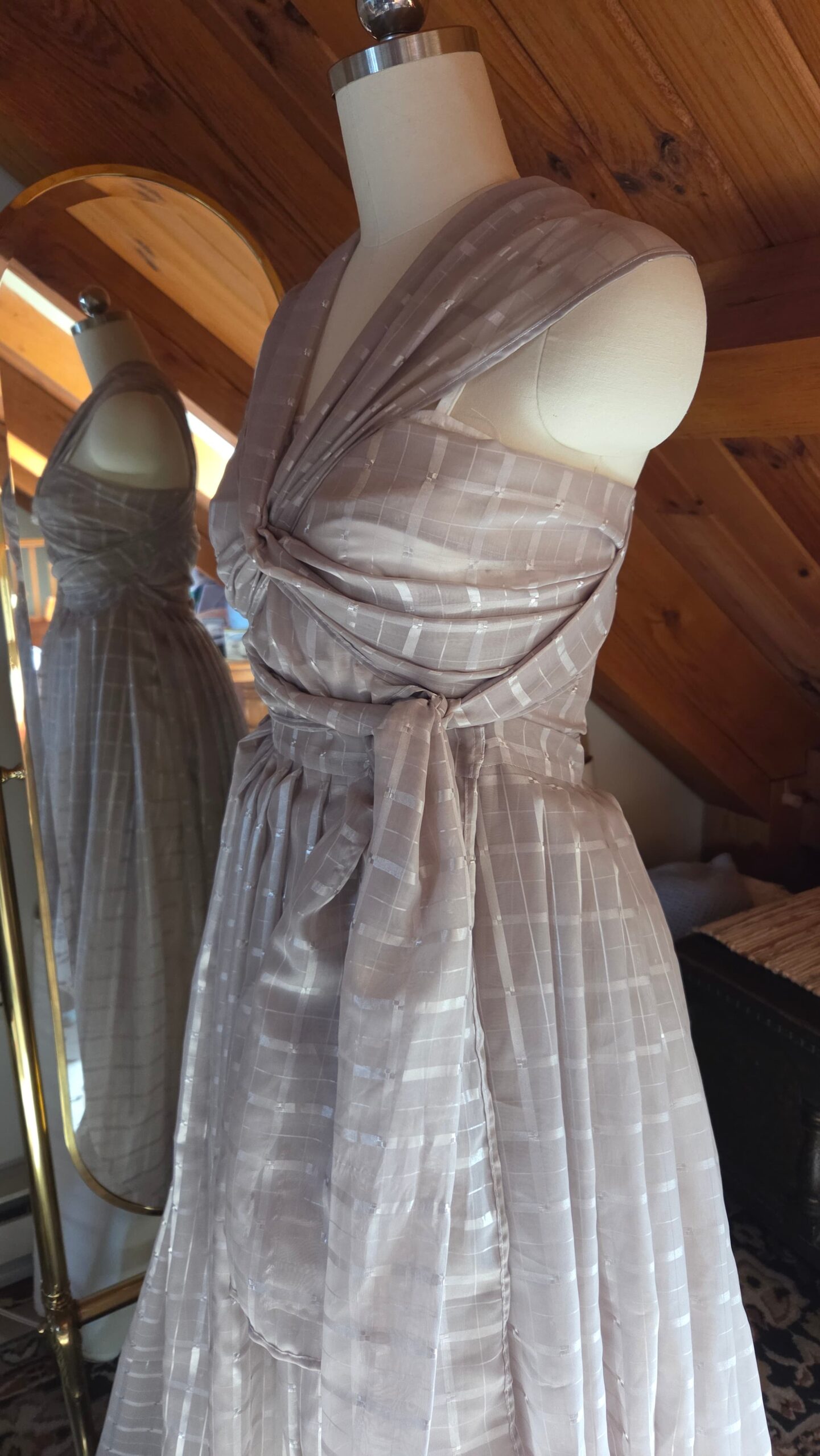
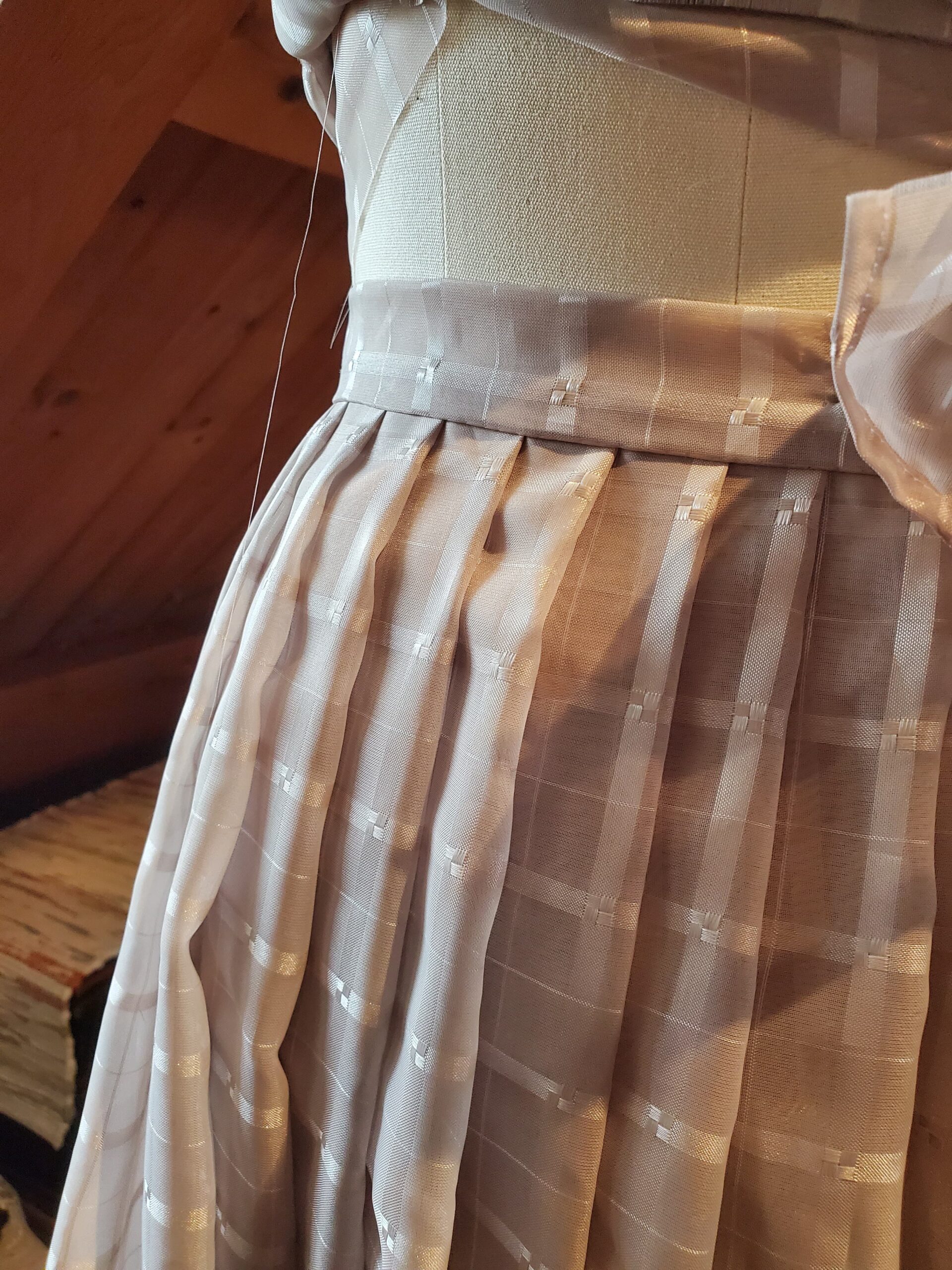
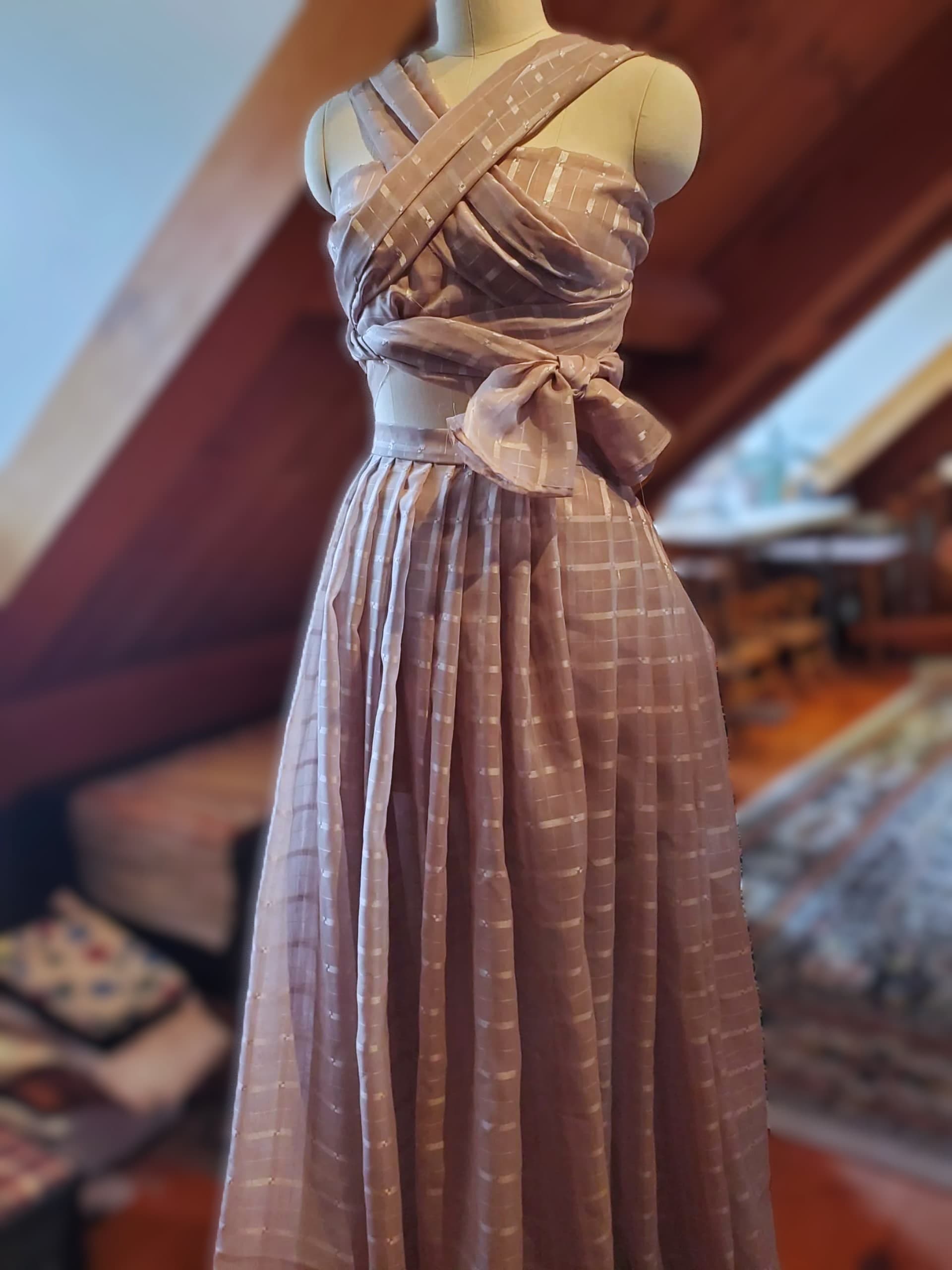
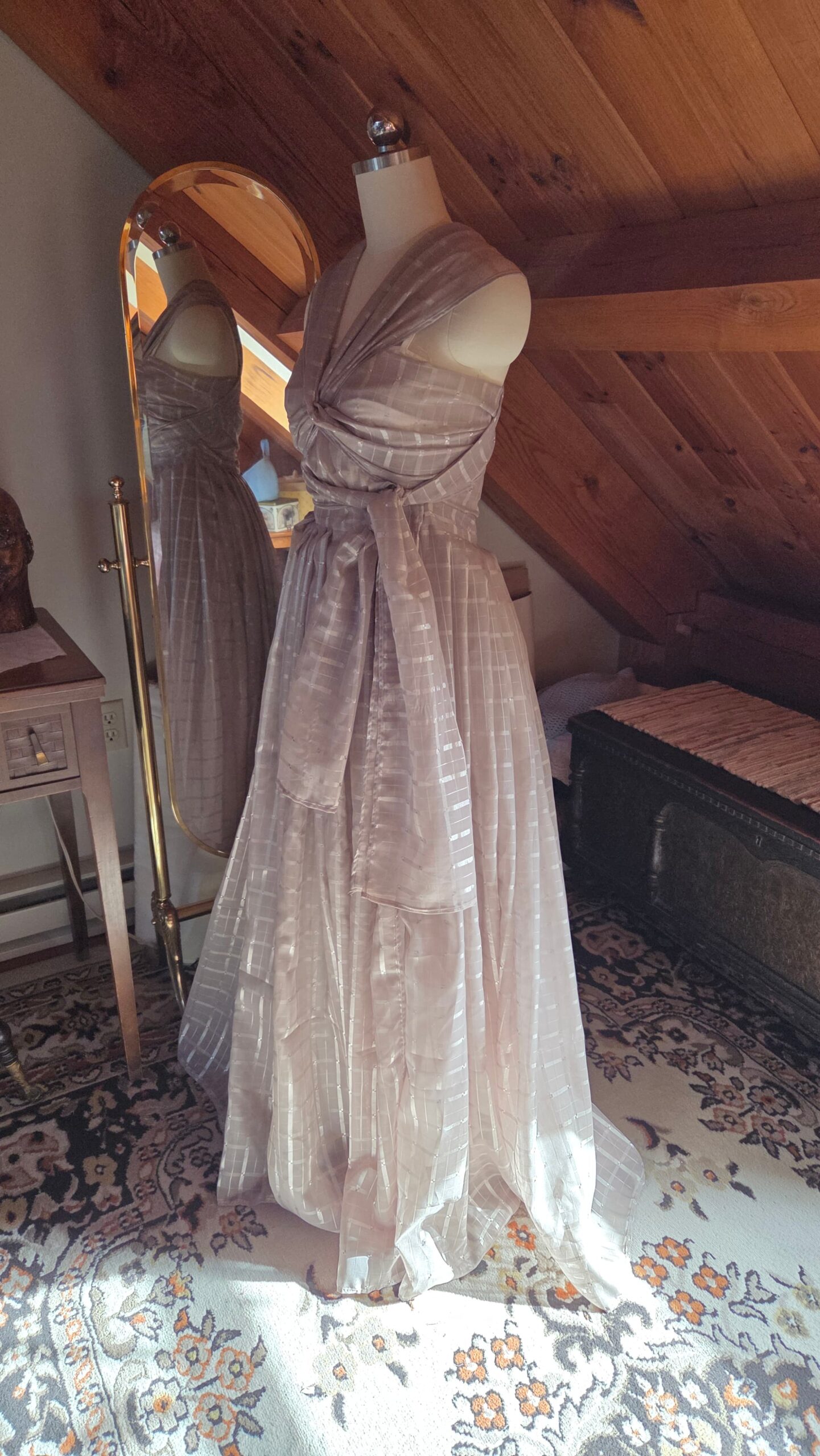
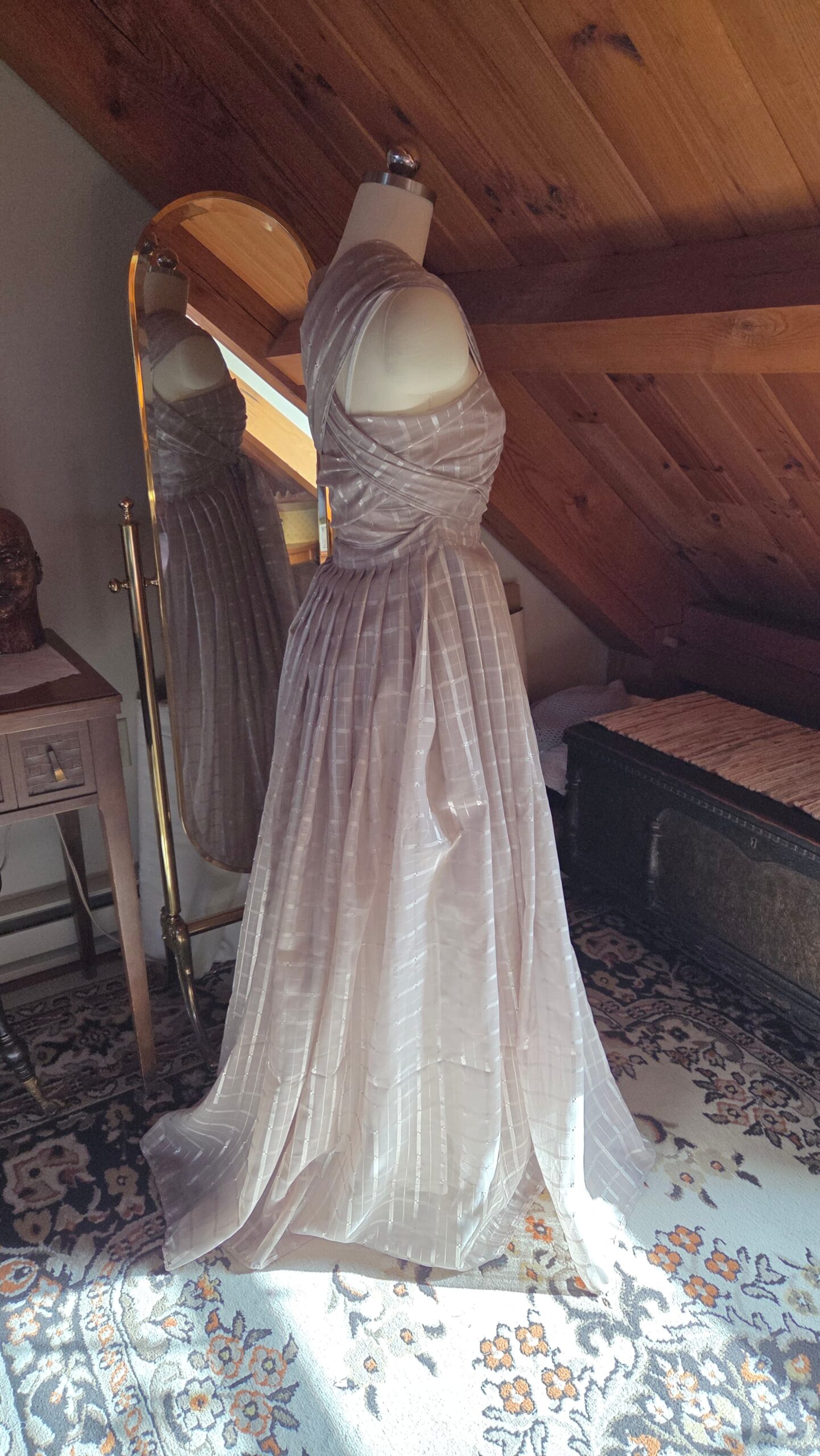
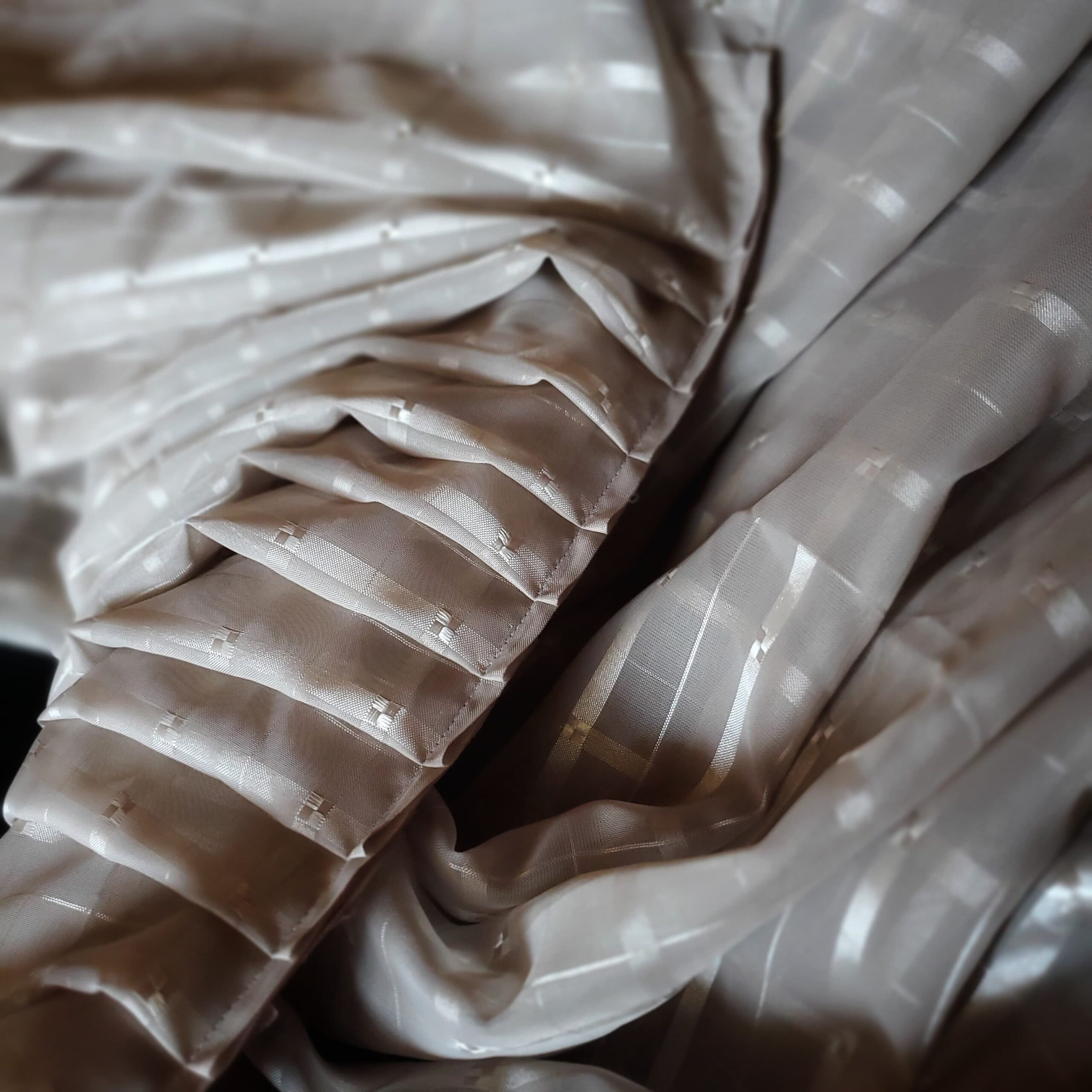
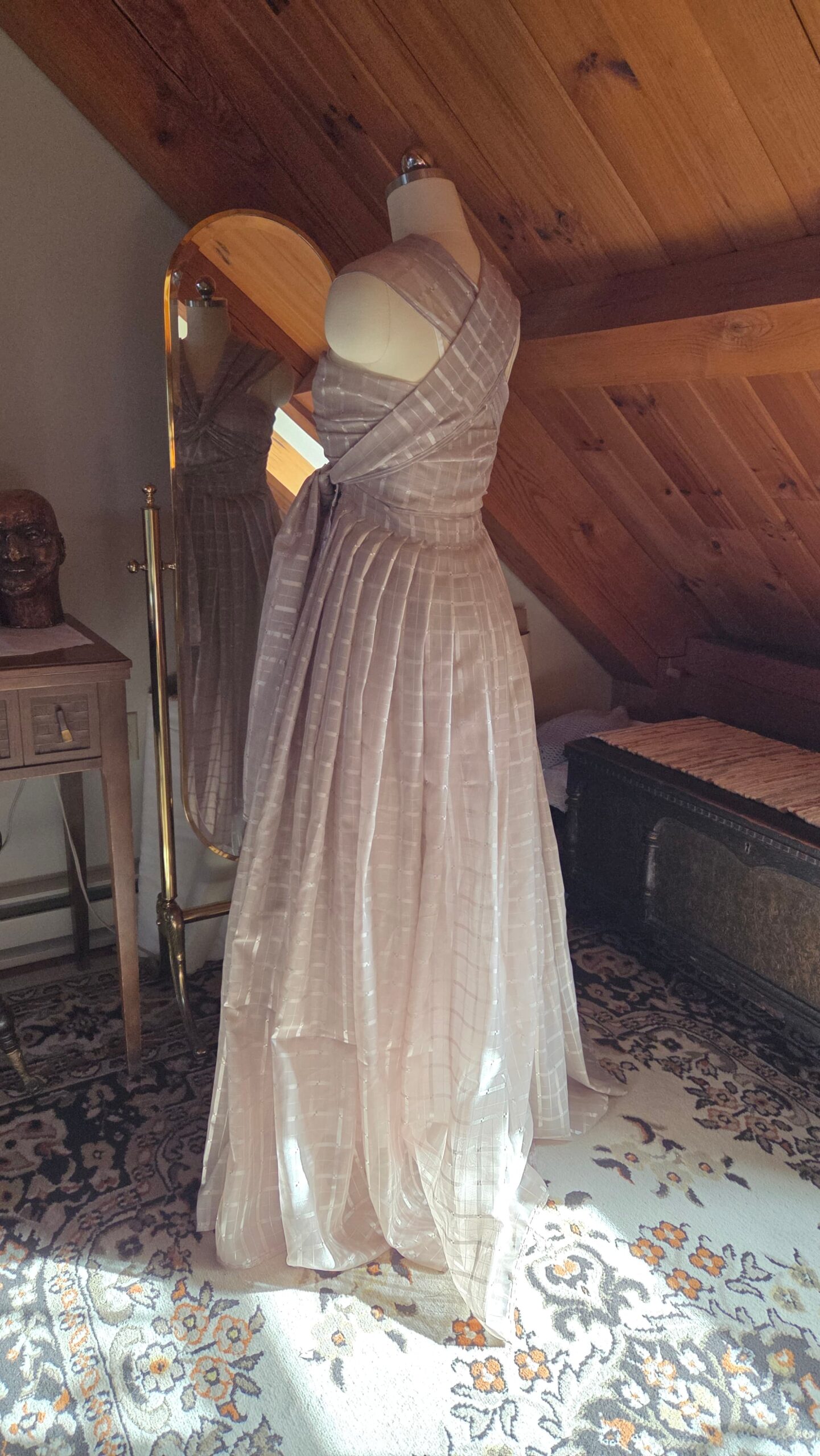
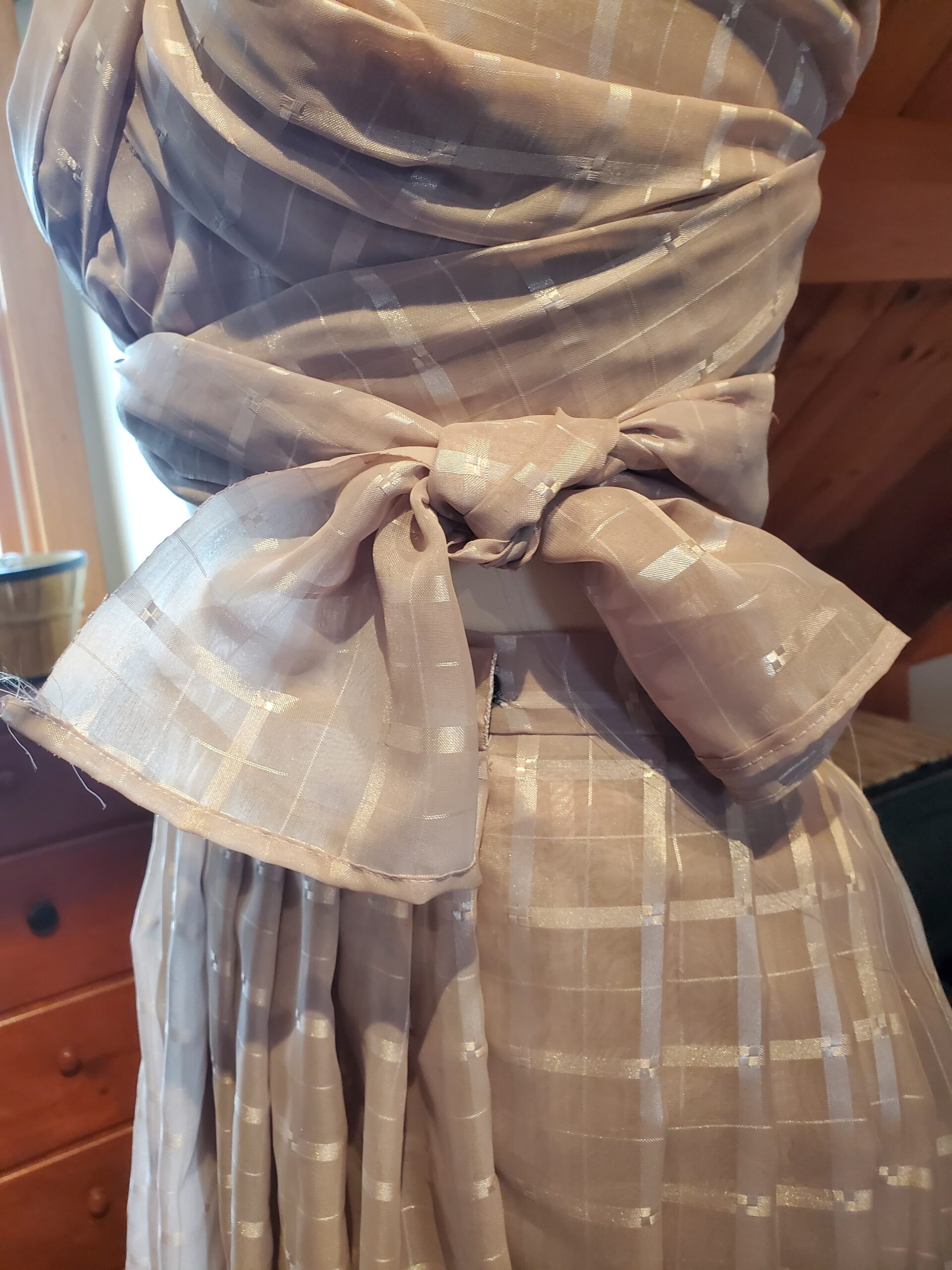
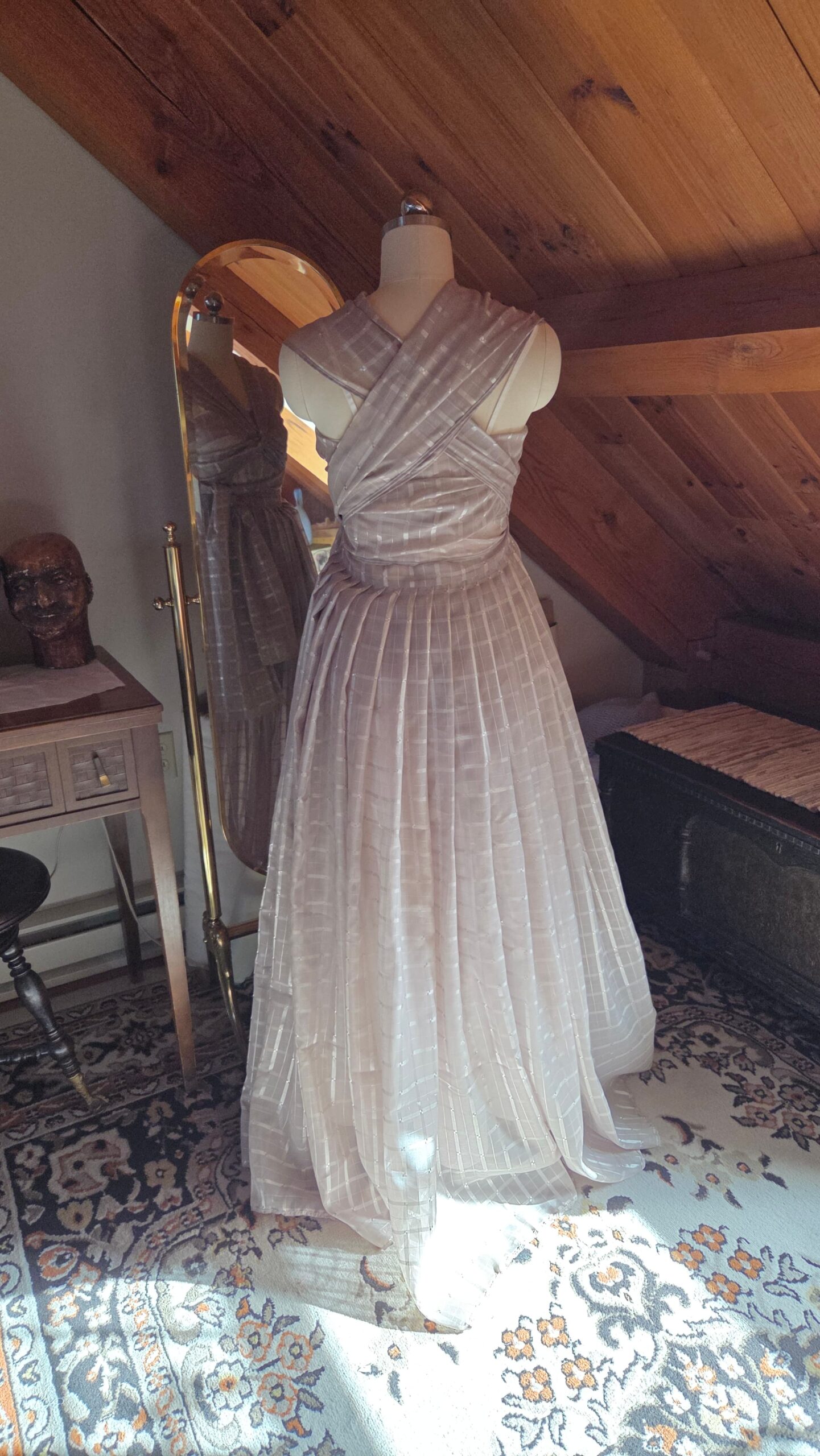
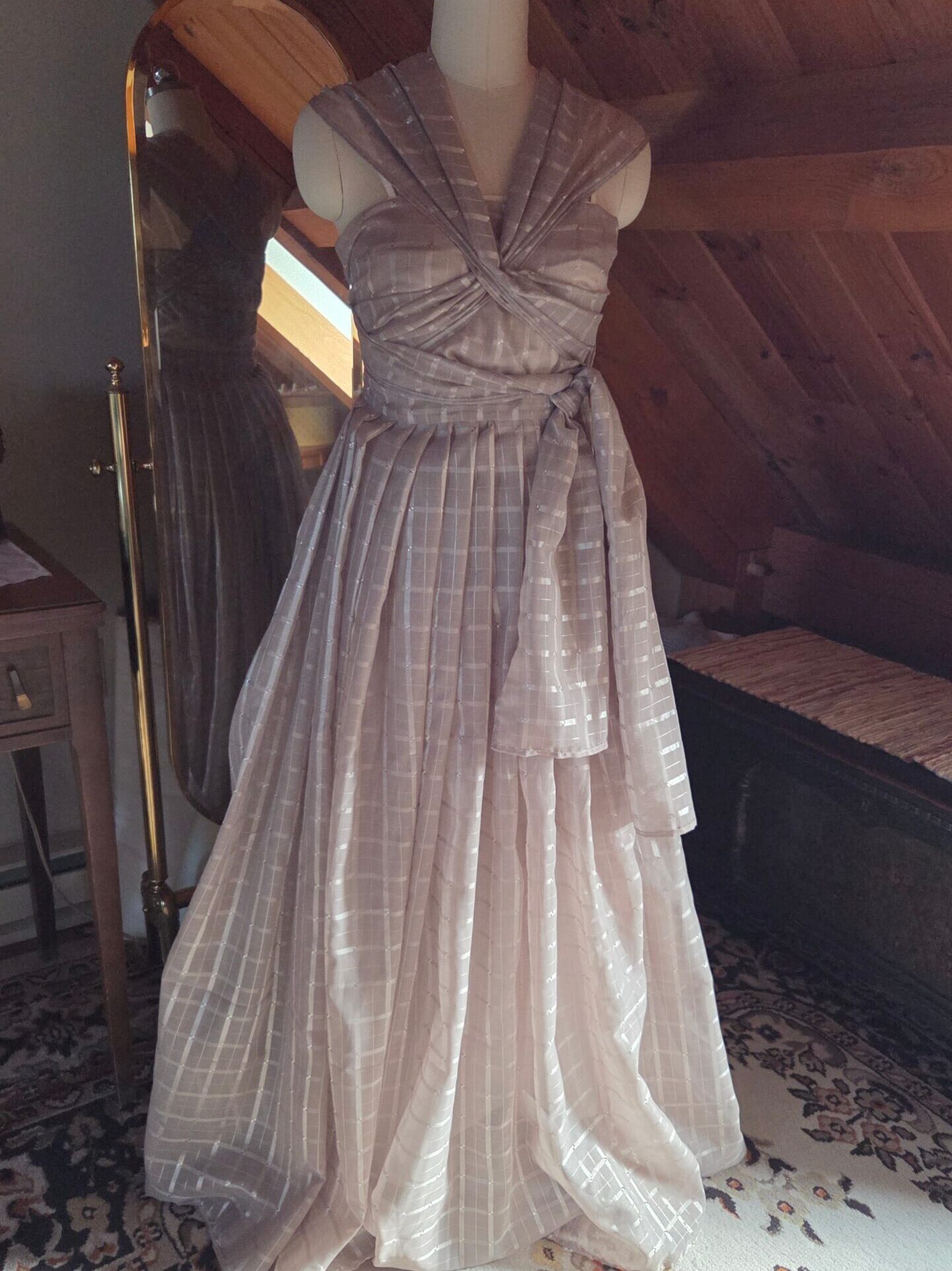
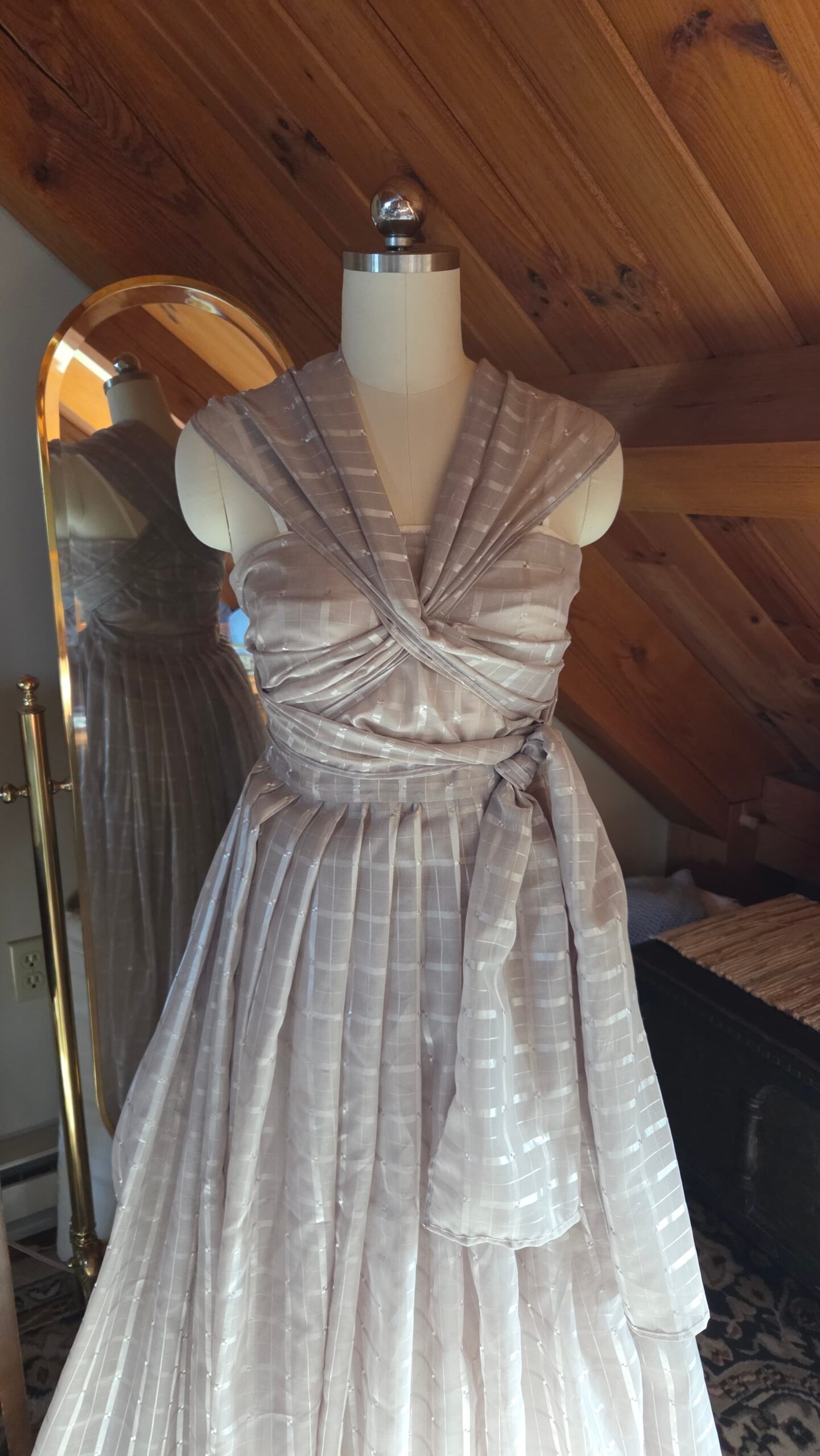
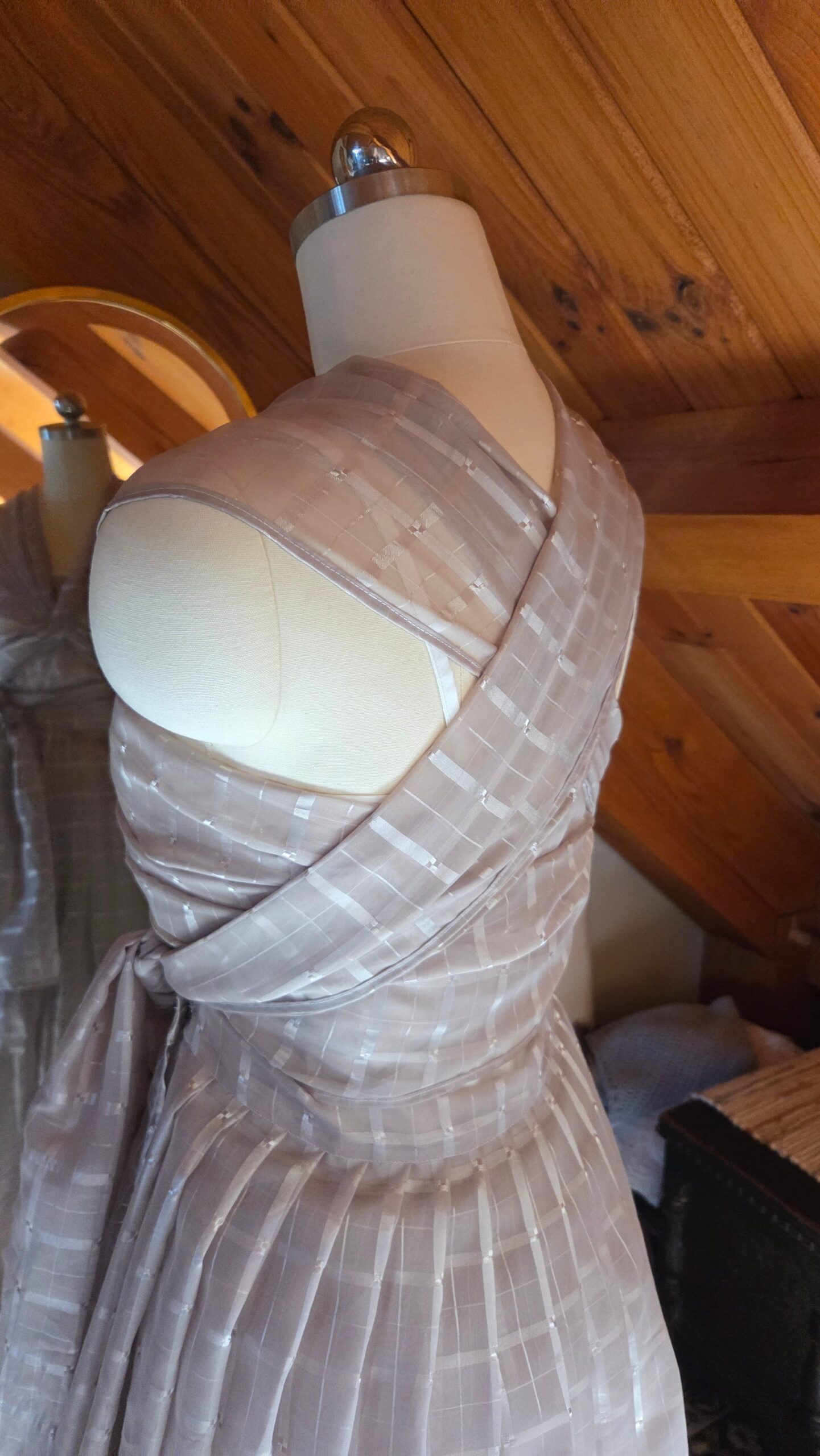
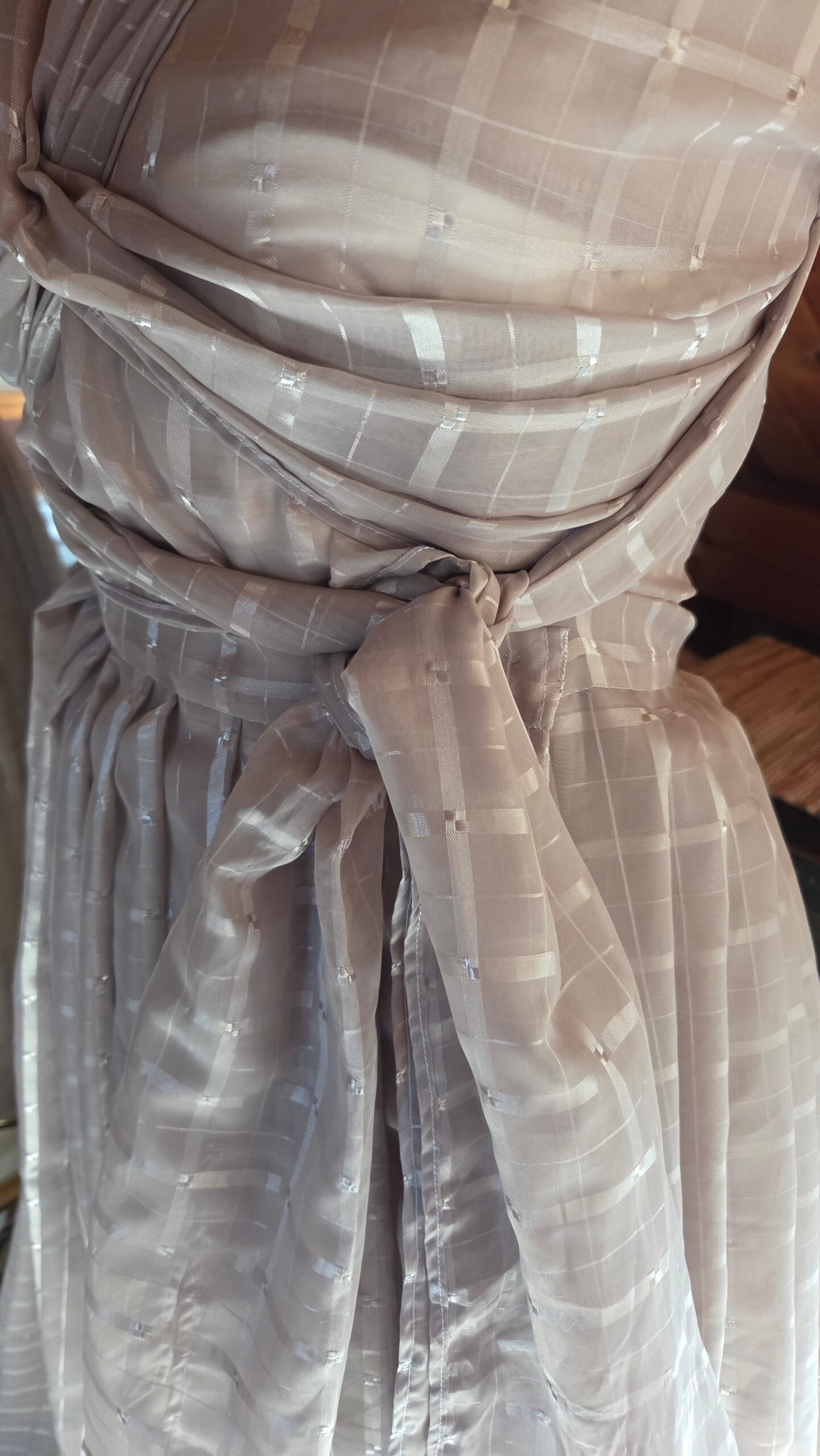
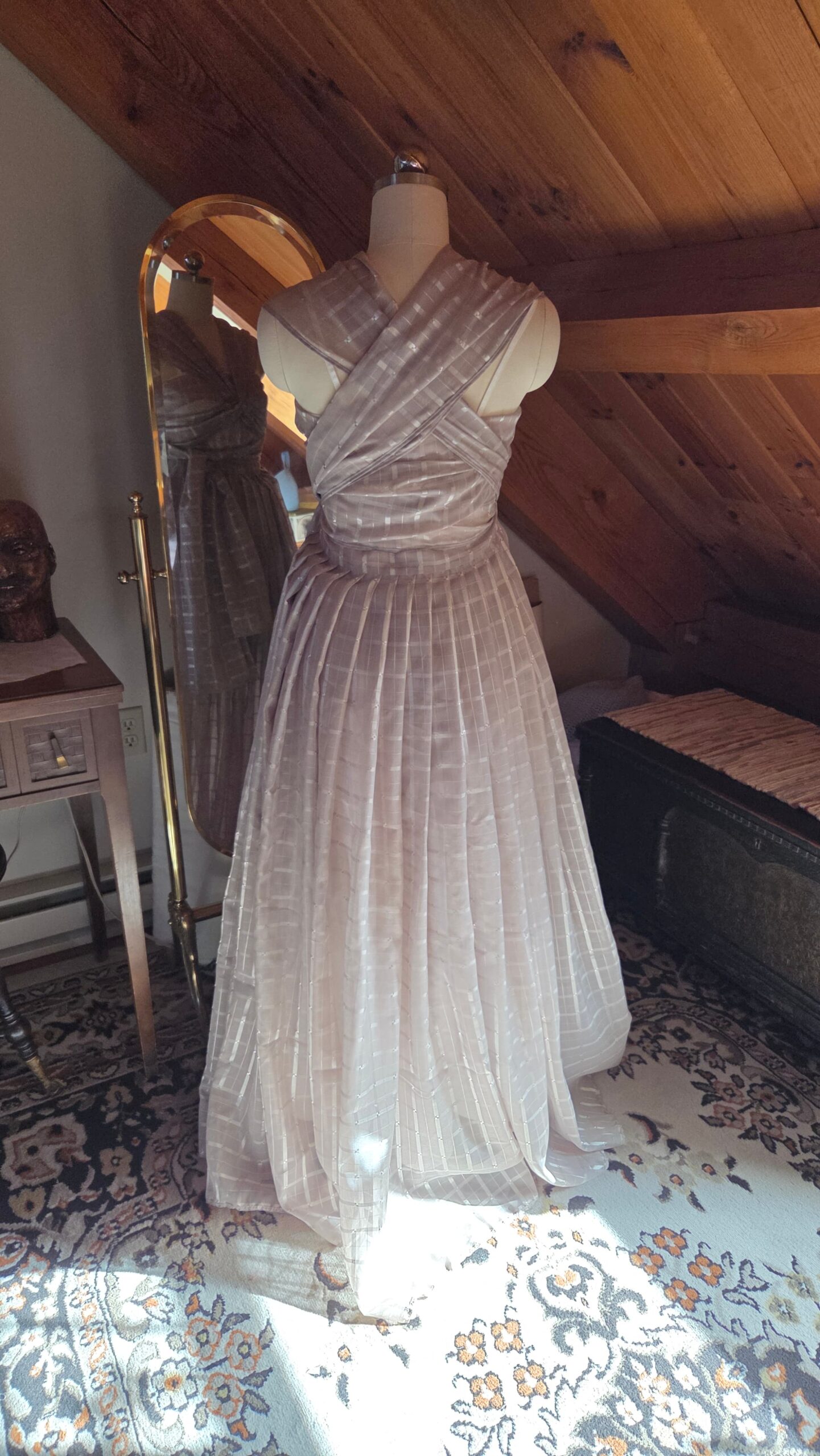
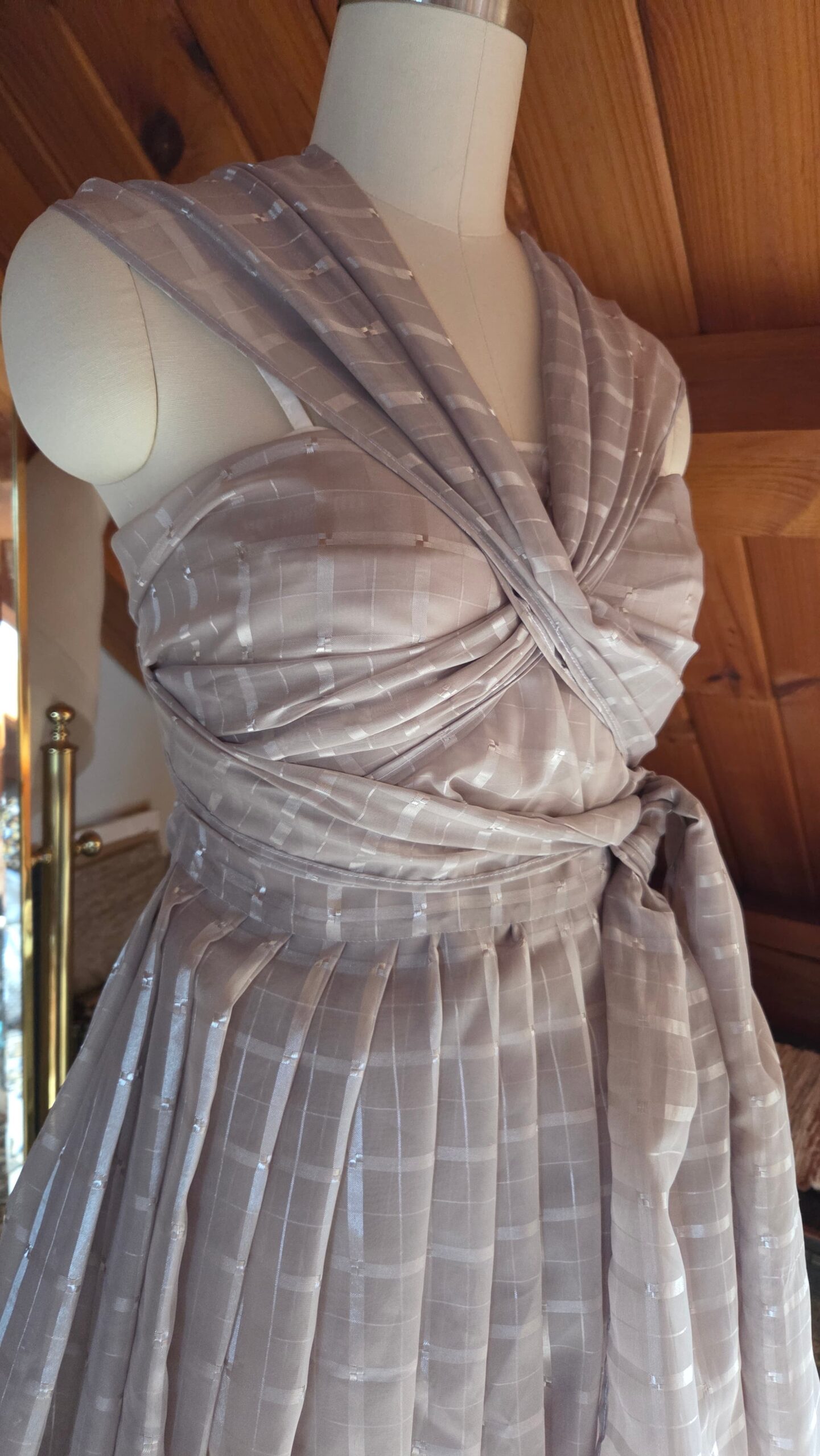
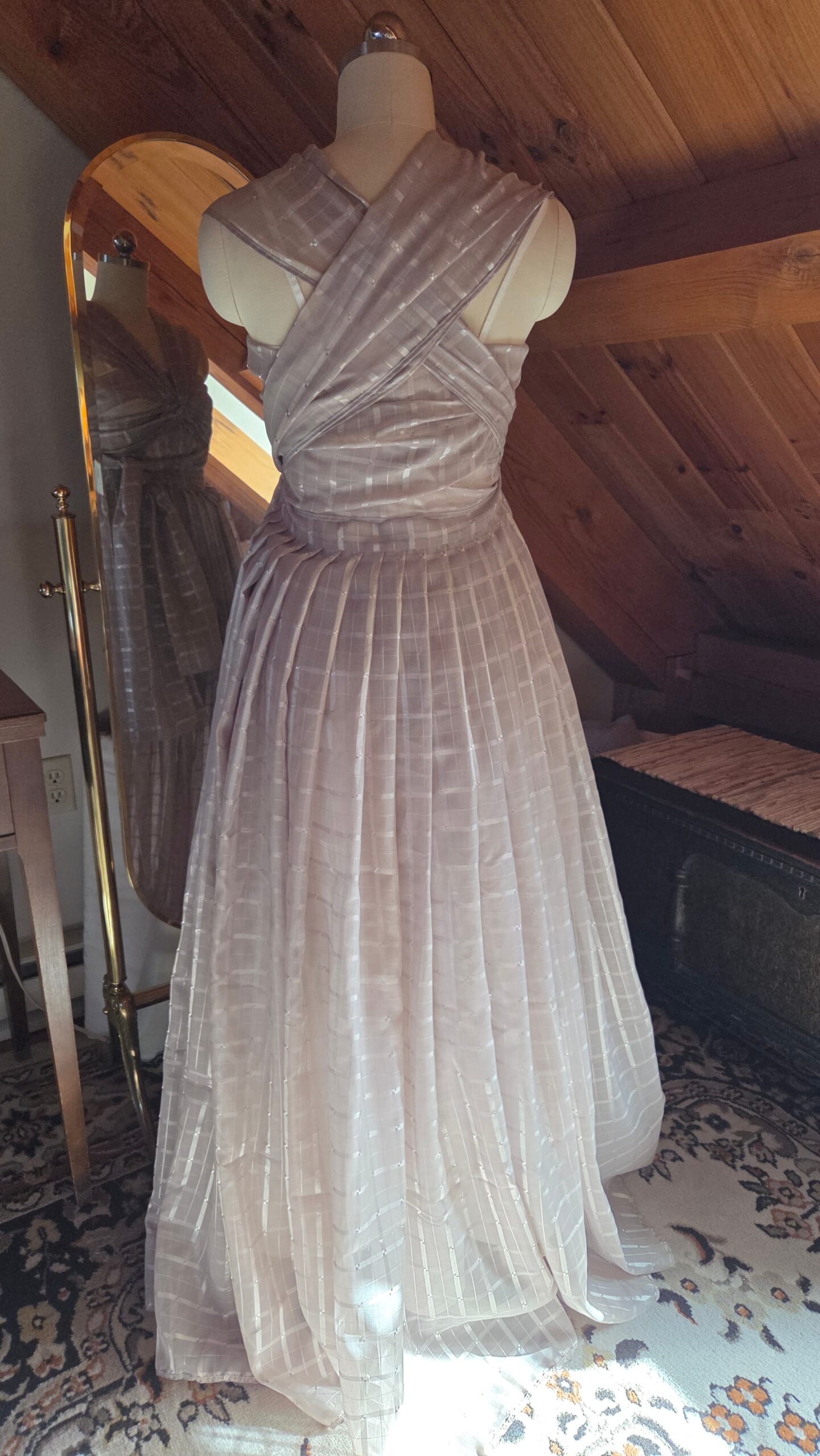
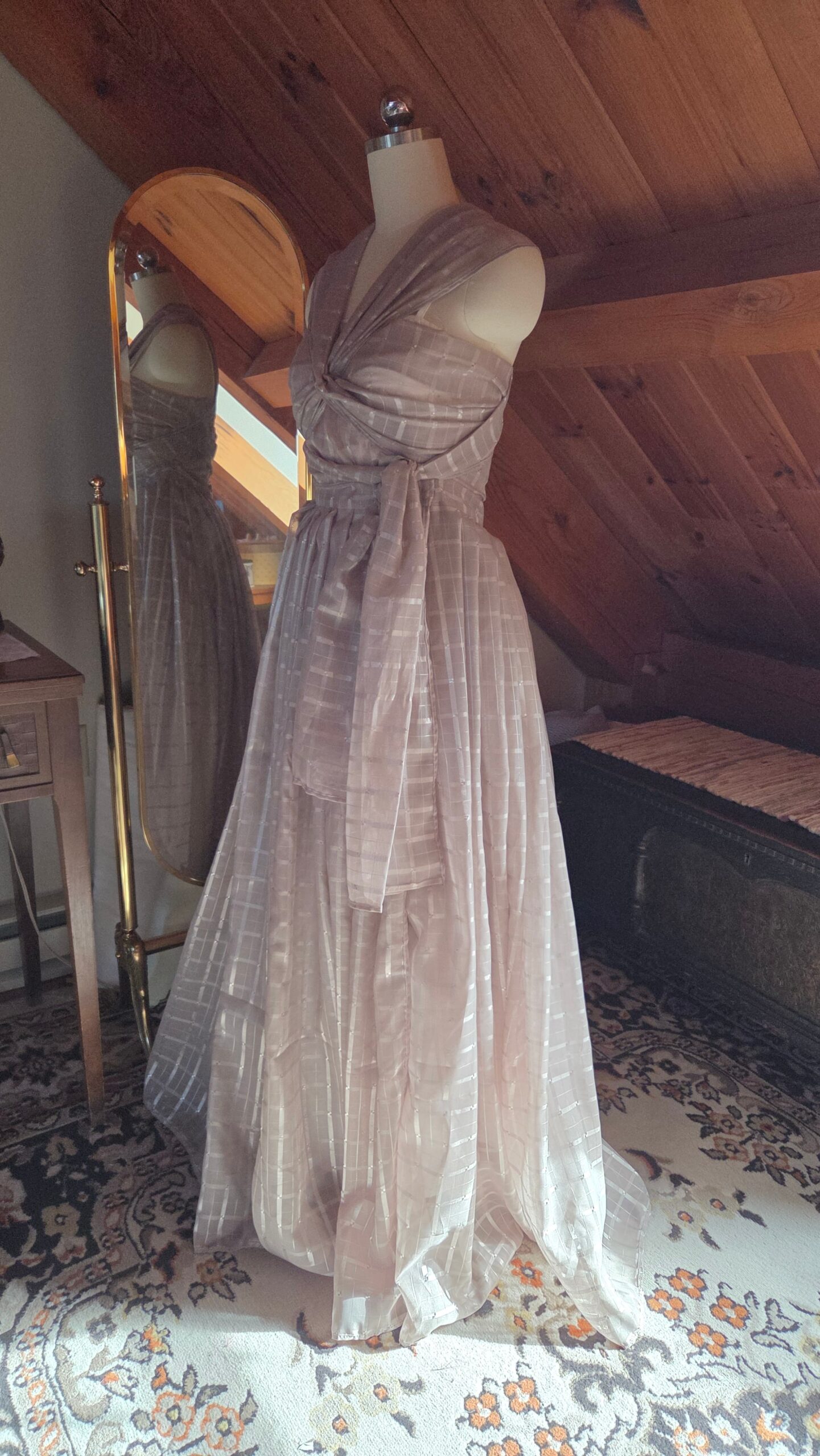
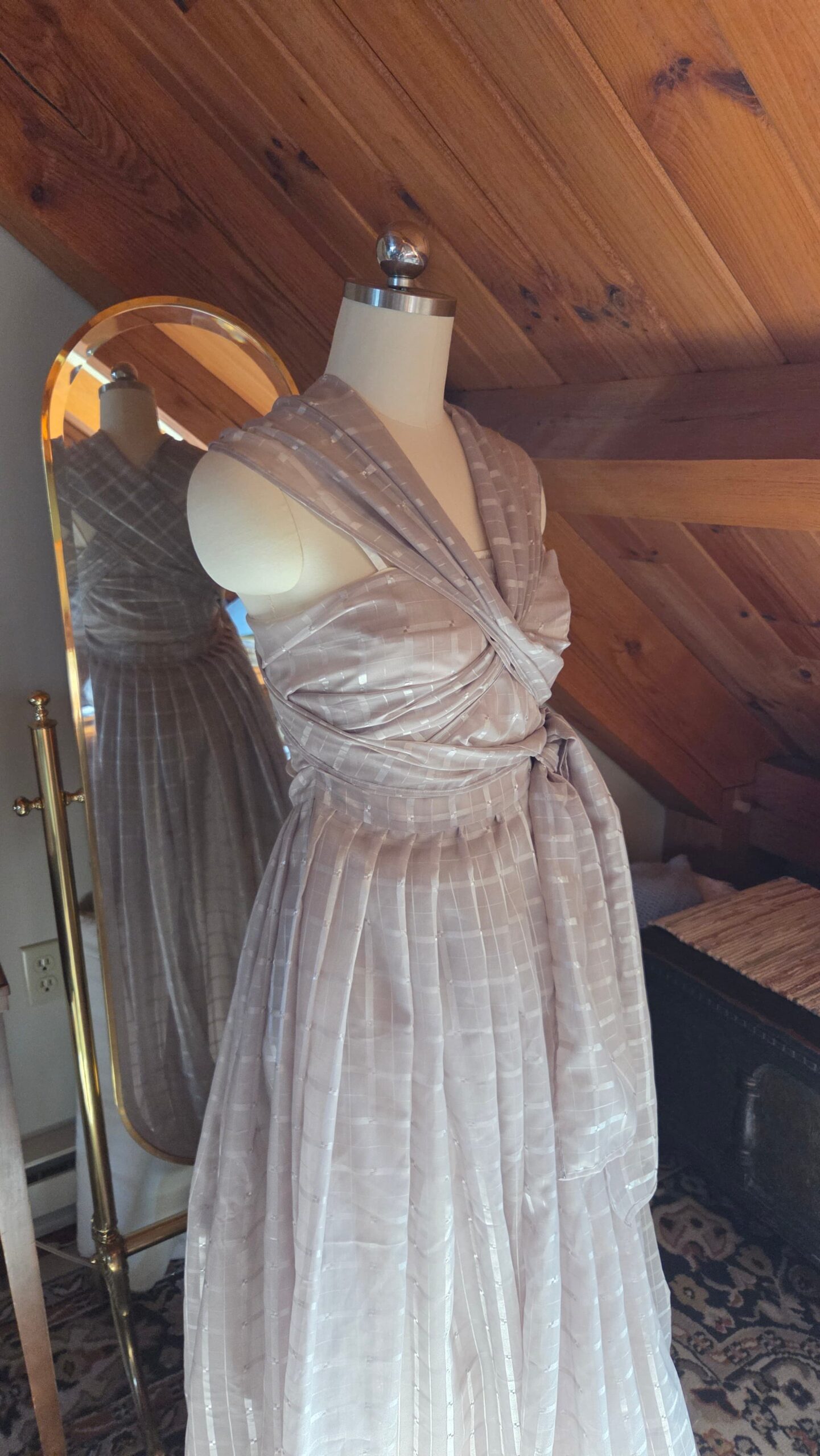
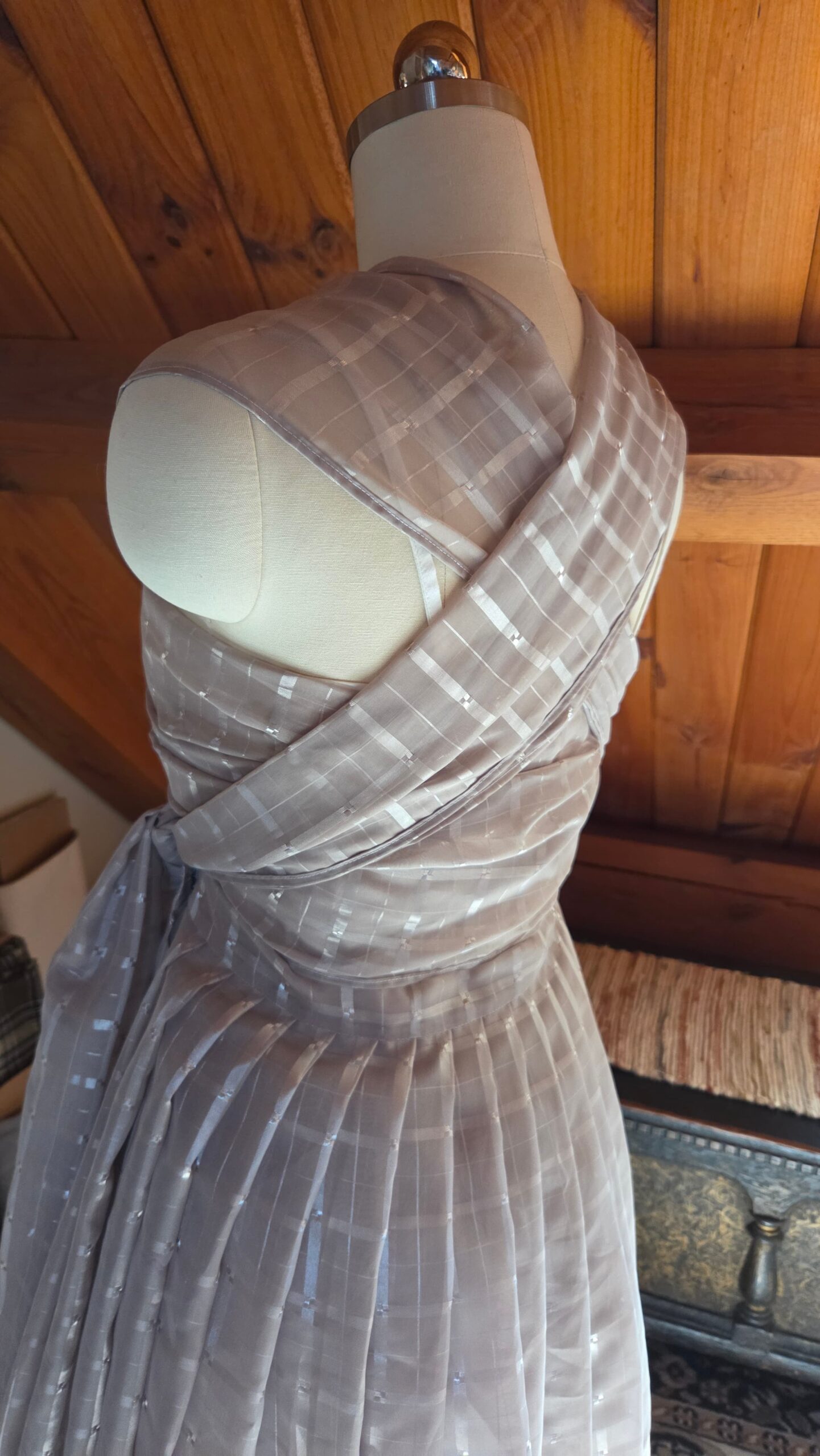
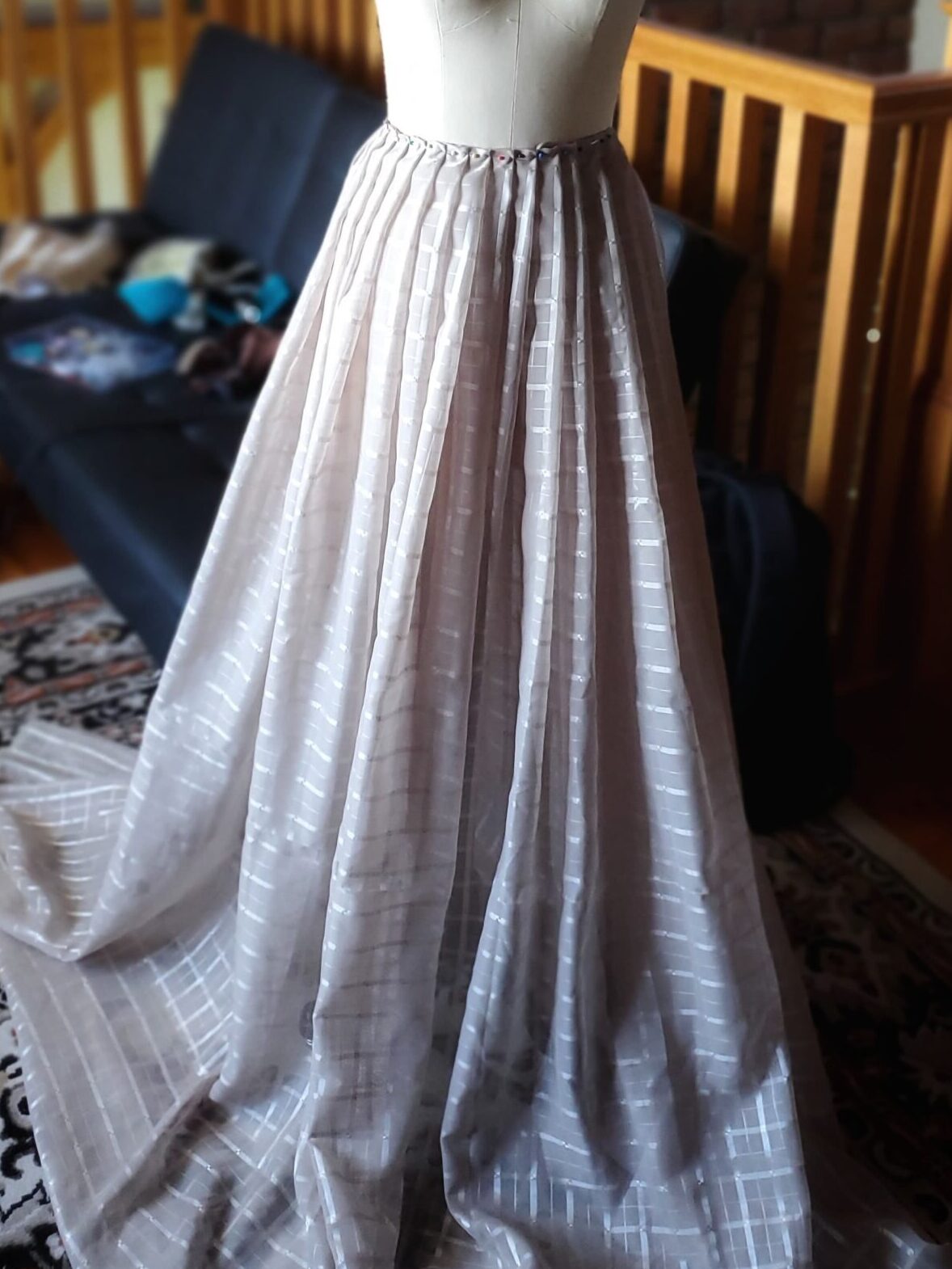
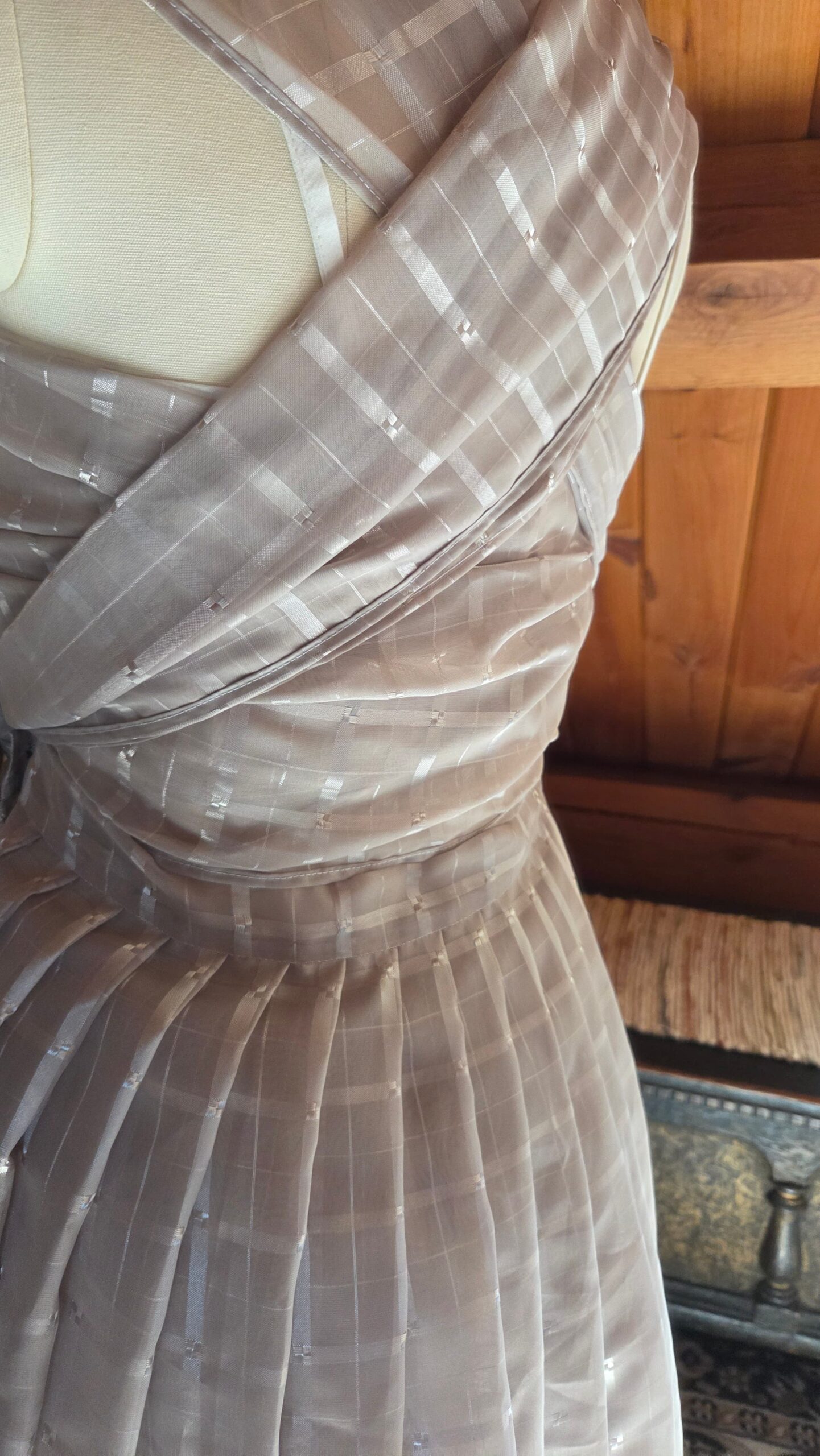
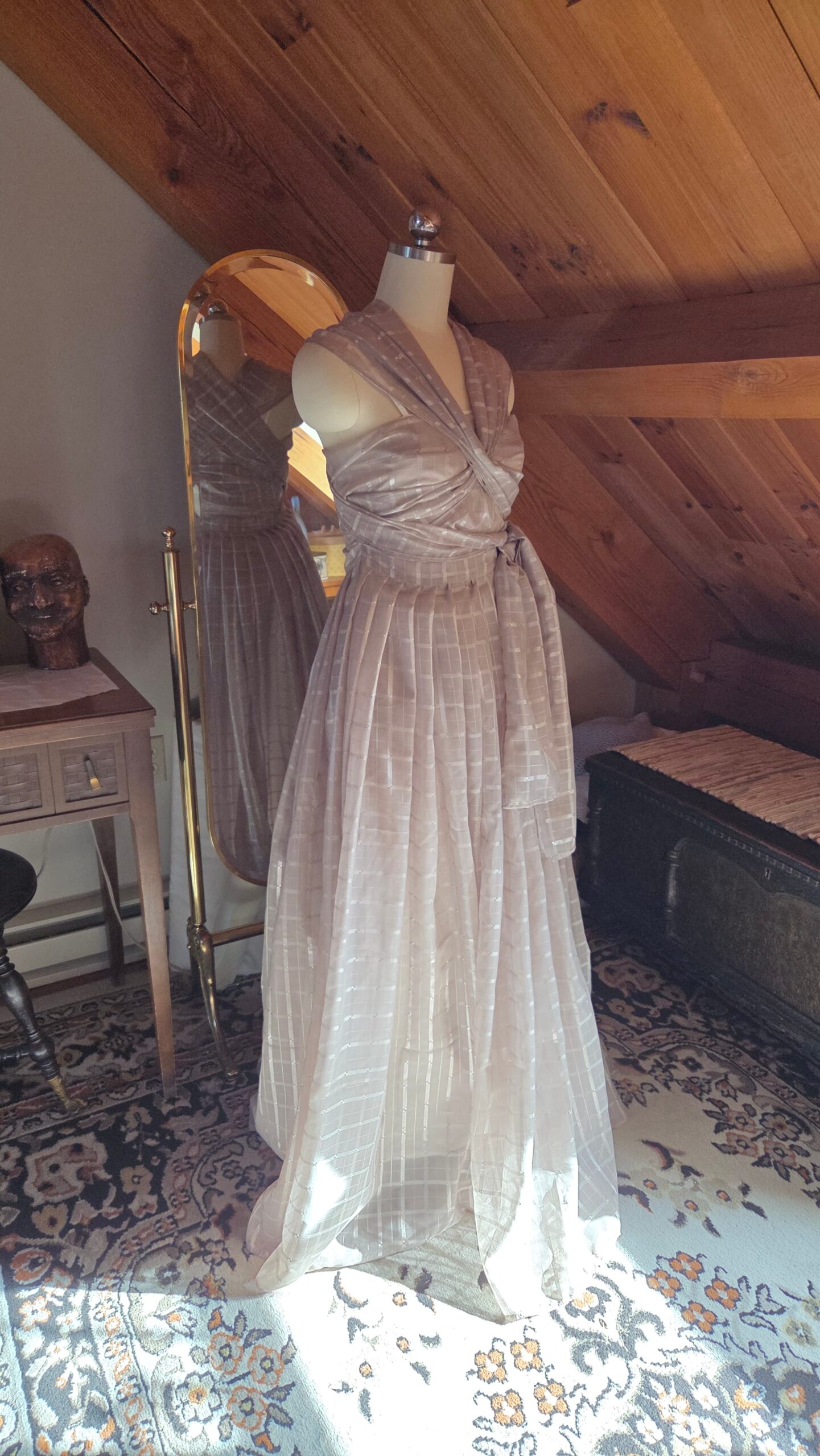
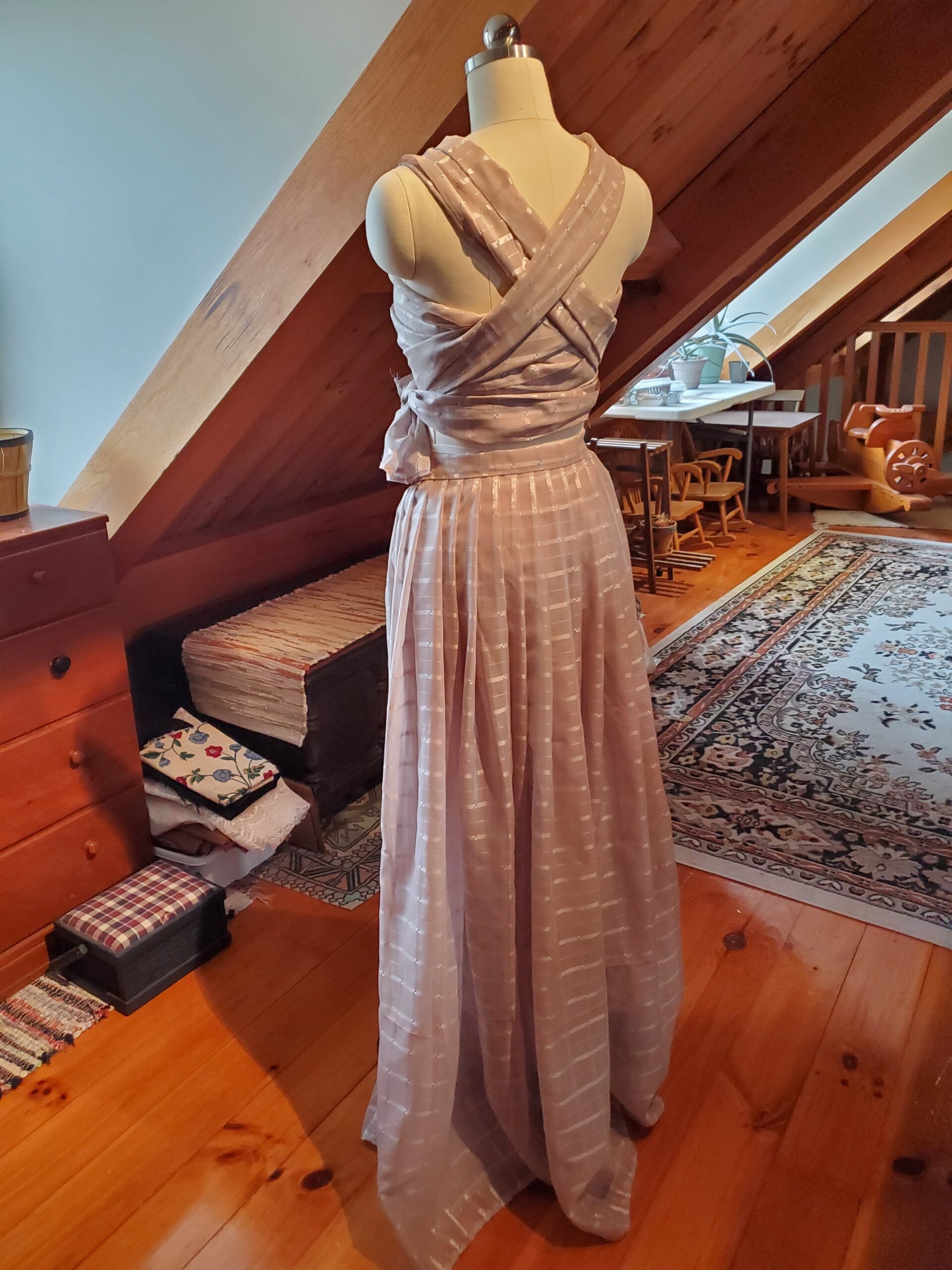
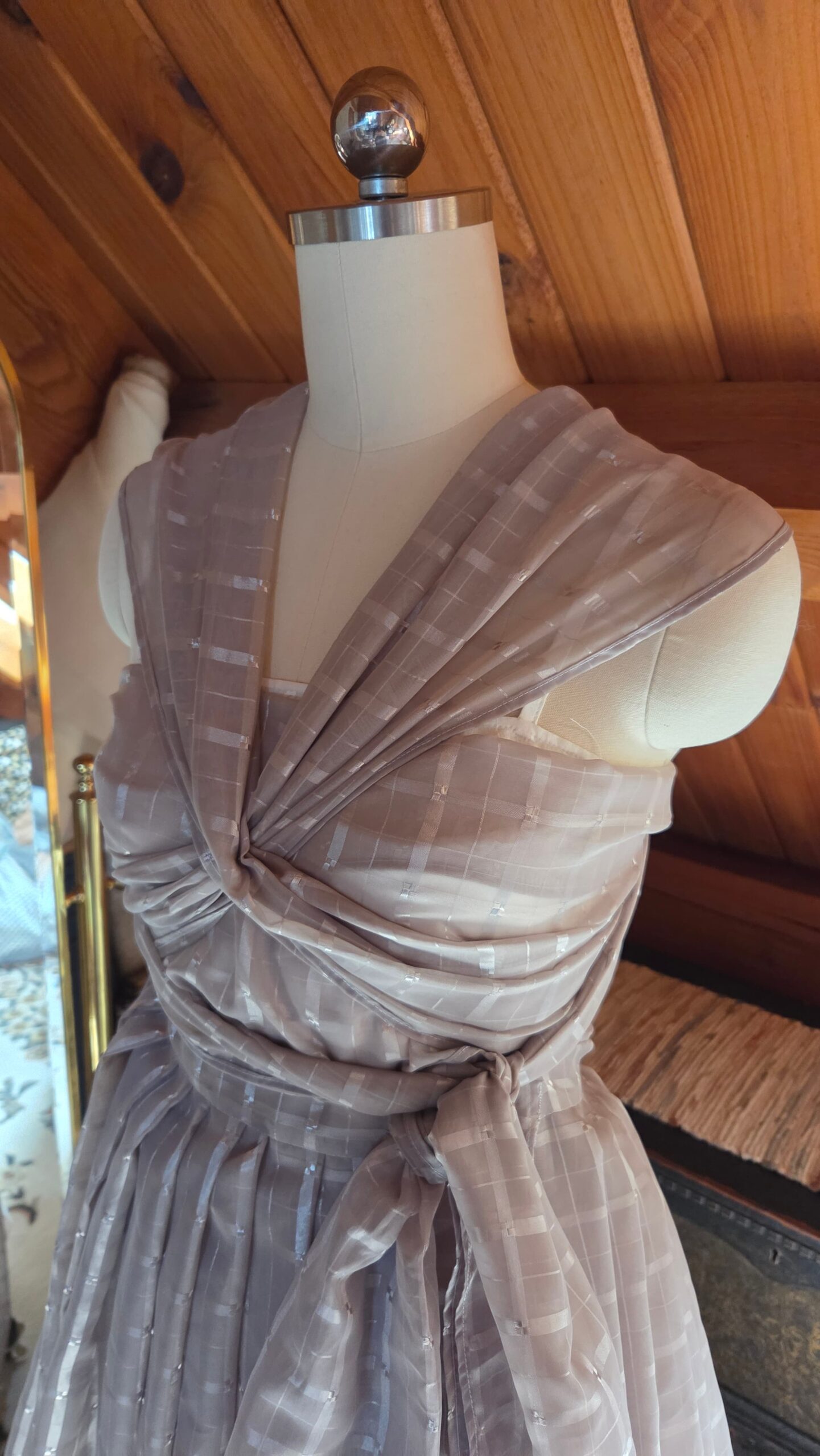
With nothing but the material and a dream, this dress came to life one step at a time—without a pattern. It was my first fully draped garment, shaped directly on the dress form. I began with the skirt, pleating the entire length of fabric down to my waist measurement and securing it with a hook‑and‑eye closure. The excess fabric trimmed from the hem was then finished and transformed into the bodice, allowing the top to grow organically from what remained.



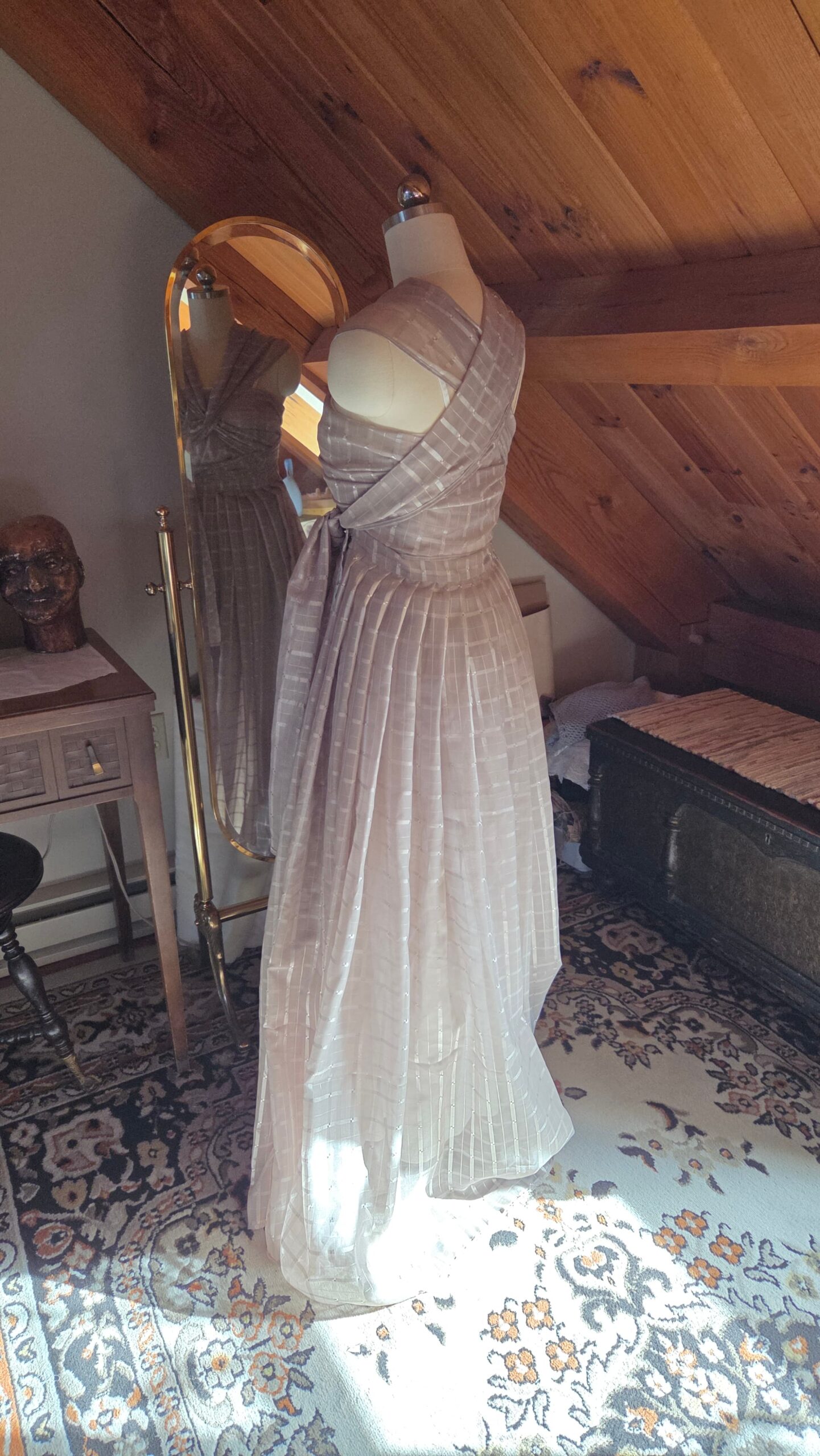
Working With Limitations, Not Against Them
Because the fabric came to me in a semi‑limited quantity, I had to design a dress that worked within the constraints of what I had, rather than sourcing more material to fit a predetermined plan. Instead of beginning with a fixed sketch or a rigid idea, the project started with the simple question of what this particular fabric could become. That shift in perspective immediately changed the tone of the making process.
As I worked, it became a fun creative challenge—an exercise in problem‑solving, intuition, and letting the fabric guide the design. Every cut and pleat required a moment of consideration, a small negotiation between my original vision and the material’s natural tendencies.
Those limitations encouraged me to slow down, pay attention, and respond to the fabric’s behavior in real time, which made the process feel more collaborative than prescriptive.
In the end, working within those boundaries made the final piece feel even more intentional and rewarding. The dress carries the story of its own making: the choices shaped by necessity, the improvisation that led to unexpected details, and the quiet satisfaction of creating something beautiful from exactly what was available. It’s a reminder that limitations aren’t obstacles—they’re often the spark that brings a design to life.